finance
Money talks; reviewing the global economy, government spending, taxes, and economic policy that affect our social and political future.
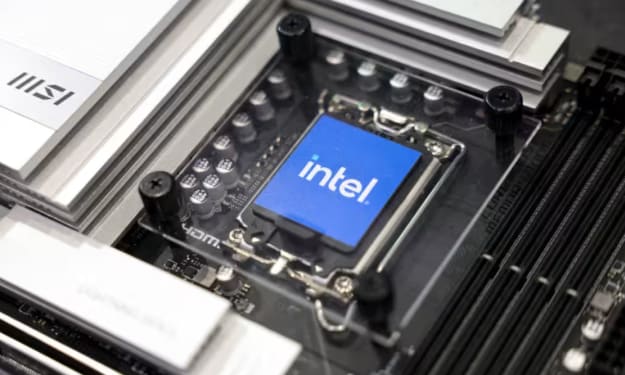
Intel Stock Surges to a 4-Year High Ahead of Earnings. AI-Generated.
For much of the past decade, Intel was seen as a tech giant struggling to keep pace with faster-moving rivals. Delays in chip manufacturing, rising competition from AMD and Nvidia, and a rapidly changing semiconductor market weighed heavily on investor confidence. But that narrative is changing — and fast. As Intel stock climbs to a four-year high ahead of its upcoming earnings report, optimism is clearly building across Wall Street. This rally is not the result of hype alone. Instead, it reflects a growing belief that Intel’s long-term turnaround strategy may finally be gaining real traction. So why are investors suddenly more confident, and what exactly is driving Intel’s momentum? A Market Shift in Intel’s Favor The semiconductor industry is notoriously cyclical, and Intel appears to be entering a favorable phase at the right moment. After years of supply chain disruptions and uneven demand, the market is stabilizing. Enterprise customers are beginning to invest again, and PC demand — while not booming — is showing signs of recovery. For Intel, even modest improvements in demand can have an outsized impact. As one of the world’s largest chipmakers, scale works both ways. When demand weakens, losses grow quickly. But when conditions improve, revenue and margins can rebound just as fast. This changing market backdrop is one reason investors are positioning themselves ahead of earnings. AI Is No Longer Just Nvidia’s Story Artificial intelligence has been the single biggest driver of semiconductor enthusiasm over the past two years. For a long time, Intel was seen as a secondary player in this space, trailing far behind Nvidia’s dominant GPUs. That perception is starting to evolve. Intel has been steadily expanding its AI-focused product portfolio, particularly in data centers and enterprise applications. Its newer processors are increasingly optimized for AI workloads, and the company has been vocal about integrating AI acceleration directly into CPUs — a different approach from relying solely on standalone GPUs. Investors are warming to the idea that AI growth does not belong to one company alone. As AI adoption spreads across industries, demand for diverse and cost-effective solutions grows — an environment where Intel can compete more effectively. Manufacturing Comeback Builds Credibility Perhaps the most important driver of renewed optimism is Intel’s manufacturing strategy. For years, manufacturing delays damaged the company’s reputation. Falling behind rivals that outsourced production raised serious questions about Intel’s ability to execute. Today, however, that concern is slowly being replaced with cautious confidence. Intel’s push to rebuild its manufacturing leadership — including advanced fabrication nodes and foundry services — is starting to look more credible. Progress may not be instant, but consistency matters more than speed at this stage. Investors are responding not because Intel has already won, but because it is finally delivering predictability — something markets value deeply. Foundry Business Adds a Long-Term Growth Story Intel’s foundry ambitions deserve special attention. By opening its manufacturing capacity to external customers, Intel is attempting to position itself as both a designer and a producer of chips — a rare combination. This move aligns closely with broader geopolitical and economic trends. Governments and corporations are increasingly focused on securing domestic semiconductor supply chains. Intel’s manufacturing footprint gives it a strategic advantage in this environment. While the foundry business will take time to mature, investors see it as a long-term option with enormous upside. That optionality alone can justify higher valuations when sentiment shifts. Earnings Expectations Are Manageable — Not Perfect Interestingly, Intel’s stock surge is not being driven by expectations of flawless earnings. Instead, optimism stems from reasonable expectations. Markets are not demanding record profits. They are looking for: Stable margins Clear guidance Evidence that strategy aligns with execution If Intel demonstrates operational discipline and reaffirms its long-term roadmap, it may not need dramatic earnings beats to sustain momentum. In many ways, this is a healthier rally — built on credibility rather than speculation. Leadership Stability Matters More Than Headlines Intel’s leadership has played a quiet but important role in restoring confidence. Consistent messaging, transparent goals, and a willingness to acknowledge past mistakes have helped rebuild trust with investors. Rather than chasing every tech trend, Intel’s leadership appears focused on doing fewer things better. That strategic clarity is often undervalued — until it begins to show results. Markets reward companies that look steady in uncertain times, and Intel is increasingly projecting exactly that image. Why the Stock Is Rising Before Earnings The timing of the rally is telling. Stocks often move before earnings when investors believe future expectations are being underestimated. In Intel’s case, rising prices suggest that investors fear missing out on a longer-term recovery story. Even those cautious about near-term numbers may be choosing to enter now rather than wait for perfect clarity. This kind of pre-earnings optimism usually reflects belief in direction, not just data. What Comes Next for Intel Investors Intel’s journey is far from complete. Risks remain, competition is intense, and execution must stay consistent. But the market is no longer asking whether Intel can survive — it is asking how strong the recovery could become. That shift in perception is powerful. If Intel continues to show steady progress across AI, manufacturing, and operational discipline, today’s four-year high may look less like a peak and more like a new base. For investors, the growing optimism is not about nostalgia for Intel’s past dominance. It’s about the belief that the company is finally building a future that markets can trust.
By Muhammad Hassan2 months ago in The Swamp
How Slovakia Became the World’s Number One Carmaker. AI-Generated.
Slovakia may be a small Central European nation, but it holds a remarkable global title: the world’s number one car producer per capita. Despite having a population of just over five million, the country manufactures more cars per person than any other nation. This achievement did not happen by accident. It is the result of strategic policy decisions, geographic advantages, skilled labor, and long-term investment by global automotive giants.
By Aarif Lashari2 months ago in The Swamp
Stocks Surge as Trump Cancels Greenland Tariffs. AI-Generated.
Global stock markets rallied sharply after former US president Donald Trump announced the cancellation of proposed tariffs linked to Greenland, easing fears of a new trade dispute and restoring investor confidence. The decision sparked gains across major indices, as markets welcomed the reduction in geopolitical and trade-related uncertainty that had weighed on sentiment in recent days.
By Aarif Lashari2 months ago in The Swamp
Index Surges Past 188,000 on Rate Cut Hopes. AI-Generated.
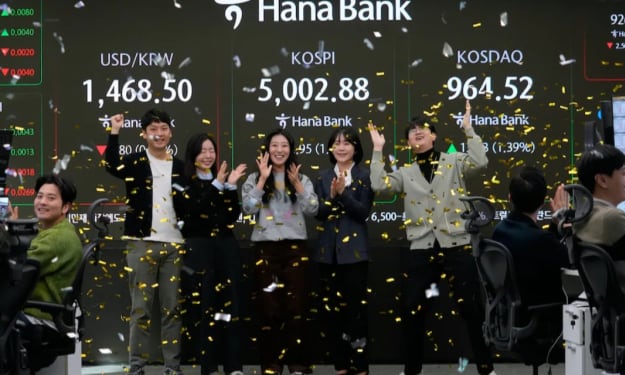
Global financial markets witnessed a powerful rally as the benchmark index surged past the 188,000 mark, driven largely by growing optimism that interest rate cuts may be on the horizon. Investors responded enthusiastically to signals suggesting easing inflationary pressures and a possible shift in central bank policy, fueling one of the strongest market moves seen in recent months.
By Aarif Lashari2 months ago in The Swamp
Wall Street Rises as Trump Pauses Greenland Tariffs. AI-Generated.
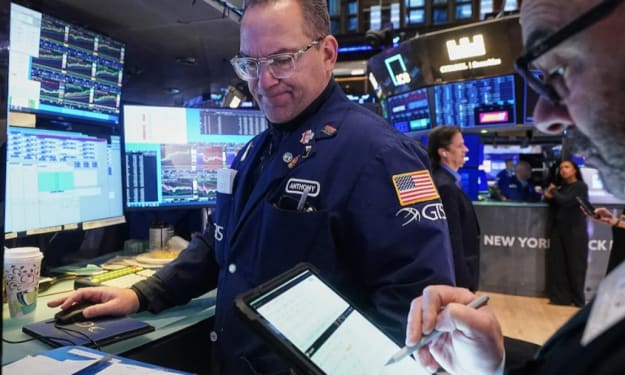
Wall Street rallied after former US president Donald Trump announced a pause on proposed tariffs linked to Greenland, easing investor concerns and injecting renewed optimism into financial markets. The decision, though limited in scope, had an outsized psychological impact, highlighting how geopolitical signals continue to influence global markets even outside formal policy channels.
By Aarif Lashari2 months ago in The Swamp
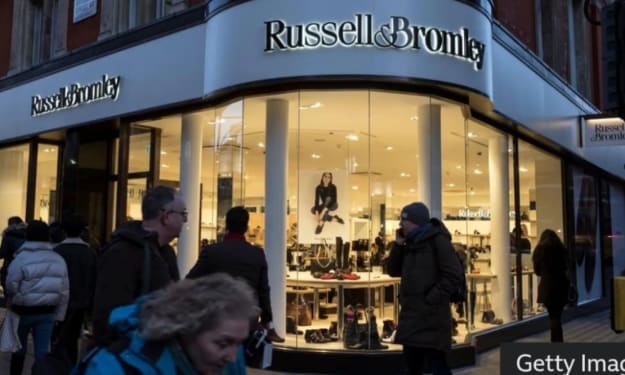
Next Acquires Shoe Chain Russell & Bromley, But 33 Stores Face Uncertainty. AI-Generated.
British retail powerhouse Next has announced its acquisition of the high-end shoe chain Russell & Bromley, a move that strengthens its presence in the footwear market. However, the deal comes with a significant caveat: 33 Russell & Bromley shops are reportedly at risk of closure, highlighting the challenges facing the UK’s high street retail sector.
By Muhammad Hassan2 months ago in The Swamp
Marine Le Pen Defends Party as “No System” Existed to Misuse EU Funds. AI-Generated.
Marine Le Pen, the leader of France’s far-right National Rally party, appeared in court this week to defend herself and her party in an appeal trial concerning allegations of misuse of European Union funds. Speaking before the judges, Le Pen asserted that her party never had a structured system or deliberate plan to exploit EU financial resources, calling the accusations politically motivated and unfounded.
By Muhammad Hassan2 months ago in The Swamp
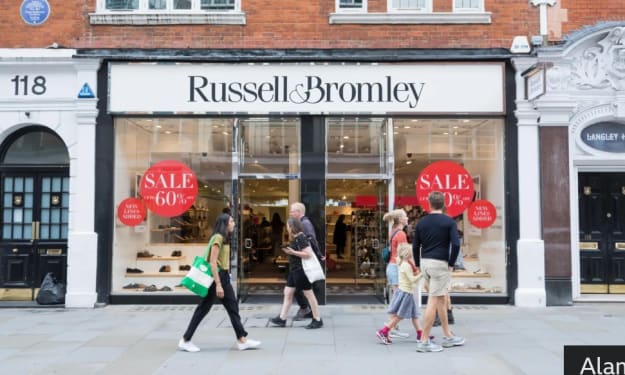
Next Buys Shoe Chain Russell & Bromley, but 33 Stores Face Closure Risk. AI-Generated.
British fashion retailer Next has acquired the upmarket shoe chain Russell & Bromley, a move that signals both confidence in the brand’s long-term value and fresh uncertainty for parts of the UK high street. While the takeover secures the future of a well-known footwear name, it also places 33 Russell & Bromley stores at risk, raising concerns for employees and town centres already under pressure.
By Aarif Lashari2 months ago in The Swamp
Berkshire Prepares to Exit 28% Stake in Kraft Heinz as New CEO Seeks to Move Past Rare Buffett Gaffe. AI-Generated.
Berkshire Hathaway, the investment powerhouse led by Warren Buffett, is reportedly preparing to exit its 28% stake in Kraft Heinz, marking a notable shift in one of the most scrutinized investments in the firm’s history. The move comes under the guidance of the new CEO of Kraft Heinz, who is determined to distance the company from what many analysts have called a rare Buffett gaffe.
By Muhammad Hassan2 months ago in The Swamp
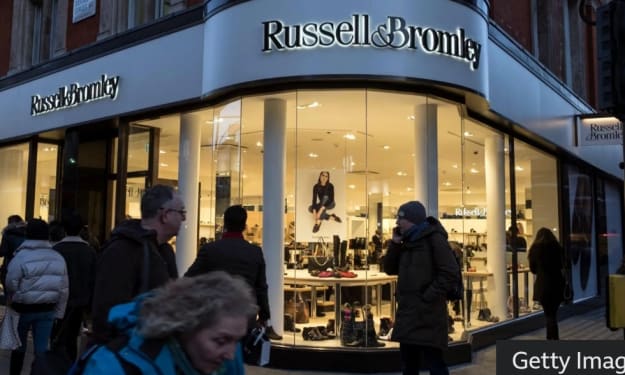
Next Buys Shoe Chain Russell & Bromley, but 33 Shops at Risk. AI-Generated.
British retail giant Next has confirmed its acquisition of the iconic shoe retailer Russell & Bromley, a deal that has attracted significant attention in the retail sector. However, alongside the excitement, the announcement also comes with warnings: 33 stores are reportedly at risk of closure, raising concerns about the impact on jobs and the UK high street.
By Aarif Lashari2 months ago in The Swamp
UK Inflation Rises for First Time in Five Months to 3.4% in December. AI-Generated.
The United Kingdom has seen a rise in inflation for the first time in five months, with December figures reaching 3.4%, according to the Office for National Statistics (ONS). The increase, largely driven by higher prices for tobacco, airfares, and other consumer goods, has raised concerns for both policymakers and households as the UK faces a challenging economic environment.
By Aarif Lashari2 months ago in The Swamp
UK Inflation Rises for First Time in Five Months to 3.4% in December
The United Kingdom has seen a rise in inflation for the first time in five months, with December figures reaching 3.4%, according to the Office for National Statistics (ONS). The increase, largely driven by higher prices for tobacco, airfares, and other consumer goods, has raised concerns for both policymakers and households as the UK faces a challenging economic environment.
By Aarif Lashari2 months ago in The Swamp