
Wall Street Rises as Trump Pauses Greenland Tariffs
“Investor confidence improves as trade tensions ease, though uncertainty over future policy remains”

Wall Street rallied after former US president Donald Trump announced a pause on proposed tariffs linked to Greenland, easing investor concerns and injecting renewed optimism into financial markets. The decision, though limited in scope, had an outsized psychological impact, highlighting how geopolitical signals continue to influence global markets even outside formal policy channels.
Major US stock indices closed higher as traders welcomed the reduced risk of immediate trade friction, particularly involving transatlantic relations. The move underscored the sensitivity of markets to tariff-related uncertainty and the broader implications of geopolitical rhetoric.
Markets React to Reduced Trade Tensions
US equities responded swiftly following reports that Trump would halt tariff measures tied to Greenland-related trade considerations. The Dow Jones Industrial Average, S&P 500, and Nasdaq all posted gains, reflecting relief among investors who had feared renewed volatility linked to international trade disputes.
Market analysts noted that while Greenland itself represents a small share of global trade, the symbolism of tariffs—and their potential escalation—often weighs heavily on investor sentiment. The pause was interpreted as a signal of restraint, at least temporarily, reducing the likelihood of near-term disruption.
Why Greenland Matters to Markets
Greenland has emerged as a point of geopolitical interest due to its strategic Arctic location, mineral resources, and proximity to key shipping routes. Although trade volumes involving Greenland are relatively modest, its importance lies in strategic influence rather than commercial scale.
Any tariff discussion involving Greenland inevitably draws in Denmark and the European Union, raising the risk of broader transatlantic trade tensions. Investors remain wary of scenarios where targeted measures could escalate into wider disputes affecting supply chains, energy markets, or technology sectors.
Investor Confidence and Political Signals
Markets often react not only to policy decisions but also to political signals that suggest the direction of future action. Trump’s pause on Greenland-related tariffs was interpreted by many investors as an attempt to de-escalate potential friction, even if temporarily.
Analysts emphasized that markets tend to prefer predictability. Tariffs, by nature, introduce uncertainty into pricing, costs, and corporate planning. Any move that delays or removes such uncertainty can support equity valuations, particularly in sectors sensitive to international trade.
Sector Performance Highlights
Several sectors benefited from the positive market sentiment:
Industrials and Manufacturing: Companies exposed to global supply chains gained as fears of new trade barriers eased.
Technology Stocks: Firms reliant on international markets saw modest gains, reflecting reduced geopolitical risk.
Financials: Banks and investment firms rose alongside broader market optimism and improved risk appetite.
Energy stocks showed mixed performance, as oil prices were influenced more by global demand signals than by the tariff news alone.
Broader Context of Trade and Politics
The tariff pause comes against a backdrop of ongoing global trade uncertainty. Investors remain alert to potential shifts in US trade policy, particularly as political rhetoric intensifies around national security, resource access, and strategic competition.
Trade disputes over the past decade have demonstrated how quickly tariffs can ripple through markets, affecting corporate earnings, consumer prices, and economic growth. As a result, even limited announcements can move markets if they alter expectations about future policy direction.
European and Transatlantic Implications
From a European perspective, the pause was seen as a welcome development, reducing immediate pressure on relations involving Denmark and the EU. European markets also showed modest gains, reflecting relief that a new trade dispute might be avoided for now.
However, analysts cautioned that the underlying issues—strategic competition in the Arctic, resource access, and geopolitical influence—remain unresolved. As such, markets may remain sensitive to further statements or developments related to Greenland and Arctic policy.
Short-Term Relief, Long-Term Questions
While Wall Street’s reaction was positive, experts warn that the rally reflects short-term relief rather than long-term certainty. A pause does not equate to a permanent resolution, and markets may reassess if rhetoric shifts or if new trade measures are proposed.
Investors are increasingly factoring geopolitical risk into their strategies, recognizing that political developments can rapidly affect valuations. Portfolio managers emphasized the importance of diversification and risk management amid an environment where policy signals can change quickly.
What Investors Are Watching Next
Market participants are now focused on several key factors:
Further Political Statements: Any clarification or reversal could quickly alter sentiment.
EU and Danish Responses: Official reactions may influence perceptions of stability.
Macroeconomic Data: Inflation, employment, and growth indicators will shape broader market direction.
Global Trade Developments: Ongoing negotiations and disputes elsewhere could overshadow the tariff pause.
These elements will determine whether the current rally can be sustained or if volatility returns.
Conclusion
Wall Street’s rise following Trump’s pause on Greenland-related tariffs highlights the enduring influence of trade policy signals on financial markets. Even when the economic stakes appear limited, the broader implications for international relations and investor confidence can be significant.
While the move provided short-term reassurance, underlying geopolitical tensions and trade uncertainties remain. For now, investors appear willing to welcome any sign of restraint, but markets are likely to remain cautious, watching closely for the next development that could shift the balance between optimism and risk.
About the Creator
Keep reading
More stories from Aarif Lashari and writers in The Swamp and other communities.
Trump Declaration of Greenland Framework Deal Met With Scepticism as Doubts Persist
Former US president Donald Trump’s declaration that a “framework deal” on Greenland is within reach has been met with widespread scepticism across Europe and among policy experts, who say the claim lacks clarity, formal backing, and political realism. While Trump has long expressed interest in Greenland’s strategic and economic value, doubts persist over whether any meaningful agreement exists beyond rhetoric.
By Aarif Lashari2 months ago in The Swamp
The Forsyth House Fire
Since 1851, Forsyth House has stood on the corner of Union Street and Gordon Street in the heart of Glasgow. Its iconic, or was... because on Sunday 8th of March, 2026, a fire broke out in a small, seemingly un-named shop in the building and tore all that history down. As I write, the rubble is still unsettled and the street is still blocked off. Central Station is quiet on the upper level, and around 30 small businesses have quite literally gone up in smoke.
By S. A. Crawforda day ago in The Swamp
The US Navy Decommissioned Middle East Minesweepers Last Year. Here’s What They Did
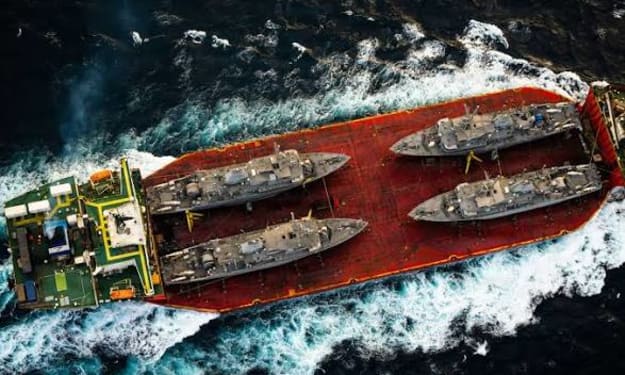
Last year, the United States Navy officially decommissioned a fleet of minesweepers that had been stationed in the Middle East, concluding decades of service aimed at safeguarding critical maritime routes in one of the world’s most strategically important regions. These vessels, which included Avenger-class minesweepers, played a crucial role in ensuring the safety of naval and commercial traffic, countering the threat of naval mines, and supporting coalition operations. Minesweepers are specialized ships designed to detect and neutralize naval mines, which are explosive devices placed in waterways to disrupt shipping and military operations. In the Middle East, particularly in the Persian Gulf and surrounding waters, these ships were tasked with protecting vital oil shipping lanes, military supply routes, and key ports from potential threats posed by adversaries. According to Navy officials, the decommissioned minesweepers were deployed for a range of missions, including mine countermeasure exercises, port security operations, and joint drills with regional partners. “These vessels have served as a critical first line of defense, ensuring safe navigation for both military and civilian vessels,” said Rear Admiral James Goldrick, who oversees maritime security operations in the region. “Their contributions have been invaluable in maintaining stability and operational readiness.” During their service, the minesweepers used a combination of sonar systems, remotely operated vehicles (ROVs), and mechanical sweeping gear to detect and clear mines. This capability was particularly important in the Persian Gulf, a narrow waterway where even a small naval mine could severely disrupt maritime traffic and the global oil supply. Their operations required close coordination with coalition partners, including the navies of the United Kingdom, Saudi Arabia, and other regional allies. The decommissioning process involved carefully retiring the ships from active service, removing sensitive equipment, and transferring or scrapping vessels according to military regulations. Many of the minesweepers had served for decades, and technological advancements had rendered some systems outdated compared to newer mine countermeasure platforms, including unmanned surface vessels (USVs) and advanced sonar systems. While these ships are no longer in operation, their legacy continues through training programs and lessons learned that have informed the Navy’s modern mine countermeasure strategies. Crews trained on these vessels developed expertise in navigation, mine detection, and coordination under potentially hostile conditions, skills that are now being transferred to personnel operating next-generation platforms. The role of minesweepers in the Middle East was particularly critical during periods of heightened tension, when adversaries threatened the Gulf’s shipping lanes with the potential deployment of mines. Their presence acted as both a deterrent and a practical measure to ensure uninterrupted flow of oil and commerce. Naval analysts point out that the retirement of these vessels reflects a broader shift in naval strategy, moving toward unmanned systems and multi-mission ships that can handle mine countermeasures while performing other operational tasks. Despite their decommissioning, the US Navy remains committed to maintaining security in the region. Newer platforms, such as the Independence-class littoral combat ships, equipped with modular mine countermeasure packages, are gradually replacing the traditional minesweepers. These vessels use advanced technologies, including unmanned underwater vehicles (UUVs) and autonomous systems, to detect and neutralize threats more efficiently and with reduced risk to personnel. Experts highlight that the minesweepers’ retirement does not signal a reduction in the Navy’s commitment to the region. Instead, it reflects an adaptation to modern naval warfare, where unmanned and highly networked systems can perform tasks that previously required manned vessels. “The mission remains the same: to ensure maritime freedom of navigation and protect commercial shipping,” said one naval strategist. “We are simply using new tools to achieve it more effectively.” Over their decades of service, the Middle East-deployed minesweepers completed thousands of operational hours, conducted joint exercises with allied navies, and played a critical role in securing one of the world’s most vital maritime regions. Their crews often worked in challenging conditions, including extreme heat, tight operational areas, and periods of geopolitical tension, demonstrating professionalism and dedication. Looking ahead, the Navy plans to expand its use of unmanned systems and integrate new mine countermeasure capabilities into the fleet. Lessons learned from the retired minesweepers will continue to inform doctrine, training, and operational planning, ensuring that future personnel can respond effectively to mine threats in both the Middle East and other strategic theaters. The decommissioning of these minesweepers marks the end of an era for the US Navy in the Gulf, but their contributions remain a cornerstone of maritime security in the region. As technology evolves, the legacy of these vessels and their crews lives on in the Navy’s ongoing mission to safeguard critical waterways, protect global commerce, and support coalition partners in maintaining regional stability. By retiring the old ships and integrating modern platforms, the US Navy aims to continue projecting strength, ensuring safe navigation, and adapting to the evolving maritime threats of the 21st century.
By Fiaz Ahmed a day ago in The Swamp



Comments
There are no comments for this story
Be the first to respond and start the conversation.