
Next Buys Shoe Chain Russell & Bromley, but 33 Shops at Risk
“Next Expands into Footwear Market with Russell & Bromley Acquisition Amid Store Closures”
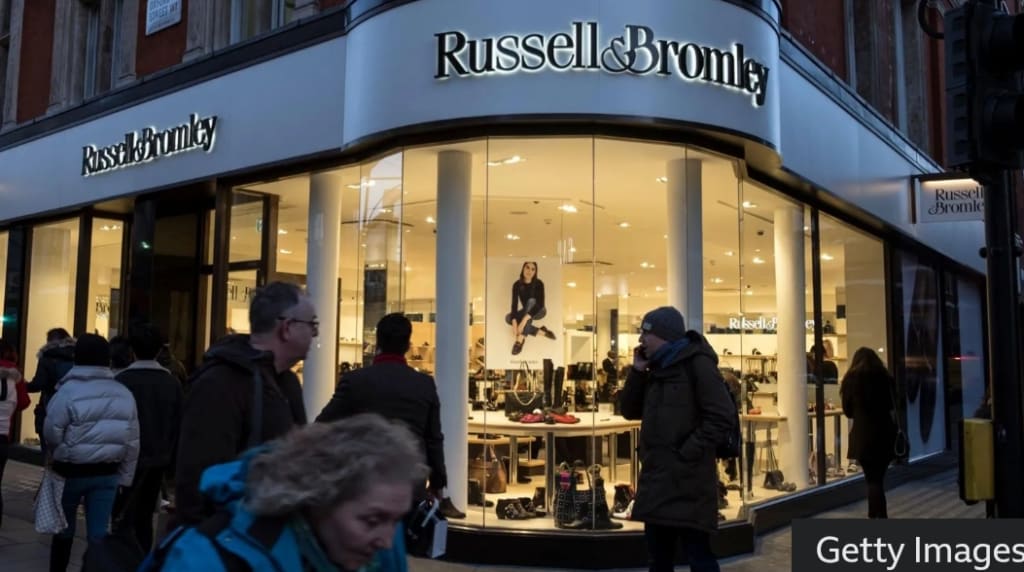
British retail giant Next has confirmed its acquisition of the iconic shoe retailer Russell & Bromley, a deal that has attracted significant attention in the retail sector. However, alongside the excitement, the announcement also comes with warnings: 33 stores are reportedly at risk of closure, raising concerns about the impact on jobs and the UK high street.
The Acquisition Deal
Next, known for its high-street clothing and homeware stores, has expanded into footwear by acquiring Russell & Bromley, a brand with a long-standing reputation for quality shoes. The acquisition allows Next to diversify its product portfolio and strengthen its position in the competitive footwear market.
Russell & Bromley, established in the 19th century, has long catered to premium customers in London and other major cities. The chain’s acquisition by Next is part of a broader trend of consolidation in the retail sector, where larger players acquire smaller chains to increase market share and operational efficiency.
Shops at Risk
Despite the deal, reports indicate that 33 Russell & Bromley locations may face closure. The potential closures are being evaluated as part of a strategic review to align the acquired stores with Next’s operational model and profitability targets.
Industry analysts note that while acquisitions often promise growth and brand synergy, they can also lead to consolidation, especially where overlapping markets or underperforming stores exist. Employees and customers alike are concerned about job security and local access to stores.
Impact on the UK Retail Sector
The acquisition highlights both opportunities and challenges in the UK retail sector, which has been undergoing significant transformation:
E-commerce Growth: Online shopping continues to rise, prompting retailers to streamline physical locations and invest in digital platforms.
High Street Challenges: Rising rents, business rates, and changing consumer habits have put pressure on traditional high-street stores, contributing to closures.
Consolidation Trend: Larger companies like Next are acquiring smaller chains to increase efficiency, diversify product offerings, and maintain competitiveness.
The Russell & Bromley deal reflects these dynamics, illustrating how retail consolidation can both preserve and disrupt businesses.
Employee and Customer Concerns
For employees, the potential closure of 33 shops raises fears over redundancies and job security. Next has stated that it will consult with staff and unions, aiming to minimize negative impacts.
Customers also face uncertainty, as store closures could reduce local access to the premium footwear brand. Loyal Russell & Bromley shoppers may need to rely more heavily on online services or visit fewer locations.
Next’s Strategy and Market Position
Next’s move to acquire Russell & Bromley aligns with its long-term strategy of diversification. By incorporating a recognized footwear brand, Next can:
Expand Product Range: Offer customers a broader selection of high-quality shoes alongside clothing and homeware.
Leverage Brand Equity: Russell & Bromley’s heritage and reputation provide a premium dimension to Next’s existing offerings.
Enhance E-Commerce Integration: Next can integrate Russell & Bromley into its online platform, potentially reaching a wider audience beyond high-street shoppers.
Financial Considerations
The financial terms of the acquisition have not been fully disclosed, but industry insiders suggest that Next aims to achieve both short-term profitability and long-term growth from the deal. Closing underperforming stores is likely part of a cost-management strategy to optimize the acquisition’s financial returns.
Economists note that while store closures may seem negative, such measures can be necessary to ensure the overall sustainability of the business in a challenging retail environment.
Consumer Trends and Retail Evolution
The acquisition also underscores shifting consumer trends. Footwear buyers increasingly prioritize:
Convenience: Online shopping and home delivery have become essential.
Quality and Brand Recognition: Consumers are willing to pay for trusted premium brands.
Experience: Physical stores must provide an engaging shopping experience to attract foot traffic.
Next’s strategy appears to combine these trends by leveraging Russell & Bromley’s brand equity while enhancing digital reach, ensuring the brand remains relevant in a rapidly evolving market.
Future Outlook for Russell & Bromley
The next steps will determine how many stores remain operational, how the brand is positioned within Next’s portfolio, and how the workforce is affected. Retail experts expect:
Some stores may be rebranded or integrated into Next’s existing locations.
E-commerce may become a primary sales channel, reducing dependence on physical stores.
Strategic marketing could reinvigorate the brand, attracting new customers while retaining loyal shoppers.
Conclusion
Next’s acquisition of Russell & Bromley represents a significant move in the UK retail sector, combining heritage and modern retail strategy. While the potential closure of 33 stores raises concerns, the deal also offers opportunities for brand growth, market expansion, and operational efficiency.
As the retail landscape evolves, acquisitions like this illustrate the balancing act between preserving tradition and embracing modern business models. For consumers, employees, and the broader industry, the coming months will reveal how this historic footwear brand adapts to Next’s ambitious vision.
About the Creator
Keep reading
More stories from Aarif Lashari and writers in The Swamp and other communities.
UK Inflation Rises for First Time in Five Months to 3.4% in December
The United Kingdom has seen a rise in inflation for the first time in five months, with December figures reaching 3.4%, according to the Office for National Statistics (ONS). The increase, largely driven by higher prices for tobacco, airfares, and other consumer goods, has raised concerns for both policymakers and households as the UK faces a challenging economic environment.
By Aarif Lashariabout 10 hours ago in The Swamp
Europe Direct Drive Wind Turbine Market Size and Forecast 2025–2033
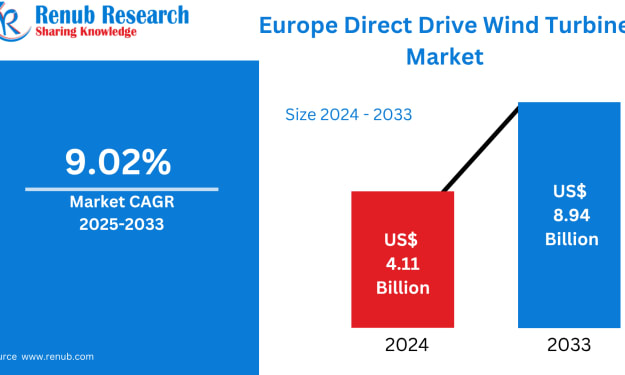
Market Snapshot The Europe Direct Drive Wind Turbine Market is anticipated to reach US$ 8.94 billion in 2033 from US$ 4.11 billion in 2024, growing at a CAGR of 9.02% during 2025–2033. This expansion is driven by rising investments in renewable energy, supportive government policies, and growing demand for efficient, low-maintenance turbine systems. As Europe accelerates toward carbon-neutral targets, direct drive technology is emerging as a cornerstone of its sustainable energy future.
By Marthan Sir7 days ago in The Swamp
Royal and French Navies Train Shipborne Drones in the Mediterranean: A Glimpse into the Future of Naval Warfare
The Mediterranean Sea has once again become a proving ground for modern naval innovation as the Royal Navy and the French Navy conduct joint exercises involving shipborne drones. These drills signal a decisive shift in how maritime powers are preparing for future conflicts—where uncrewed systems, artificial intelligence, and networked warfare will play a central role. As geopolitical tensions rise and naval operations become more complex, both nations are investing heavily in remotely piloted and autonomous systems to enhance surveillance, strike capability, and fleet protection. The recent Mediterranean exercise highlights how traditional naval forces are evolving to meet 21st-century threats. Why Shipborne Drones Matter Shipborne drones—whether launched from destroyers, frigates, or aircraft carriers—offer navies a powerful advantage. Unlike crewed aircraft, drones can operate for longer periods, take greater risks, and be deployed rapidly without endangering human life. In the joint drills, British and French warships tested uncrewed aerial vehicles (UAVs) and uncrewed surface systems designed for tasks such as: Maritime surveillance Intelligence, surveillance, and reconnaissance (ISR) Target acquisition Force protection Electronic warfare support By training together, both navies aim to ensure that their drone systems are interoperable, capable of sharing data seamlessly during real-world operations. A Strategic Partnership at Sea The Royal Navy and the French Navy already share one of Europe’s closest defense partnerships. From carrier strike cooperation to nuclear deterrence coordination, the two forces have a long history of working side by side. This latest drone-focused exercise strengthens that partnership by addressing a critical question: how can allied navies integrate uncrewed systems into joint operations without disrupting command structures or safety protocols? During the drills, operators practiced launching and recovering drones from moving ships—one of the most technically challenging aspects of naval drone operations. The exercises also tested how drone data feeds into ship combat management systems, allowing commanders to make faster, better-informed decisions. The Mediterranean: A Testing Ground The Mediterranean is an ideal environment for such trials. It is one of the world’s busiest maritime regions, featuring: Heavy commercial shipping traffic NATO and non-NATO naval presence Proximity to conflict zones in the Middle East and North Africa Operating drones in this complex environment allows navies to test not just technology, but rules of engagement, deconfliction procedures, and cyber resilience. Officials involved in the drills emphasized that the exercises were not aimed at any single adversary. Instead, they are part of a broader effort to ensure maritime security, freedom of navigation, and deterrence in an increasingly contested domain. From Manned Fleets to Hybrid Forces Both the UK and France are transitioning toward hybrid naval fleets, where crewed ships operate alongside autonomous and semi-autonomous systems. This approach allows navies to extend their reach without dramatically increasing fleet size or personnel. For the Royal Navy, shipborne drones are already being tested aboard Type 23 and Type 45 vessels. France, meanwhile, has invested heavily in naval drone programs as part of its future fleet modernization. Training together accelerates learning on both sides, helping commanders understand: What drones can realistically achieve Where human oversight remains essential How to balance autonomy with accountability Implications for NATO and Beyond The success of these exercises has implications far beyond the Mediterranean. As NATO places greater emphasis on multi-domain operations, lessons learned from UK-French cooperation could shape alliance-wide standards for naval drones. Future conflicts are likely to feature swarm tactics, electronic warfare, and contested communications. Practicing now ensures allied navies are not caught unprepared. Moreover, visible cooperation sends a clear message: European naval powers are serious about maintaining technological relevance and collective security in an era of rapid military change. Looking Ahead As shipborne drone technology continues to mature, exercises like this will become more frequent—and more complex. Future drills may involve larger drone swarms, underwater autonomous vehicles, and AI-assisted decision-making tools. For now, the Royal Navy and French Navy have taken an important step forward. By training together in the Mediterranean, they are not just testing machines—they are reshaping the future of naval warfare, one unmanned system at a time
By Fiaz Ahmed Brohi4 days ago in The Swamp
Rachel Reviews: The Spiral Archive by Pieter Hendrik
It's difficult for me to know where to start with a review of this book as it was, for me, an entirely unique experience and one that I'll probably never have again. I don't want that to be interpreted as unenjoyable but it has left me scratching my head a little and ruminating on its content, its themes and its characters.
By Rachel Deeming4 days ago in BookClub



Comments
There are no comments for this story
Be the first to respond and start the conversation.