finance
Money talks; reviewing the global economy, government spending, taxes, and economic policy that affect our social and political future.
Silver Price Per Ounce: A Complete Guide to Market Trends and Future Outlook. AI-Generated.
Silver has always held a unique position in the global financial system. Known as both a precious metal and an essential industrial resource, silver plays a dual role that strongly influences its price per ounce. In recent years, the silver market has gained renewed attention from investors, analysts, and industries alike due to sharp price movements, rising industrial demand, and global economic uncertainty.
By Ayesha Lashariabout a month ago in The Swamp
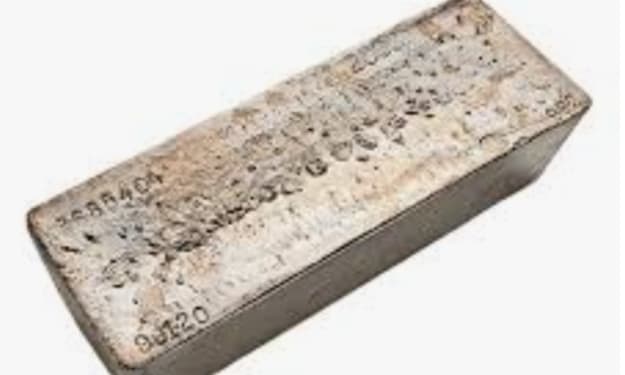
Gold Slump Eases as Traders Weigh Unwinding of ‘Crowded’ Bets. AI-Generated.
After weeks of dramatic swings in global markets, gold has finally shown signs of stabilizing. The recent slump that rattled traders and investors worldwide appears to be easing, as market participants reassess positions and reconsider the so-called “crowded bets” that had amplified volatility. But what exactly drove gold’s decline, and why is the market now regaining its footing? Let’s break down the factors behind this key turning point in precious metals trading.
By Sajida Sikandarabout a month ago in The Swamp
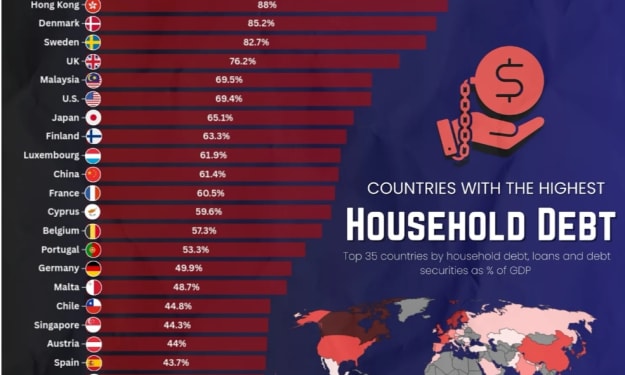
Charted: The 35 Countries with the Highest Household Debt. AI-Generated.
Household debt has become a major economic indicator, reflecting not only the financial habits of citizens but also broader economic trends in each country. From mortgages and personal loans to credit cards and other forms of borrowing, household debt levels provide insight into consumer confidence, government policies, and potential financial vulnerabilities.
By Aarif Lashariabout a month ago in The Swamp
Microsoft Down. AI-Generated.
When Microsoft services suddenly went down, millions of users across the globe felt the impact almost instantly. From businesses unable to access cloud data to individuals locked out of email and productivity tools, the outage served as a powerful reminder of how deeply integrated Microsoft has become in everyday life. What began as a technical failure quickly turned into a worldwide disruption that affected workplaces, schools, and governments alike.
By Sajida Sikandarabout a month ago in The Swamp
The Rise of Fried Chicken Restaurants: A Global Phenomenon. AI-Generated.
Introduction: The Universal Appeal of Fried Chicken Fried chicken—crispy, juicy, and irresistibly delicious—has evolved from a Southern American staple into a beloved global dish. Whether served in the comfort of a family kitchen or as the centerpiece of a fast-food chain, fried chicken has become a universal comfort food that transcends borders. In the past few decades, fried chicken restaurants have popped up everywhere, from the heart of bustling cities to remote corners of the world. But how did fried chicken grow into such a dominant food trend? What makes it so universally loved?
By Ayesha Lashariabout a month ago in The Swamp
Why Fried Chicken Restaurants Continue to Rule the Comfort Food Scene. AI-Generated.
Few foods inspire the same level of devotion as fried chicken. Crispy on the outside, tender on the inside, and bursting with flavor, it has become a symbol of comfort and celebration across cultures. Fried chicken restaurants, in particular, have carved out a special place in the culinary world by transforming a simple dish into an unforgettable experience. These establishments do more than serve food—they preserve tradition while embracing innovation.
By Sajida Sikandarabout a month ago in The Swamp
U.S. Government Shutdown. AI-Generated.
A U.S. government shutdown is one of the most visible signs of political deadlock in Washington. When it happens, it disrupts federal services, sends hundreds of thousands of workers into uncertainty, and creates ripple effects across the economy. Although the term often trends during moments of crisis, shutdowns are not rare events—they are the result of a specific budget process failing to reach completion.
By Saboor Brohi about a month ago in The Swamp
Lloyds Q4 Results Beat Expectations by 9%. AI-Generated.
Lloyds Banking Group has reported a 9% profit beat in its fourth-quarter results, exceeding analysts’ expectations and demonstrating resilience in a challenging economic environment. The UK’s largest retail bank recorded robust earnings driven by higher net interest margins, disciplined cost management, and improved customer lending, signaling confidence in its strategic direction despite economic headwinds.
By Aarif Lashariabout a month ago in The Swamp
US Dollar Strengthens as Trump Nominates Kevin Warsh as Federal Reserve Chair. AI-Generated.
A Pivotal Moment for the Fed and the Dollar In a move that has captured global attention, President Donald Trump nominated Kevin Warsh to serve as Chair of the U.S. Federal Reserve. The decision immediately sent ripples through the financial markets, with the U.S. dollar strengthening sharply, treasury yields rising, and investors reassessing their expectations for monetary policy in the coming months. The Fed, the United States’ central bank, plays a critical role in shaping the economy, controlling inflation, and influencing global financial markets. As such, the nomination of a new Fed Chair is more than a political decision—it is a signal to markets, businesses, and international observers about the future direction of U.S. monetary policy. Kevin Warsh, known for his experience during the 2008 financial crisis and his reputation as a market-savvy economist, brings a particular philosophy to the role, which investors believe will influence the dollar and broader markets. Kevin Warsh: Background and Experience Kevin Warsh’s career has been defined by high-stakes financial environments and navigating economic crises. His background includes: Education at Harvard University, where he earned a degree in Economics Early experience in investment banking and financial consulting, providing him insights into market mechanics Senior advisory roles in the Federal Reserve, where he contributed to policy decisions during periods of market volatility Warsh’s professional trajectory has made him well-versed in the mechanics of monetary policy and risk management, positioning him as a credible choice for a Fed Chair during a period of global economic uncertainty. Why Markets Reacted to the Nomination 1. Dollar Strengthening The most immediate market reaction to Warsh’s nomination was a strengthening of the U.S. dollar against major currencies. Analysts attribute this to several factors: Hawkish Expectations: Warsh is perceived as more inclined toward tightening monetary policy, controlling inflation, and maintaining the strength of the dollar Investor Confidence: Markets interpret his experience during previous financial crises as an ability to maintain economic stability, which increases confidence in U.S. assets Interest Rate Anticipation: A stronger dollar typically reflects expectations of higher interest rates relative to other economies The dollar’s movement has implications for imports, exports, and global financial flows. A stronger dollar can reduce import costs for American consumers, but may also pressure emerging market economies and commodity prices. 2. Treasury Yields Rise Alongside the dollar, U.S. Treasury yields climbed, reflecting investor expectations that Warsh may advocate for interest rates that prevent overheating of the economy. Rising yields often: Make borrowing more expensive for corporations and consumers Attract foreign investment into U.S. government bonds Signal market confidence in the Fed’s ability to manage inflation The combination of higher yields and a stronger dollar underscores investor belief in Warsh’s commitment to financial stability. 3. Stocks and Risk Assets Equity markets showed mixed reactions. While some sectors, particularly financials, welcomed the prospect of a more predictable monetary policy, other risk assets, including technology stocks and cryptocurrencies, experienced modest declines. A tighter monetary policy can affect: Growth-sensitive sectors like tech and real estate Non-yielding assets such as gold and silver, which fell in value as investors moved toward interest-bearing assets These movements reflect the complex balance markets strike between stability, growth, and interest rate expectations. Kevin Warsh’s Policy Philosophy Warsh is known for a balanced, data-driven approach, combining market awareness with caution. Analysts highlight key aspects of his likely policy stance: Inflation Control: Warsh has historically emphasized preventing runaway inflation, which could strengthen the dollar and support long-term growth Financial Stability: His experience in crisis management suggests a focus on risk mitigation in banking and markets Measured Decision-Making: Warsh is not expected to make sudden or unpredictable policy moves, which markets typically favor This philosophy explains why traders and investors reacted with a positive sentiment for the dollar, seeing his nomination as a sign of steady and competent economic stewardship. Global Implications of the Nomination The Fed Chair’s decisions impact not only the U.S. economy but also the global financial system: Emerging Markets: Rising U.S. yields and a stronger dollar could pressure debt-servicing costs in countries with dollar-denominated debt Commodity Prices: Metals, oil, and other commodities often react to a stronger dollar, affecting global supply chains International Trade: Exporters may face challenges as their goods become more expensive for U.S. consumers Kevin Warsh’s leadership may therefore reshape international markets depending on his approach to interest rates and monetary policy. Historical Context: Fed Chairs and Market Confidence The Fed Chair’s role is unique because their statements and policy actions directly influence market psychology. For example: Alan Greenspan: Known for his careful guidance during volatile periods, instilled confidence in markets Ben Bernanke: Guided the Fed through the 2008 financial crisis, emphasizing crisis response Janet Yellen: Focused on gradual policy shifts, balancing growth and inflation Warsh, shaped by the 2008 crisis, is expected to combine analytical rigor with market prudence, reassuring investors that the Fed will act responsibly. Why the Dollar Reacted So Quickly Market participants often price in expectations long before policies take effect. Warsh’s nomination likely caused immediate reactions due to: Perceived hawkishness: Investors anticipate tighter monetary policy Crisis credibility: His past experience suggests a capable steward of the economy Market psychology: Traders adjust positions quickly to reflect potential Fed moves The speed of the reaction is typical for high-stakes financial news, where sentiment and perception can move markets faster than policy itself. Potential Risks and Challenges While the nomination has been positively received, there are risks: Global Economic Volatility: Rising rates could slow global growth and impact trade Political Pressures: The Fed must maintain independence, even as political narratives around Warsh’s appointment emerge Market Overreaction: Investors may have priced in too much optimism, risking a correction if policies differ from expectations These risks mean that Warsh will need to balance market expectations with real economic conditions, a delicate task for any Fed Chair. The Road Ahead for Investors Investors and financial planners are advised to: Monitor Treasury yields and dollar movements closely Prepare for potential interest rate adjustments affecting loans, mortgages, and investments Assess the impact on commodities, emerging markets, and equities Follow Warsh’s early speeches and Fed statements for guidance Long-term, Warsh’s tenure may stabilize the U.S. dollar, influence global markets, and reshape investor strategies worldwide. Conclusion: A Critical Juncture for U.S. Monetary Policy Kevin Warsh’s nomination as Federal Reserve Chair is more than a political choice—it is a market-moving event with immediate and far-reaching implications. The dollar’s strength, rising yields, and cautious equity responses reflect a combination of expectation, confidence, and strategic anticipation. As Warsh prepares to take the helm, the world watches closely. His decisions will not only influence domestic growth and inflation but also global financial stability, investor sentiment, and international trade flows. In a period marked by economic uncertainty and market sensitivity, Warsh’s leadership will be a key factor in determining whether markets remain calm or face volatility, making this nomination one of the most consequential for investors in recent years.
By Zahid Hussainabout a month ago in The Swamp