agriculture
Tackling food waste, research and global debates about agricultural sustainability and how to feed our population while still saving some for later.
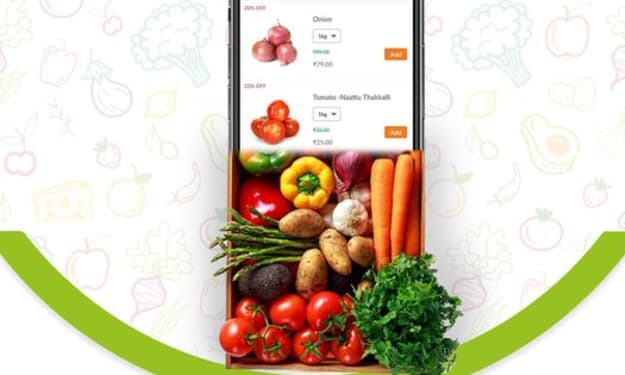
Ansio Fresh's Sustainable Farming & Rural Empowerment
India is an agrarian nation. Agriculture & allied industry plays a pivotal role in building up the Indian Economy. About 55% of the population is involved in Rural farming and agricultural related activities. Leaders come and go but the life of the farmer involved typically in the agricultural activity hasn't changed much. Ansio Fresh, the Online Supermarket in Chennai has come up with an innovative & sustainable strategy to improve the lives of the rural population.
By Sofia Sofi5 years ago in The Swamp
National Mission for Sustainable Agriculture
National Mission for Sustainable Agriculture (NMSA) is a part of the National Action Plan on Climate Change (NAPCC) that promotes sustainable agriculture. It aims to enhance agricultural productivity while maintaining soil health, efficient usage of water and conserving natural resources by using promoting techniques like organic farming, soil tests etc. as well as it also focuses on increasing the income of Indian farmers.
By Chelsi Ved5 years ago in The Swamp
The Dawn of a Green Evolution
Throughout the past century our views regarding the environment have changed radically. Western mentalities tended to see the environment as a resource that is meant to be used and exploited for profit and gain. Those who cared for the environment were in the minority and no regulations or expectations truly stopped corporations or governments from destroying and polluting fragile environments. Nowadays though, especially in first world nations, you see a very strong focus on creating sustainable and eco-friendly products.
By Rico Verse6 years ago in The Swamp
BRINGING FOOD PRODUCTION, STORAGE AND DISTRIBUTION TO THE BLOCKCHAIN
GLOBAL FOOD NETWORK (GFN) BRINGING FOOD PRODUCTION, STORAGE AND DISTRIBUTION TO THE BLOCKCHAIN The Food Coin (TFC) FACT: “The global food system is dysfunctional. People go to bed hungry in some countries while others consume too many calories and throw away massive amounts of food. Opportunities to fix the broken food system are urgently needed”
By Joshua Jogo6 years ago in The Swamp
Famine, The Third Horseman Of The Apocalypse
Famine, the third Horseman of the Apocalypse is galloping onward. Can we stop him in time? That remains to be seen. But, we do have a chance. But, only if we recognize how dire the world's food supply really is. This Pandemic has only intensified the shortages of food all over the world. And, yet we for the most part are only focus has been on stopping the spread of this very infectious virus. We can not wait until another catastrophic disaster hits before we do something about it right now. And that is immediately usher in protective measures to secure our food supply will be available when we actually need it. We are already seeing acute signs of shortages of food and rising prices. Now, is the time to act before it really is too late.
By Dr. Williams6 years ago in The Swamp
The dying planet: its a rich man's world
In the fight to keep our Earth turning, its money that makes the world go round. The world's richest 1% encompasses 44% of global wealth and some of the members of this exclusive club, coincidentally (or not-so-coincidentally) happen to be some of the world's most influential. Jeff Bezos, Mark Zuckerberg and the like have the ultimate power for change - which makes it all the more damaging that they contribute the least to the cause. Greta Thunberg and the Extinction Rebellion have done well to inspire ordinary folk like you and me to do their own bit for the environment, however, Greta did not set out to do this, in fact, her goal was to arouse change in the men with the moolah: the celebrities, the CEOs, the biggest influencers.
By Laura Simons6 years ago in The Swamp
Subsidizing Non-Meat Farming
As we all know eating too much of anything is bad for you. Although, you can eat much more vegetables than meat before it becomes bad for you. Eating meat might not be bad for you in moderation but we consume so much of it. It can lead to a number of illnesses that are totally preventable.
By Brian Anonymous6 years ago in The Swamp
Solar And Wind Power Have Become Affordable!
In today’s world of constant change and technological advancements, we have witnessed a rise in pollution, and exhaustion of natural resources. The world is getting hotter, while we continue to pollute and degrade our planet. Ecosystems are being destroyed, and wastelands are filling up to their brim. To put it into perspective, according to National Geographic scientists, Alaskan glaciers are melting one hundred times faster than was previously thought. The world’s population is rising exponentially, leading to an increase in the number of vehicles on roads, and in turn the consumption of petrol and diesel.
By Michal Kuchař6 years ago in The Swamp