
"Superpowers at a Crossroads: The Future of U.S.–China Relations in 2025"
"How the World’s Two Giants Are Shaping a New Global Order"


Superpowers at a Crossroads: The Future of U.S.–China Relations in 2025
How the World’s Two Giants Are Shaping a New Global Order
In the ever-shifting landscape of international politics, few relationships carry as much weight—or as much risk—as that between the United States and China. These two global giants, wielding unmatched economic, military, and technological influence, stand at a pivotal crossroads in 2025. Their interactions do more than affect their own nations; they ripple across continents, shaping global markets, alliances, security frameworks, and the future of international cooperation.
A Relationship Built on Competition and Codependence
Since China’s economic liberalization in the late 20th century, the U.S.–China relationship has oscillated between cautious engagement and intense rivalry. The U.S. played a key role in China’s accession to the World Trade Organization in 2001, hoping economic integration would encourage political openness. But instead of liberalization, China grew more assertive, and its rise has challenged American primacy on multiple fronts.
Today, the two countries are deeply economically intertwined yet politically estranged. Bilateral trade still amounts to hundreds of billions of dollars annually, but tariffs, export bans, and national security concerns have fractured the trust that once underpinned cooperation. The U.S. accuses China of intellectual property theft, unfair trade practices, and currency manipulation, while China views America’s actions as attempts to contain its rightful ascent.
The Taiwan Flashpoint and Military Tensions
No issue exemplifies the fragility of U.S.–China relations more than Taiwan. Beijing considers the self-governing island a breakaway province and has not ruled out the use of force to achieve reunification. The U.S., while maintaining a "One China" policy, continues to support Taiwan’s democratic system and provides arms to bolster its defense.
Military tensions in the South China Sea and Taiwan Strait have escalated, with close encounters between naval forces and increased military drills. The Indo-Pacific region has become a theater for strategic posturing, with the U.S. strengthening alliances with Japan, South Korea, Australia, and India through forums like the Quad.
The Battle for Technological Dominance
Beyond territorial disputes, the U.S.–China rivalry is increasingly defined by the race for technological supremacy. From 5G networks and artificial intelligence to semiconductors and quantum computing, both nations are investing heavily to outpace the other. The U.S. has restricted Chinese tech firms like Huawei from accessing advanced chip technologies, citing security concerns. In response, China has accelerated efforts to achieve self-sufficiency in critical sectors.
This tech arms race is not just economic—it's ideological. It reflects broader concerns about data governance, surveillance, digital freedom, and the role of the state in shaping innovation. The outcome will determine whose standards and values dominate the next generation of global infrastructure.
Climate: The One Area of Potential Cooperation
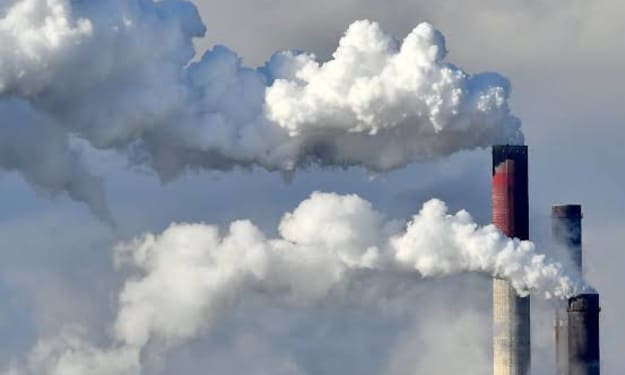
Amid the competition, climate change remains a rare domain of shared interest. As the world’s two largest carbon emitters, the U.S. and China hold the key to meaningful global climate progress. While their climate diplomacy is often marred by broader tensions, both countries have signaled willingness to collaborate on clean energy, emissions reduction, and green technology.
In late 2024, the two sides resumed high-level climate talks, focusing on methane reduction and sustainable finance. Although modest, such engagements hint at the possibility of compartmentalized cooperation—where both sides work together on existential global issues, even as strategic rivalry continues elsewhere.
A New Global Order in the Making
As we move further into 2025, it’s clear the old world order—centered on unchallenged U.S. dominance—is giving way to a multipolar reality. China is carving out a leadership role in the Global South, offering an alternative to the Western model through infrastructure programs like the Belt and Road Initiative. Meanwhile, the U.S. is reinvigorating alliances and promoting a rules-based international order.
The world is watching as these two superpowers navigate a path forward. Will they settle into a “cold peace” of managed competition, or stumble into open confrontation? Can multilateral institutions mediate their differences, or will new blocs emerge?
Conclusion
The U.S.–China relationship is not merely bilateral—it is global in consequence. How these nations choose to engage with each other will shape the trajectory of war and peace, cooperation and conflict, progress and peril. In 2025, with stakes higher than ever, the world’s two giants must decide: will they lead the world together—or pull it apart?
About the Creator
World politics
shares simple and clear updates on global news, leaders, and events. We cover politics, conflicts, and international stories that shape the world. Stay informed and learn something new every day.
Keep reading
More stories from World politics and writers in The Swamp and other communities.
"The Shifting Landscape of World Politics in 2025"
China’s Expanding Influence in Asia and Beyond In 2025, China's rise as a global superpower is no longer a prediction — it is a living reality. The once unipolar world order dominated by the United States is now being reshaped by a multipolar dynamic, with China playing a leading role. From economic investments and military advancements to diplomatic strategies and cultural outreach, China's influence is stretching far beyond its borders, fundamentally altering global geopolitics.
By World politics 10 months ago in The Swamp
The Forsyth House Fire
Since 1851, Forsyth House has stood on the corner of Union Street and Gordon Street in the heart of Glasgow. Its iconic, or was... because on Sunday 8th of March, 2026, a fire broke out in a small, seemingly un-named shop in the building and tore all that history down. As I write, the rubble is still unsettled and the street is still blocked off. Central Station is quiet on the upper level, and around 30 small businesses have quite literally gone up in smoke.
By S. A. Crawford3 days ago in The Swamp
Germany Germany misses climate targets as emissions barely fall in 2025
Germany has fallen short of its national climate targets after greenhouse gas emissions declined only marginally in 2025, raising fresh concerns about whether Europe’s largest economy can meet its ambitious decarbonization goals in the coming decade. Preliminary estimates from environmental monitoring groups suggest emissions in Germany fell by less than expected last year, marking a slowdown in progress compared with earlier reductions achieved during the energy crisis and pandemic years. The modest decline has sparked criticism from climate advocates and renewed debate within the government over the pace of the country’s energy transition. Officials linked the sluggish progress to several factors, including higher industrial output, increased use of fossil fuels during periods of energy demand, and slower-than-anticipated expansion of renewable power infrastructure. These pressures complicated the country’s efforts to stay on track with targets established under Germany’s national climate law. Slower Emissions Decline Germany had aimed to reduce greenhouse gas emissions significantly by the middle of the decade as part of a broader plan to reach climate neutrality by 2045. However, analysts say the reductions achieved in 2025 were minimal compared with the steep cuts required to meet those targets. The country’s climate framework requires strict annual limits for major sectors including transportation, buildings, industry, and energy production. Several of those sectors are believed to have exceeded their permitted emission levels last year, placing additional pressure on policymakers to introduce corrective measures. Environmental experts note that early gains in emissions reduction were partly driven by temporary circumstances such as reduced economic activity and energy consumption during the pandemic period. As the economy rebounded, structural reforms needed to maintain those reductions have proven more difficult to implement. Energy Transition Challenges Germany’s energy transition, often referred to as Energiewende, aims to rapidly expand renewable energy while phasing out nuclear and coal power. Although renewable generation has grown significantly over the past decade, challenges remain in scaling up infrastructure quickly enough to replace fossil fuels. Wind and solar installations continue to expand across the country, but regulatory hurdles, grid limitations, and local opposition to some projects have slowed development in certain regions. At the same time, fluctuating renewable output has required continued reliance on gas and coal power plants during periods of high electricity demand. Energy analysts say that balancing supply and demand during the transition remains one of the central difficulties for policymakers. Without major improvements in energy storage, grid expansion, and renewable deployment, fossil fuel generation may remain necessary to ensure stability in the power system. Transport and Buildings Under Pressure Two sectors in particular — transportation and buildings — continue to pose serious challenges for Germany’s climate strategy. Road traffic emissions remain stubbornly high due to strong reliance on private vehicles and freight transport powered by diesel and gasoline. Although electric vehicle adoption is increasing, the transition is occurring more slowly than many climate planners had anticipated. Charging infrastructure expansion and consumer adoption rates have become key issues in the national debate over transportation emissions. The buildings sector faces similar obstacles. Heating systems in millions of German homes still rely on natural gas or oil, and efforts to replace them with cleaner alternatives have triggered political controversy over costs and regulatory requirements. European and Global Implications Germany’s climate performance carries significant weight across the European Union, where the country plays a leading economic and political role. The EU has set ambitious emissions reduction targets for member states as part of its broader strategy to combat global climate change. If Germany struggles to meet its national targets, analysts warn it could complicate the bloc’s collective efforts to reduce emissions and maintain credibility in international climate negotiations. Climate groups say stronger policies will be needed to accelerate emissions cuts, including faster renewable energy deployment, stricter efficiency standards, and increased investment in green technologies. Political Debate Intensifies The latest emissions data has already fueled debate within Germany’s governing coalition, where parties differ over the best approach to climate policy. Some leaders argue that more aggressive regulations and subsidies are needed to drive rapid transformation, while others warn that excessive pressure could harm industry and economic competitiveness. Industrial groups have expressed concern that overly strict climate measures could push manufacturing companies to relocate production outside Europe. Environmental advocates, however, argue that delaying action would ultimately prove more costly both economically and environmentally. The Road Ahead Despite the disappointing results for 2025, government officials insist that Germany remains committed to its long-term climate objectives. Additional policies aimed at accelerating renewable deployment, expanding public transportation, and improving energy efficiency are expected to be introduced in the coming years. Experts say the next few years will be critical for determining whether Germany can regain momentum in cutting emissions. Achieving the country’s climate targets will require sustained investment, political consensus, and major structural changes across key sectors of the economy. For now, the limited emissions decline in 2025 serves as a warning sign that the path toward climate neutrality may prove more complex — and more contested — than originally anticipated.
By Fiaz Ahmed 2 days ago in The Swamp
My First Time Skiing and I Got Lost, Alone, in the French Alps
Looking back, I can trace some of my life’s biggest adventures to a simple action from my sister. She’d introduced me to Tommy (a very long time ago), a colleague of hers, who had overshared his penchant for Italian-looking women, and I ticked that box.
By Chantal Christie Weiss3 days ago in Humans



Comments (1)
Nice