
"The Shifting Landscape of World Politics in 2025"
China’s Expanding Influence in Asia and Beyond

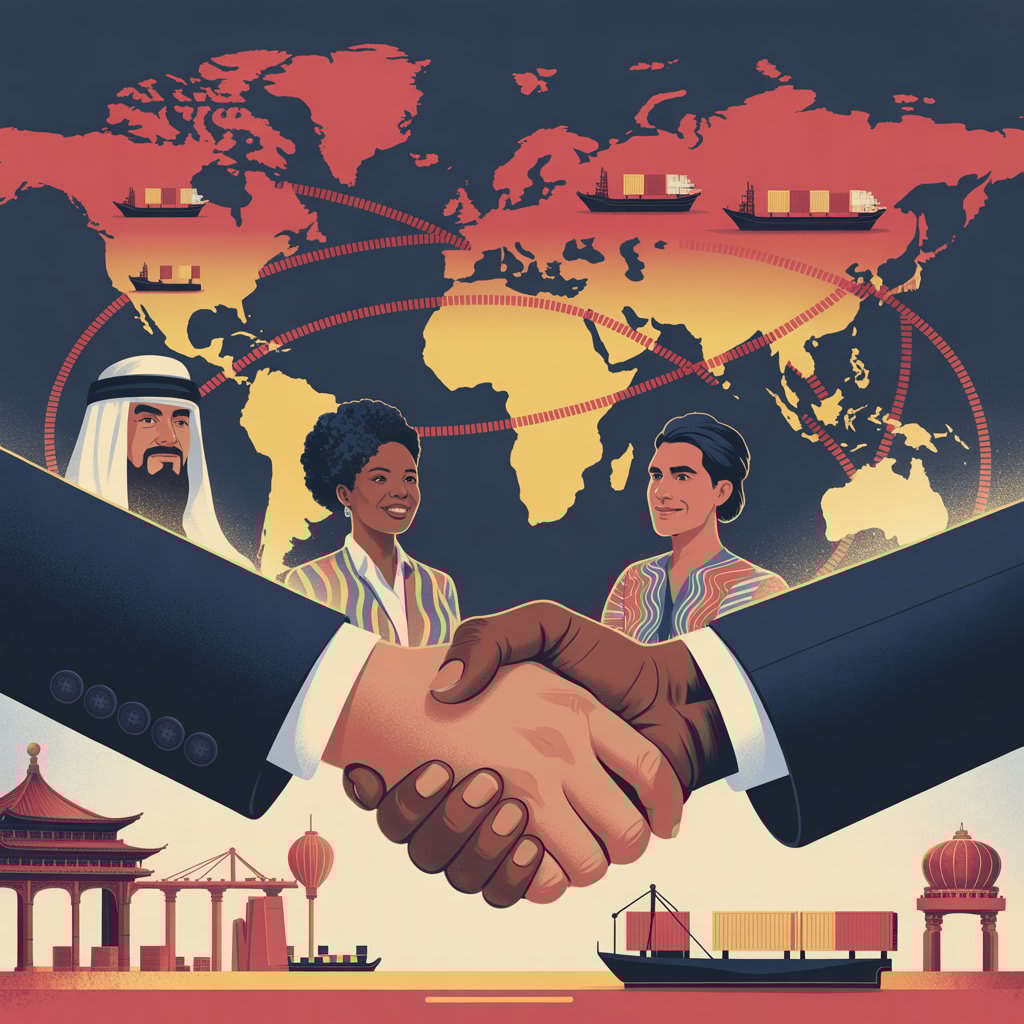
China’s Expanding Influence in Asia and Beyond
In 2025, China's rise as a global superpower is no longer a prediction — it is a living reality. The once unipolar world order dominated by the United States is now being reshaped by a multipolar dynamic, with China playing a leading role. From economic investments and military advancements to diplomatic strategies and cultural outreach, China's influence is stretching far beyond its borders, fundamentally altering global geopolitics.
Economic Expansion Through the Belt and Road Initiative
At the heart of China’s global strategy lies the Belt and Road Initiative (BRI), a massive infrastructure and investment project launched in 2013. Now in its second decade, the BRI has connected more than 140 countries through roads, railways, ports, and digital infrastructure. It has allowed China to secure trade routes, gain access to critical resources, and extend its economic presence into regions traditionally dominated by Western powers.
In Asia, countries like Pakistan, Sri Lanka, and Laos have become heavily reliant on Chinese investments. For instance, the China-Pakistan Economic Corridor (CPEC) has not only enhanced trade between the two nations but also given China strategic access to the Arabian Sea. Meanwhile, in Africa and Latin America, China continues to fund infrastructure projects and offer loans that come with fewer political strings than Western aid — although critics warn of a potential “debt trap” diplomacy.
Military Modernization and Strategic Posturing
China's military, particularly the People’s Liberation Army Navy (PLAN), has undergone rapid modernization. The South China Sea remains a central point of tension, as Beijing continues to assert its claims over disputed territories, building artificial islands and militarizing them despite international criticism and rulings from The Hague.
Beyond its immediate region, China has increased its presence in the Indian Ocean, with a military base in Djibouti and regular naval deployments in strategic chokepoints. Its expanding blue-water navy is designed not only to protect trade routes but also to project power far from its shores. This has raised concerns in neighboring countries and drawn the attention of the United States and its allies.
Diplomacy with “Chinese Characteristics”
Beijing’s diplomatic approach combines traditional statecraft with economic leverage and soft power. Through platforms like the Shanghai Cooperation Organization (SCO) and the recently revived BRICS bloc, China seeks to reshape global governance structures to be less Western-centric. It champions “non-interference” in domestic affairs — a stance attractive to many authoritarian regimes — and presents itself as a counterbalance to U.S. influence.
China has also stepped up its role as a mediator in international conflicts. In 2023, it brokered a landmark diplomatic thaw between Iran and Saudi Arabia, demonstrating its growing clout in the Middle East. Such actions position Beijing not just as a global power, but as a global peace broker — a role long monopolized by the West.
Cultural Soft Power and Global Narratives
Beyond economics and military might, China is actively promoting its culture and political ideology. With state-run media like CGTN and Xinhua expanding their global reach, and Confucius Institutes established in dozens of countries, China is investing in shaping public opinion overseas. The narrative emphasizes harmony, mutual development, and respect for sovereignty — subtly contrasting with what Beijing portrays as Western hypocrisy and interventionism.
At the same time, digital platforms like TikTok (owned by Chinese company ByteDance) have become part of China’s soft power arsenal. Though primarily entertainment platforms, they subtly contribute to cultural normalization and influence among global youth.
Challenges and Pushback
Despite its success, China’s rise is not without resistance. Several countries have grown wary of its economic dominance and political motives. In Southeast Asia, nations like Vietnam and the Philippines are strengthening ties with the U.S. and forming regional alliances to counter Chinese assertiveness. In Europe and the U.S., concerns about human rights, intellectual property theft, and cyber-espionage continue to strain relations with Beijing.
Moreover, the “China model” — combining authoritarian governance with capitalist economics — is viewed with suspicion in democratic societies, especially as Beijing tightens its grip on Hong Kong and cracks down on dissent at home.
Conclusion: A New World Order in the Making
As we move deeper into the 21st century, China’s expanding influence is reshaping not only Asia but the global balance of power. Whether one views this transformation with optimism or concern, it is clear that the world must adapt to a future where China is a central actor. How other nations respond — with cooperation, competition, or confrontation — will determine the course of global politics for decades to come.
About the Creator
World politics
shares simple and clear updates on global news, leaders, and events. We cover politics, conflicts, and international stories that shape the world. Stay informed and learn something new every day.
Keep reading
More stories from World politics and writers in The Swamp and other communities.
I hate America
I Hate America for Helping Israel Let me be clear: when I say “I hate America for helping Israel,” I don’t mean I hate Americans. I don’t hate the ideals of democracy, freedom, or human rights that this country claims to uphold. What I hate is the hypocrisy. I hate the billions in aid sent to a country that continues to occupy, displace, and bomb a stateless, defenseless people. I hate how my government turns a blind eye to Palestinian suffering, and how the media spins tragedy into "self-defense" for one side only.
By World politics 8 months ago in The Swamp
Defense Logistics Market Size and Forecast 2025–2033
Defense Logistics Market Overview The Defense Logistics Market is projected to expand from US$ 163.55 billion in 2024 to US$ 286.33 billion by 2033, registering a CAGR of 6.42% from 2025 to 2033. This growth is being fueled by rising geopolitical tensions, military modernization initiatives, and the increasing need for rapid, technologically advanced supply chain operations. As armed forces worldwide confront evolving threats across land, sea, air, space, and cyber domains, logistics has emerged as a strategic pillar of defense preparedness.
By Janine Root 5 days ago in The Swamp
The Devil's Cut
“Comrade, finally you’re awake.” The voice was smooth, sensual. A flickering incandescent bar was all that lit the white, sterile room. All Vladimir remembered was everything going black. He tried to move his arms and found them strapped to the gurney.
By Matthew J. Fromm5 days ago in Fiction


Comments (1)
Nice