
Starmer and Xi Call for Deeper UK-China Ties as Trump Shakes Up Global Relations
Global uncertainty and shifting U.S. policies push London and Beijing toward renewed dialogue
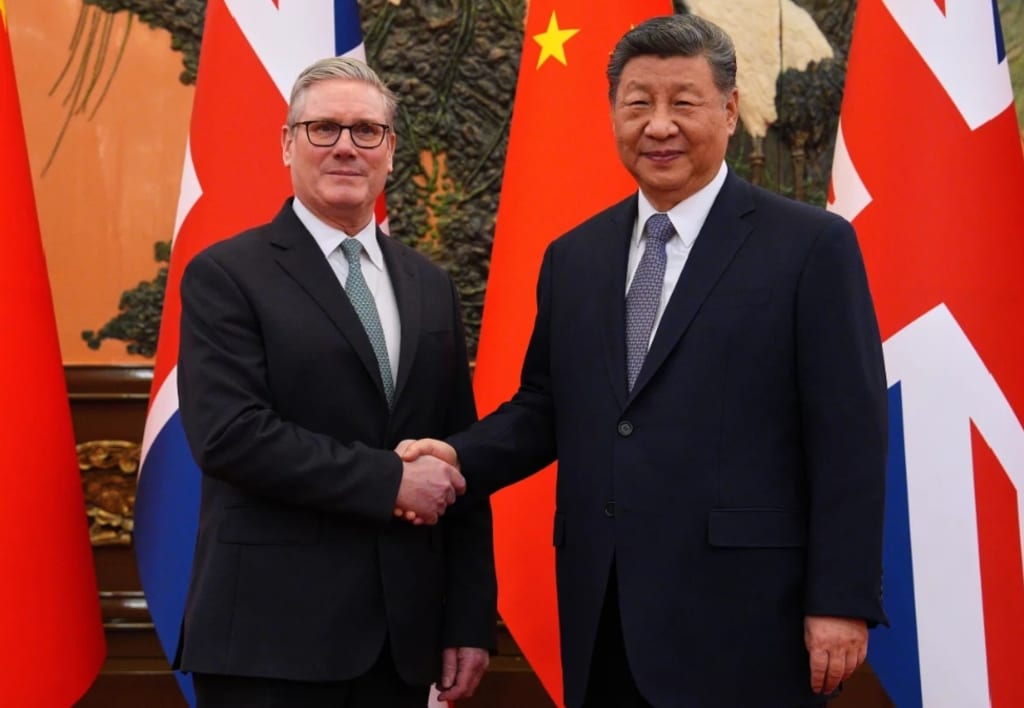
As global politics enters a period of renewed uncertainty, UK Prime Minister Keir Starmer and Chinese President Xi Jinping have made a notable diplomatic move: publicly calling for deeper cooperation between Britain and China. The conversation comes at a moment when former U.S. President Donald Trump’s return to the center of global politics is reshaping alliances, trade strategies, and diplomatic expectations across the world.
The timing of the Starmer–Xi dialogue is no accident. With Trump once again challenging long-standing international norms, many countries are reassessing how they position themselves in an increasingly fragmented global order. For the UK, the renewed outreach to China signals a pragmatic shift — one rooted in economic realities, geopolitical balance, and the desire to maintain influence beyond traditional alliances.
A Changing Global Landscape
Donald Trump’s influence on global relations has historically been disruptive. His “America First” approach challenged multilateral institutions, strained NATO partnerships, and sparked trade disputes with both allies and rivals. As Trump reshapes U.S. foreign policy priorities once again, global leaders are preparing for a world where American commitments may be less predictable.
Against this backdrop, Starmer’s government appears determined to diversify Britain’s international relationships. The UK, still navigating the long-term consequences of Brexit, faces economic pressures at home and competition abroad. Strengthening ties with China — the world’s second-largest economy — offers potential economic benefits, even as it raises political and ethical questions.
What Starmer and Xi Discussed
According to official statements, Starmer and Xi emphasized dialogue, economic cooperation, and stability. Both leaders spoke about improving trade links, encouraging investment, and maintaining open communication channels at a time when global tensions are rising.
For Starmer, the message was carefully balanced. He stressed the importance of engagement without abandoning core values, signaling that cooperation does not mean silence on issues such as human rights or global security. Xi, meanwhile, framed stronger UK-China ties as mutually beneficial, highlighting shared interests in economic growth, climate change, and global development.
The exchange reflects a broader diplomatic trend: engagement rather than isolation, even amid disagreement.
Economic Motivations Behind the Outreach
Economic considerations are central to the UK’s approach. China remains one of Britain’s largest trading partners, particularly in sectors such as technology, higher education, finance, and manufacturing. At a time when global supply chains are under strain and economic growth is fragile, maintaining access to Chinese markets is seen as strategically important.
Starmer’s Labour government has emphasized economic stability and growth, and closer dialogue with China aligns with those priorities. While previous UK administrations adopted a more confrontational tone toward Beijing, the current leadership appears focused on practical engagement over ideological standoffs.
For China, improving relations with the UK offers diplomatic advantages as well. As tensions with the U.S. fluctuate, Beijing is keen to strengthen ties with European nations to avoid overreliance on any single global partner.
The Shadow of Trump’s Foreign Policy
Trump’s influence looms large over this diplomatic recalibration. His skepticism toward international institutions and willingness to use tariffs as political tools have unsettled allies and rivals alike. As a result, countries such as the UK are preparing for scenarios where global cooperation becomes more fragmented.
Starmer’s call with Xi can be interpreted as a signal that Britain intends to remain flexible and proactive — not waiting for Washington to define global priorities. Rather than choosing sides in a renewed great-power rivalry, the UK appears to be positioning itself as a bridge between major global players, maintaining dialogue even when relations are strained elsewhere.
Risks and Criticism
Not everyone welcomes the prospect of closer UK-China ties. Critics argue that deeper engagement risks compromising Britain’s stance on human rights, national security, and democratic values. Concerns persist over issues such as Hong Kong, cybersecurity, and China’s global influence campaigns.
Starmer’s government faces the challenge of reassuring domestic audiences and international partners that engagement will not come at the cost of principles. This balancing act — cooperation without concession — will likely define UK-China relations in the years ahead.
At the same time, disengagement carries its own risks. In a world where economic blocs are hardening and alliances are shifting, isolation could weaken Britain’s global standing.
A Signal of Pragmatic Diplomacy
The Starmer–Xi call represents more than a single diplomatic exchange. It reflects a broader recognition that the global order is changing, and nations must adapt accordingly. With Trump’s return unsettling established norms, mid-sized powers like the UK are seeking stability through diversified partnerships.
Whether this outreach leads to tangible policy shifts remains to be seen. What is clear, however, is that the UK is signaling a willingness to engage China directly — not as an endorsement, but as a necessity in an interconnected world.
Looking Ahead
As Trump continues to reshape global relations, the UK’s approach to China will be closely watched by allies, investors, and critics alike. The challenge for Starmer will be turning diplomatic dialogue into measurable economic gains while maintaining political credibility at home and abroad.
In an era defined by uncertainty, one thing is evident: global diplomacy is entering a more fluid, complex phase, and traditional alliances alone may no longer be enough. The Starmer-Xi call underscores how nations are recalibrating — carefully, strategically, and with an eye on a rapidly shifting world.
About the Creator
Santander Closing Further 44 Branches Ahead of £2.6bn TSB Takeover
Santander’s Branch Closures Santander UK has confirmed that it will close an additional 44 branches across the country as part of a strategic move to streamline operations. This announcement comes amid the bank’s preparation for its £2.6 billion acquisition of TSB, signaling a major shift in the UK retail banking landscape.
By Aarif Lashari3 days ago in The Swamp
U.S. Removes Tanker Captain From UK Waters as Crew Prepares to Leave Scotland
The United States has removed the captain of a tanker from UK waters as the vessel’s crew prepares to leave Scotland, a move that has drawn attention from maritime authorities, political observers, and the shipping industry alike. While officials have offered limited public detail, the decision has sparked debate about maritime responsibility, international jurisdiction, and how nations respond when safety concerns arise in shared waters.
By Ayesha Lashari4 days ago in The Swamp
After the Storm
After the storm of winter snow there sat a small bear by the name Ted, of course. He loves the snow and likes to roll around in it making all sorts of trails and whatever he has a mind to do. He wondered where all the people are, but in a way, he is hoping that they are all snug in the homes maybe drinking hot chocolate-one of his favorite drinks with mini-marshmallows and eating something homemade for he likes this winter wonderland all to himself to romp and play and maybe even catch some fish down by the river.
By Mark Graham3 days ago in Fiction




Comments
There are no comments for this story
Be the first to respond and start the conversation.