
U.S. Removes Tanker Captain From UK Waters as Crew Prepares to Leave Scotland
A maritime decision that raises questions about safety, jurisdiction, and international cooperation at sea

The United States has removed the captain of a tanker from UK waters as the vessel’s crew prepares to leave Scotland, a move that has drawn attention from maritime authorities, political observers, and the shipping industry alike. While officials have offered limited public detail, the decision has sparked debate about maritime responsibility, international jurisdiction, and how nations respond when safety concerns arise in shared waters.
According to reports, the tanker had been operating in or near UK-controlled waters when concerns emerged regarding its command. U.S. authorities subsequently stepped in, removing the captain and arranging for the crew to depart Scotland. Although no immediate environmental disaster was reported, the action itself signals that the situation was considered serious enough to warrant swift intervention.
Maritime experts note that removing a ship’s captain is an extraordinary measure, typically taken only when there are significant concerns about safety, compliance, or conduct. Captains hold ultimate responsibility for a vessel, its crew, and its cargo. When that authority is revoked, it suggests a breakdown of trust between the individual and the overseeing authorities.
The involvement of both U.S. and UK jurisdictions adds complexity to the situation. While the tanker was connected to the United States, it was operating within or near UK waters, making cooperation between the two countries essential. Such incidents highlight how international maritime law relies heavily on coordination, particularly when vessels cross borders or operate in shared seas.
UK maritime authorities have not indicated that the vessel posed an immediate threat to coastal communities or the environment. However, even the potential risk associated with large tankers—often carrying oil, fuel, or chemicals—is enough to justify heightened scrutiny. The environmental consequences of maritime accidents can be severe, especially in ecologically sensitive areas around Scotland’s coastline.
The decision to allow or require the crew to leave Scotland also raises questions about crew welfare and accountability. Seafarers operate under demanding conditions, often spending months away from home while navigating complex legal and safety frameworks. When incidents occur, crews can find themselves caught between corporate decisions, national regulations, and public scrutiny.
From a U.S. perspective, the removal of the captain may reflect a desire to assert responsibility over vessels linked to American interests, even when operating abroad. Ensuring that ships meet safety and operational standards is not only a regulatory issue but also a matter of international reputation. Incidents involving U.S.-connected vessels overseas can have diplomatic consequences if not handled carefully.
At the same time, the UK’s role underscores the importance of coastal states in enforcing safety within their waters. The United Kingdom has a duty to protect its marine environment and ensure that vessels passing through do not pose unacceptable risks. Cooperation with foreign authorities is often the most effective way to manage such situations without escalating tensions.
The shipping industry is watching closely. Tankers remain a vital part of the global economy, transporting energy resources that power industries and households worldwide. However, they also represent some of the highest-risk vessels at sea. Any indication of lax oversight or command failures can undermine public confidence and invite tighter regulations.
This incident also brings attention to the human element of maritime operations. While technology and automation have advanced, the judgment and competence of a ship’s captain remain critical. Training standards, mental health, fatigue, and decision-making under pressure all play roles in determining whether a voyage proceeds safely.
Critics argue that transparency is essential in cases like this. When authorities withhold details, speculation fills the gap. Clear communication about why the captain was removed—without compromising legal processes—can help maintain trust in maritime governance and reassure the public that risks are being managed responsibly.
Supporters of the decision, however, maintain that swift action is preferable to hesitation. If concerns were raised about the captain’s ability to safely command the vessel, removing them before an incident occurred may have prevented far greater consequences. From this perspective, the move represents proactive risk management rather than overreaction.
The departure of the crew from Scotland marks the closing of one chapter of the incident, but questions remain about what happens next. Will the tanker resume operations under new القيادة? Will there be an investigation or disciplinary action? And will this case lead to changes in how similar situations are handled in the future?
Ultimately, the removal of a tanker captain from UK waters by U.S. authorities serves as a reminder of how interconnected modern maritime operations have become. Oceans may separate nations, but responsibility at sea is shared. Decisions made in one country can have implications far beyond its borders.
As global shipping continues to operate under increasing scrutiny—driven by environmental concerns, safety expectations, and geopolitical tensions—incidents like this highlight the delicate balance between national authority and international cooperation. While the full details may not yet be public, the message is clear: when safety is at stake, decisive action takes precedence over routine procedure.
About the Creator
Keep reading
More stories from Ayesha Lashari and writers in The Swamp and other communities.
Neil Young Offers Greenlanders Free Access to His Music Archives
Legendary musician Neil Young has once again demonstrated that his relationship with music goes far beyond fame, profit, or nostalgia. By offering the people of Greenland free access to his extensive music archives, Young made a powerful statement about cultural respect, artistic freedom, and the role of art in times of political and environmental uncertainty.
By Ayesha Lashariabout 20 hours ago in The Swamp
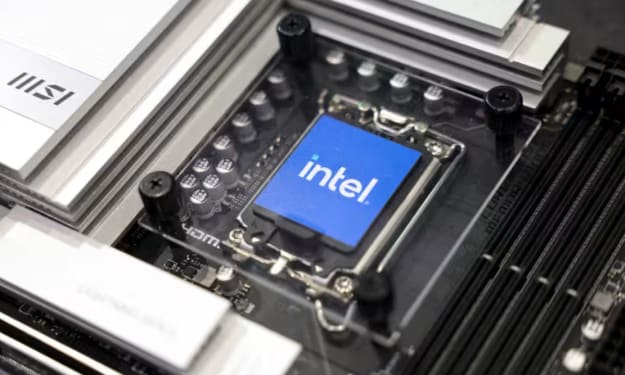
Intel Stock Surges to a 4-Year High Ahead of Earnings
For much of the past decade, Intel was seen as a tech giant struggling to keep pace with faster-moving rivals. Delays in chip manufacturing, rising competition from AMD and Nvidia, and a rapidly changing semiconductor market weighed heavily on investor confidence. But that narrative is changing — and fast. As Intel stock climbs to a four-year high ahead of its upcoming earnings report, optimism is clearly building across Wall Street. This rally is not the result of hype alone. Instead, it reflects a growing belief that Intel’s long-term turnaround strategy may finally be gaining real traction. So why are investors suddenly more confident, and what exactly is driving Intel’s momentum? A Market Shift in Intel’s Favor The semiconductor industry is notoriously cyclical, and Intel appears to be entering a favorable phase at the right moment. After years of supply chain disruptions and uneven demand, the market is stabilizing. Enterprise customers are beginning to invest again, and PC demand — while not booming — is showing signs of recovery. For Intel, even modest improvements in demand can have an outsized impact. As one of the world’s largest chipmakers, scale works both ways. When demand weakens, losses grow quickly. But when conditions improve, revenue and margins can rebound just as fast. This changing market backdrop is one reason investors are positioning themselves ahead of earnings. AI Is No Longer Just Nvidia’s Story Artificial intelligence has been the single biggest driver of semiconductor enthusiasm over the past two years. For a long time, Intel was seen as a secondary player in this space, trailing far behind Nvidia’s dominant GPUs. That perception is starting to evolve. Intel has been steadily expanding its AI-focused product portfolio, particularly in data centers and enterprise applications. Its newer processors are increasingly optimized for AI workloads, and the company has been vocal about integrating AI acceleration directly into CPUs — a different approach from relying solely on standalone GPUs. Investors are warming to the idea that AI growth does not belong to one company alone. As AI adoption spreads across industries, demand for diverse and cost-effective solutions grows — an environment where Intel can compete more effectively. Manufacturing Comeback Builds Credibility Perhaps the most important driver of renewed optimism is Intel’s manufacturing strategy. For years, manufacturing delays damaged the company’s reputation. Falling behind rivals that outsourced production raised serious questions about Intel’s ability to execute. Today, however, that concern is slowly being replaced with cautious confidence. Intel’s push to rebuild its manufacturing leadership — including advanced fabrication nodes and foundry services — is starting to look more credible. Progress may not be instant, but consistency matters more than speed at this stage. Investors are responding not because Intel has already won, but because it is finally delivering predictability — something markets value deeply. Foundry Business Adds a Long-Term Growth Story Intel’s foundry ambitions deserve special attention. By opening its manufacturing capacity to external customers, Intel is attempting to position itself as both a designer and a producer of chips — a rare combination. This move aligns closely with broader geopolitical and economic trends. Governments and corporations are increasingly focused on securing domestic semiconductor supply chains. Intel’s manufacturing footprint gives it a strategic advantage in this environment. While the foundry business will take time to mature, investors see it as a long-term option with enormous upside. That optionality alone can justify higher valuations when sentiment shifts. Earnings Expectations Are Manageable — Not Perfect Interestingly, Intel’s stock surge is not being driven by expectations of flawless earnings. Instead, optimism stems from reasonable expectations. Markets are not demanding record profits. They are looking for: Stable margins Clear guidance Evidence that strategy aligns with execution If Intel demonstrates operational discipline and reaffirms its long-term roadmap, it may not need dramatic earnings beats to sustain momentum. In many ways, this is a healthier rally — built on credibility rather than speculation. Leadership Stability Matters More Than Headlines Intel’s leadership has played a quiet but important role in restoring confidence. Consistent messaging, transparent goals, and a willingness to acknowledge past mistakes have helped rebuild trust with investors. Rather than chasing every tech trend, Intel’s leadership appears focused on doing fewer things better. That strategic clarity is often undervalued — until it begins to show results. Markets reward companies that look steady in uncertain times, and Intel is increasingly projecting exactly that image. Why the Stock Is Rising Before Earnings The timing of the rally is telling. Stocks often move before earnings when investors believe future expectations are being underestimated. In Intel’s case, rising prices suggest that investors fear missing out on a longer-term recovery story. Even those cautious about near-term numbers may be choosing to enter now rather than wait for perfect clarity. This kind of pre-earnings optimism usually reflects belief in direction, not just data. What Comes Next for Intel Investors Intel’s journey is far from complete. Risks remain, competition is intense, and execution must stay consistent. But the market is no longer asking whether Intel can survive — it is asking how strong the recovery could become. That shift in perception is powerful. If Intel continues to show steady progress across AI, manufacturing, and operational discipline, today’s four-year high may look less like a peak and more like a new base. For investors, the growing optimism is not about nostalgia for Intel’s past dominance. It’s about the belief that the company is finally building a future that markets can trust.
By Muhammad Hassan7 days ago in The Swamp
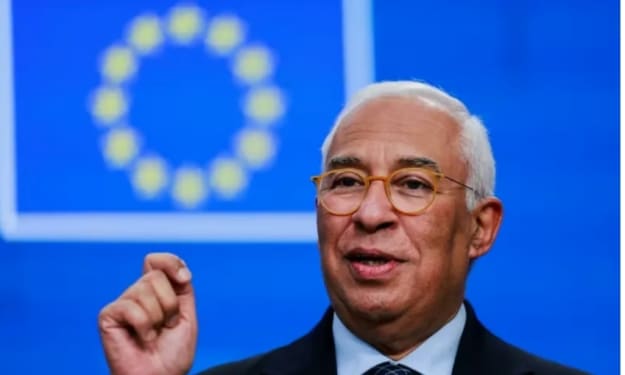
EU Council President Arrives in India to Seal Historic Trade Pact
New Delhi, India — The European Union’s top political representative, European Council President António Costa, has touched down in New Delhi, signalling a critical moment in long‑running negotiations with India over a free trade agreement (FTA) that both sides hope will reshape global economic ties. Costa’s arrival comes amid celebrations of India’s Republic Day and on the eve of a high‑stakes EU‑India summit, where leaders aim to finalize the deal after nearly two decades of diplomacy and talks.
By Salaar Jamali3 days ago in The Swamp
One Hard Thing
Stop me if you’ve heard this one before: You have the number, you know your schedule- you’ve even picked out the perfect day and time to make this appointment. Shoot, you’ve even picked out alternative days and times just in case their schedules can’t accommodate you!
By Taylor Rigsby3 days ago in Motivation


Comments
There are no comments for this story
Be the first to respond and start the conversation.