
Silver (XAG) Forecast: Outlook Turns Volatile as Speculative Buying Detaches From Demand
Speculative inflows, record-breaking price swings, and weakening links to physical demand raise risks—and opportunities—for silver investors

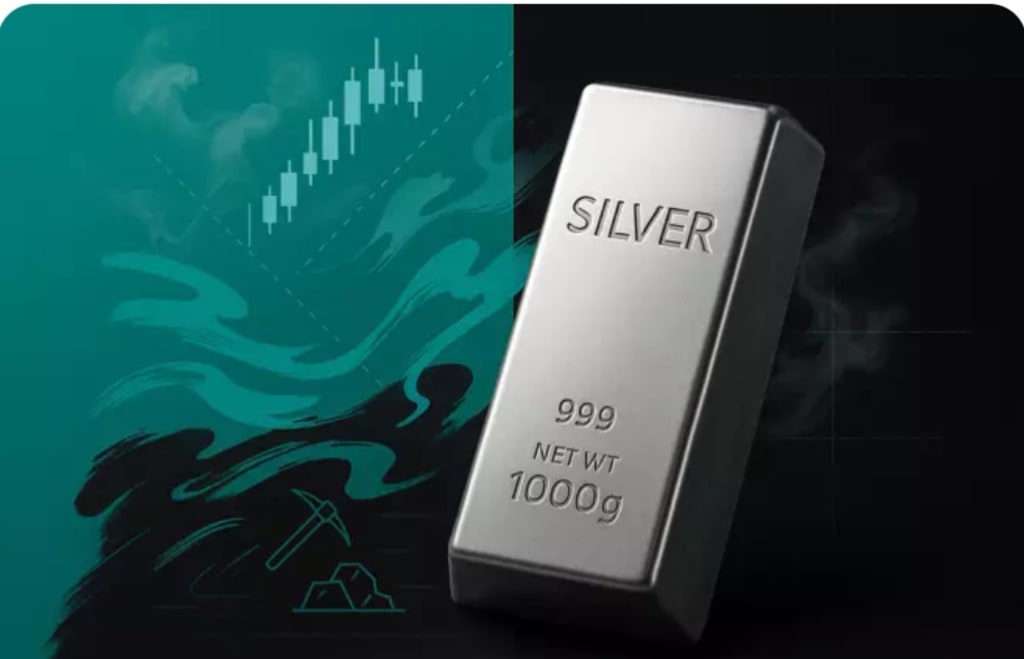
The silver market has captured global investor attention as prices surge to unprecedented levels, but beneath the headline numbers lies a story of intense volatility, speculative positioning, and a disconnect between price action and underlying physical demand. According to recent market analysis, the outlook for silver (XAG) — whether traded as bullion or via futures and ETFs — is entering an especially unpredictable phase, with speculative flows increasingly detaching from fundamental demand drivers.
---
Market Snapshot: Record Highs and Sharp Swings
Silver’s price has been on a dramatic ride. Spot silver recently traded lower late in a session after reaching a record high above roughly $121 per ounce, reflecting the intensity of the recent rally and subsequent volatility. This type of price action — including sharp intraday reversals — underscores the degree to which momentum and speculation are shaping trading behavior rather than traditional supply-and-demand fundamentals.
This volatility is partly a function of the metal’s relatively small market capitalization compared to major equity indexes, meaning that even modest flows of speculative capital can trigger outsized price swings. According to markets analysts, silver has “totally detached from where physical demand is robust,” highlighting the risk that prices may be driven more by sentiment and technical trading than by consumption and supply constraints.
---
Speculative Buying: Momentum Over Fundamentals
A key theme in the current silver environment is the growing role of speculative buying, particularly by retail investors and leveraged traders. This trend has been observed in behaviors such as retail traders purchasing silver ETFs at a pace faster than even popular tech stocks — a sign of how much speculative fervor now permeates the market. In some cases, retail volumes in silver ETFs have surged more than 11 times above normal levels.
While heavy ETF inflows and speculative interest can accelerate price rises, they also contribute to the detachment between price and physical demand. Industrial and bullion consumption — the traditional pillars of silver demand — have not kept pace with speculative positioning in futures markets. This means that while prices may rally on momentum, they are also more exposed to swift reversals if sentiment shifts.
Moreover, some market observers warn that prices driven primarily by technical momentum rather than real demand can lead to bubble-like dynamics — with rapid upside followed by equally sharp corrections once speculative inflows slow or unwind.
---
Fundamentals: Structural Demand and Supply Deficits
Despite the growing influence of speculation, the silver market still retains some fundamental supports — particularly in structural supply deficits and industrial demand. Silver has one of the most persistent physical deficits in the metals complex, with demand often outstripping mined supply year after year. These imbalances can provide a base level of support for prices over the medium and long term.
Industrial uses — especially in solar panels, electronics, electric vehicles, and advanced medical technologies — account for a substantial portion of total silver consumption. As global economies continue to invest in renewable energy and electrification, these sectors are expected to support ongoing demand growth.
However, there are early signs that exceptionally high prices could begin to erode industrial demand, particularly in cost-sensitive sectors like solar manufacturing, where producers might substitute silver with cheaper alternatives or optimize designs to use less metal. This fundamental strain could amplify volatility as it challenges the narrative that current price levels are fully justified by real demand.
---
Monetary Policy and Macro Drivers
Silver’s trajectory is also influenced by broader macroeconomic forces. Expectations of Federal Reserve rate cuts and a weaker U.S. dollar typically benefit non-yielding assets like silver, lowering the opportunity cost of holding bullion and assets perceived as inflation hedges. These macro drivers have helped keep silver in the spotlight for investors seeking diversification.
Geopolitical tensions and safe-haven demand — similar to the forces that boost gold — have also played a role in supporting silver prices. However, because silver’s market is far less liquid than gold’s, similar catalysts can result in more pronounced price swings in silver.
---
Risk and Reward: Navigating in a Volatile Market
For traders and long-term investors, the current environment poses both risks and opportunities. The short-term outlook is marked by heightened volatility; exaggerated moves driven by positioning can create profitable trading windows, but they also raise the risk of swift downside corrections if speculative sentiment reverses.
Analysts caution that while structural demand and supply imbalances support a long-term bullish narrative, prices detached from fundamentals in the near term could correct sharply — especially if excessive positioning unwinds or if industrial demand falters. Some forecasters draw parallels to historical metal rallies that ended in significant sell-offs after a speculation-driven peak.
At the same time, robust industrial demand and persistent supply deficits mean that sharp pullbacks may attract long-term buyers, particularly in contracts or physical holdings. Investors with a longer time horizon could view strategic dips as buying opportunities, but only with careful risk management given the inherent volatility.
---
Conclusion: A Market at a Crossroads
The silver market today sits at an intersection of speculative fervor and structural fundamentals. Short-term price behavior is increasingly influenced by momentum and retail flows that have detached from traditional demand indicators, creating an environment of heightened volatility. However, persistent structural deficits in supply, strong industrial relevance, and macroeconomic tailwinds offer a compelling backdrop for long-term interest.
For market participants, navigating this landscape requires balancing speculative risk with fundamental understanding — acknowledging that while prices can surge rapidly, they are also vulnerable to fast corrections when sentiment shifts. In this phase of the silver market, volatility isn’t just a feature — it’s the defining characteristic that will shape price trajectories in the months ahead.
About the Creator
Keep reading
More stories from Salaar Jamali and writers in The Swamp and other communities.
Saudi Arabia Stands as Earth’s Largest Country Without Permanent Rivers
Subtitle: Saudi Arabia holds a unique and striking distinction on the global map: it is the largest country on Earth without a single permanent river. Covering more than 2.15 million square kilometers, the Kingdom dominates most of the Arabian Peninsula, yet none of its waterways flow year-round. This geographic reality has shaped Saudi Arabia’s history, settlement patterns, water management strategies, and modern development in profound ways.
By Salaar Jamali2 days ago in The Swamp
Xi’s Purge of Top General Spurs Questions on Taiwan, Succession
In one of the most dramatic political moves in recent Chinese history, President Xi Jinping has targeted one of his longest-serving military allies, General Zhang Youxia, vice chairman of China’s Central Military Commission (CMC). The purge has sparked serious questions about Beijing’s plans for Taiwan and the future of political succession in China.
By Aqib Hussain6 days ago in The Swamp
Imran Khan’s Health in ‘Grave Danger’ After Eye Blockage Diagnosis, Party Says
Political tensions rise as concerns grow over the former prime minister’s medical condition Fresh concerns have emerged over the health of former Pakistani Prime Minister Imran Khan, after his political party warned that his condition is in “grave danger” following a diagnosis related to an eye blockage. The statement has drawn widespread attention, adding a new layer of urgency to Pakistan’s already tense political climate. According to party representatives, the condition requires immediate and proper medical care. They argue that delays or restrictions in treatment could lead to serious and potentially irreversible consequences. While official medical details remain limited, the warning has sparked debate over prisoner health rights, transparency, and political accountability. What the Party Has Claimed Imran Khan’s party has stated that doctors identified a blockage affecting his eye, a condition that can interfere with blood flow and vision. Party officials say the diagnosis raises serious concerns and should be treated as a medical emergency. They have emphasized that eye-related blockages, if left untreated, may lead to long-term damage. The party insists that timely access to specialists, diagnostic tests, and treatment is essential to prevent further complications. The use of strong language such as “grave danger” reflects growing frustration among supporters, who believe Khan’s health situation is not being handled with the seriousness it deserves. Why Health Claims Matter in Detention Health concerns involving detained political leaders often draw public attention, especially in countries where politics is deeply polarized. International norms stress that detainees, regardless of status, are entitled to adequate medical care. Legal experts note that access to healthcare is not a political privilege but a basic right. When health warnings are ignored or delayed, they can become human rights issues, attracting scrutiny from courts, civil society, and international observers. In Khan’s case, supporters argue that medical transparency would help reduce speculation and restore public confidence. Understanding Eye Blockage Conditions While exact medical details have not been officially released, eye blockages generally refer to restricted blood flow affecting vision. These conditions can vary in severity and cause. Possible risks include: Sudden vision loss Persistent pain or pressure Long-term damage if untreated Medical professionals often stress early diagnosis and intervention. However, without official medical reports, it remains unclear how advanced the condition may be. Political Context Behind the Concern Imran Khan remains one of Pakistan’s most influential and divisive political figures. His legal troubles and detention have fueled ongoing political tensions across the country. Any development related to his health quickly becomes politically charged, with supporters viewing it as a test of fairness and opponents urging caution against politicizing medical issues. This situation highlights the difficulty of separating health matters from politics in high-profile cases. Calls for Transparency and Independent Review Human rights groups and legal analysts have repeatedly emphasized the importance of independent medical assessments in cases involving detained leaders. Transparent medical evaluations help ensure credibility and prevent misinformation. Party leaders have demanded that: Independent doctors be allowed to examine Khan Medical reports be shared with legal teams Treatment decisions remain free from political influence Such steps, they argue, would reduce tensions and reassure the public. Public Reaction and Supporter Response News of Khan’s reported health condition has triggered strong reactions among his supporters. Many have taken to social media to express concern and demand immediate action. Public gatherings, online campaigns, and legal petitions have followed similar health-related claims in the past. Analysts warn that continued uncertainty could lead to increased unrest if supporters believe medical needs are being ignored. At the same time, others urge patience, calling for verified information rather than emotionally driven conclusions. Government Silence and Official Position So far, official responses have been limited. Authorities have not released detailed medical statements addressing the party’s claims, which has fueled speculation. In high-profile cases, delays in communication often worsen public mistrust. Observers note that clear and factual updates could help ease tensions and prevent rumors from spreading. Silence, even if procedural, can be interpreted as indifference in politically sensitive situations. Health, Law, and Political Stability The situation underscores how health issues intersect with law and political stability. When the health of a prominent political figure is questioned, the impact extends beyond personal well-being. Such moments test: Legal safeguards for detainees Institutional transparency Public trust in governance Pakistan has faced similar challenges in the past, where unresolved health controversies added pressure to already fragile political environments. What Happens Next The coming days may prove crucial. Much will depend on whether: Independent medical evaluations are allowed Official health updates are shared Treatment access is clearly confirmed If authorities address the concerns openly, tensions may ease. If not, the issue could continue to dominate political discourse and legal proceedings. Conclusion The claim that Imran Khan’s health is in “grave danger” following an eye blockage diagnosis has intensified scrutiny on how health issues are managed in politically sensitive cases. While medical facts remain limited, the situation highlights broader questions about detainee rights, transparency, and accountability. In a deeply divided political landscape, clear communication and proper medical care are essential—not only for Khan’s well-being but also for maintaining public confidence. As attention remains focused on his condition, the response from authorities may shape both political reactions and public trust in the days ahead.
By Fiaz Ahmed 3 days ago in The Swamp




Comments
There are no comments for this story
Be the first to respond and start the conversation.