
Xi’s Purge of Top General Spurs Questions on Taiwan, Succession
What China’s Military Shake-Up Could Mean for the Future

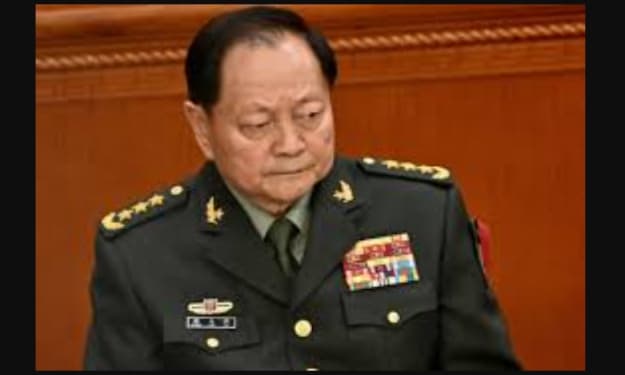
In one of the most dramatic political moves in recent Chinese history, President Xi Jinping has targeted one of his longest-serving military allies, General Zhang Youxia, vice chairman of China’s Central Military Commission (CMC). The purge has sparked serious questions about Beijing’s plans for Taiwan and the future of political succession in China.
Let’s break down what happened, why it matters, and what it could mean for the world.
A Surprising Shake-Up
Zhang Youxia has been placed under investigation for “serious violations of discipline and law,” a phrase usually associated with anti-corruption campaigns. But removing someone of Zhang’s stature is far from routine. He’s a veteran commander with decades of experience, a trusted figure in the military, and someone who has served beyond the usual retirement age.
Alongside Zhang, General Liu Zhenli has also been investigated, leaving the CMC — China’s top military decision-making body — largely cleared of senior leaders except for Xi himself and one loyalist. Analysts are calling this the most dramatic shake-up of China’s military since the Cultural Revolution.
This isn’t just about rooting out corruption. It’s about power. By reshaping the top ranks, Xi has effectively consolidated his control over the military in an unprecedented way.
Loyalty Over Everything
Officially, China frames this purge as part of an ongoing effort to enforce discipline in the PLA. But observers see it differently. Zhang wasn’t just any general — he was a seasoned commander with loyalty to Xi. His removal sends a strong signal: loyalty to Xi personally outweighs all other criteria.
For anyone in China’s top military or political circles, this is a warning: your career now depends more than ever on political alignment with Xi rather than merit or institutional norms.
What This Means for Taiwan
Perhaps the most pressing question is how this affects China’s stance on Taiwan. Xi has made reunification with Taiwan a core national objective, and the PLA’s modernization has been central to this goal.
But sudden purges at the top can disrupt command continuity. In the short term, this could weaken China’s ability to carry out coordinated military action, which might lower the chance of immediate conflict over Taiwan.
At the same time, a PLA leadership rebuilt around loyalty to Xi may fully align with his strategic vision in the long run. This could mean a more unified, aggressive approach if Xi decides action against Taiwan is necessary.
Succession Uncertainty
Beyond Taiwan, the purge has huge implications for China’s political succession. Unlike past decades, when potential successors were groomed through party consensus, Xi has centralized power in a way unseen since Mao Zedong.
By removing potential alternative power centers in the military, Xi ensures there are fewer rivals to challenge him. While this strengthens his grip now, it raises long-term concerns. What happens if there’s no clear successor? Will China face instability when leadership eventually changes?
This is one reason the purge is so closely watched — it’s not just about the PLA; it’s about the very future of China’s political leadership.
Inside China and Abroad
For those inside China, the message is clear: no one is untouchable. Even high-ranking, trusted officers can be removed. This likely changes the culture within the military, pushing officers to prioritize political loyalty over strategic thinking or professional judgment.
For the rest of the world, the purge raises alarms about how Beijing’s internal decisions might influence military behavior. Observers are paying close attention to China’s posture not just toward Taiwan, but also in hotspots like the South China Sea.
The Bottom Line
Xi Jinping’s purge of top generals is more than a headline-making anti-corruption campaign. It’s a strategic move that consolidates his power, reshapes China’s military, and impacts key geopolitical questions.
Taiwan: Short-term disruption in command, but long-term alignment with Xi’s vision.
Military loyalty: Political allegiance now outweighs experience or merit.
Succession: Centralized power may stabilize Xi’s rule now but raises long-term uncertainty.
Global impact: Countries are watching to see how this affects China’s military behavior and strategy.
In short, Xi’s purge is a bold statement of control and a reminder that in China, power flows through loyalty first. For analysts, diplomats, and regional leaders, the big questions remain: How stable is Xi’s grip? How prepared is the PLA? And what does this mean for Taiwan’s future?
The answers aren’t clear yet, but one thing is certain: China’s top military shake-up will be shaping politics and security calculations for years to come.
About the Creator
Keep reading
More stories from Aqib Hussain and writers in The Swamp and other communities.
EU Countries Give Final Approval to Russian Gas Ban
In a landmark decision, European Union (EU) member states have officially approved a ban on imports of Russian natural gas. This ban, set to be fully enforced by late 2027, is a major step in reducing Europe’s reliance on Moscow for energy. It also reflects the EU’s commitment to reshaping its energy landscape amid ongoing geopolitical tensions. A Long-Awaited Shift in Policy After months of negotiation, EU energy ministers gave their final approval for a regulation that will phase out Russian gas. This includes both pipeline gas and liquefied natural gas (LNG). Here’s what the new rules mean: Russian LNG imports must end by December 31, 2026. Pipeline gas imports will stop by September 30, 2027, with a possible short extension to November 1, 2027 if needed. All new contracts with Russian suppliers are banned immediately. The law balances ambition with practicality. Some countries still heavily depend on Russian energy, and the phased timeline allows them to adjust gradually. Balancing Energy Security and Political Differences The approval was not without disagreement. Hungary and Slovakia voted against the ban, citing concerns about energy shortages, while Bulgaria abstained. Hungary has already announced plans to challenge the ban at the European Court of Justice. Despite these differences, the EU law passed thanks to a reinforced qualified majority, showing the bloc’s growing determination to secure energy independence and reduce Russian influence. It’s worth noting that Russia used to supply over 40% of the EU’s gas, a number that fell to around 13% by 2025 thanks to sanctions, diversification, and changing markets. Some countries like France and Belgium still relied on Russian gas longer, highlighting the uneven transition across Europe. Why This Ban Matters The gas ban is about more than just energy; it’s a strategic and symbolic move. Here’s why: Weakening Russia’s Economic Power Cutting off EU gas imports will further reduce Russia’s revenue, limiting its ability to fund military operations and exert influence abroad. Strengthening EU Energy Sovereignty The ban pushes member states to diversify gas supplies and invest in infrastructure, storage, and interconnectors to ensure reliable energy. National plans must be prepared by March 2026. Accelerating the Green Transition As Europe phases out Russian gas, investment in renewable energy like wind, solar, and hydrogen is expected to increase, helping the bloc reach its climate goals. Economic Challenges Ahead While the ban is historic, it comes with challenges: Rising energy prices in some markets as cheaper Russian gas is replaced. Infrastructure needs, including LNG terminals and interconnectors, to ensure supply resilience. Compliance penalties for companies failing to phase out Russian gas, which could include multi-million-euro fines. Critics also warn that Europe could risk dependence on other external suppliers if diversification efforts are not broad enough. Looking Forward: Europe’s Energy Independence The Russian gas ban is part of REPowerEU, the EU’s strategy to reduce reliance on foreign fossil fuels. Beyond gas, the EU is preparing to phase out Russian oil and nuclear fuel, signaling a long-term shift toward energy sovereignty and sustainability. The final approval of this ban is not just the end of Russian gas imports—it’s the start of a decade-long transformation in European energy, geopolitics, and economic strategy. Final Thoughts The EU’s decision to ban Russian gas is historic. It reduces Moscow’s economic leverage, strengthens European energy security, and encourages investment in green alternatives. While challenges remain, including rising prices and infrastructure needs, the move marks a bold step toward independence and a redefined geopolitical balance in Europe.
By Aqib Hussainabout 17 hours ago in The Swamp
UK Holds Off Joining Trump's Board of Peace Over Putin Concerns
In a move reflecting rising global tensions and cautious diplomacy, the United Kingdom has reportedly decided to hold off on joining former U.S. President Donald Trump’s proposed “Board of Peace,” citing concerns over Russian President Vladimir Putin’s influence and the potential geopolitical ramifications. The announcement has sparked discussions across international relations circles, highlighting the complexities of modern diplomacy in a world still navigating post-pandemic recovery, energy crises, and ongoing conflicts.
By Aarif Lashari5 days ago in The Swamp



Comments
There are no comments for this story
Be the first to respond and start the conversation.