
Imran Khan’s Health in ‘Grave Danger’ After Eye Blockage Diagnosis, Party Says
Party raises alarm over former prime minister’s medical condition and access to care

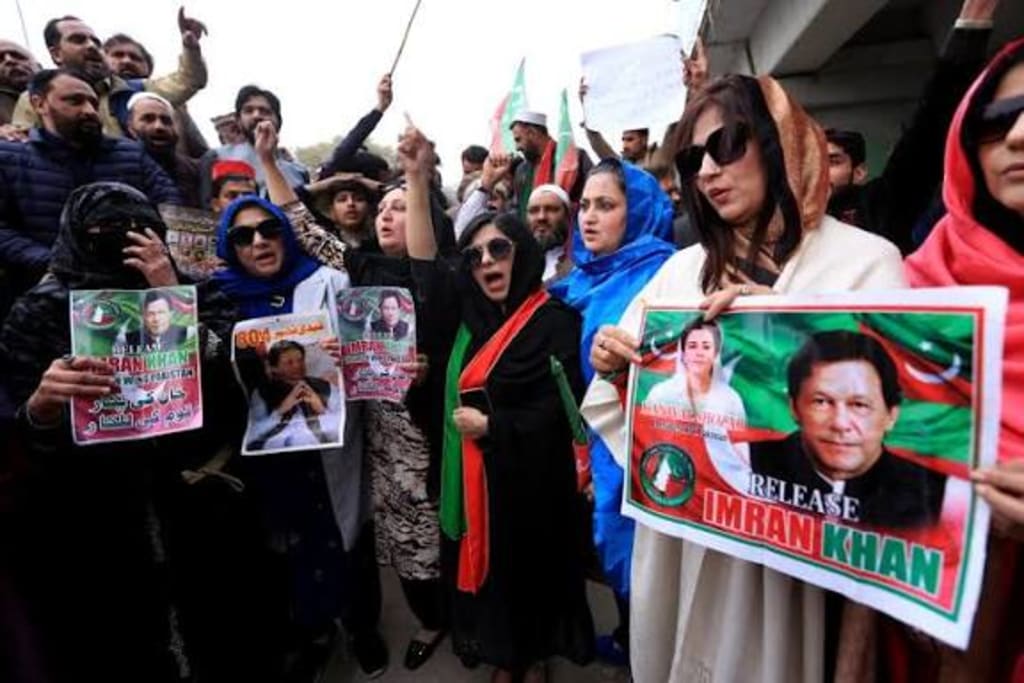
Political tensions rise as concerns grow over the former prime minister’s medical condition
Fresh concerns have emerged over the health of former Pakistani Prime Minister Imran Khan, after his political party warned that his condition is in “grave danger” following a diagnosis related to an eye blockage. The statement has drawn widespread attention, adding a new layer of urgency to Pakistan’s already tense political climate.
According to party representatives, the condition requires immediate and proper medical care. They argue that delays or restrictions in treatment could lead to serious and potentially irreversible consequences. While official medical details remain limited, the warning has sparked debate over prisoner health rights, transparency, and political accountability.
What the Party Has Claimed
Imran Khan’s party has stated that doctors identified a blockage affecting his eye, a condition that can interfere with blood flow and vision. Party officials say the diagnosis raises serious concerns and should be treated as a medical emergency.
They have emphasized that eye-related blockages, if left untreated, may lead to long-term damage. The party insists that timely access to specialists, diagnostic tests, and treatment is essential to prevent further complications.
The use of strong language such as “grave danger” reflects growing frustration among supporters, who believe Khan’s health situation is not being handled with the seriousness it deserves.
Why Health Claims Matter in Detention
Health concerns involving detained political leaders often draw public attention, especially in countries where politics is deeply polarized. International norms stress that detainees, regardless of status, are entitled to adequate medical care.
Legal experts note that access to healthcare is not a political privilege but a basic right. When health warnings are ignored or delayed, they can become human rights issues, attracting scrutiny from courts, civil society, and international observers.
In Khan’s case, supporters argue that medical transparency would help reduce speculation and restore public confidence.
Understanding Eye Blockage Conditions
While exact medical details have not been officially released, eye blockages generally refer to restricted blood flow affecting vision. These conditions can vary in severity and cause.
Possible risks include:
Sudden vision loss
Persistent pain or pressure
Long-term damage if untreated
Medical professionals often stress early diagnosis and intervention. However, without official medical reports, it remains unclear how advanced the condition may be.
Political Context Behind the Concern
Imran Khan remains one of Pakistan’s most influential and divisive political figures. His legal troubles and detention have fueled ongoing political tensions across the country.
Any development related to his health quickly becomes politically charged, with supporters viewing it as a test of fairness and opponents urging caution against politicizing medical issues.
This situation highlights the difficulty of separating health matters from politics in high-profile cases.
Calls for Transparency and Independent Review
Human rights groups and legal analysts have repeatedly emphasized the importance of independent medical assessments in cases involving detained leaders. Transparent medical evaluations help ensure credibility and prevent misinformation.
Party leaders have demanded that:
Independent doctors be allowed to examine Khan
Medical reports be shared with legal teams
Treatment decisions remain free from political influence
Such steps, they argue, would reduce tensions and reassure the public.
Public Reaction and Supporter Response
News of Khan’s reported health condition has triggered strong reactions among his supporters. Many have taken to social media to express concern and demand immediate action.
Public gatherings, online campaigns, and legal petitions have followed similar health-related claims in the past. Analysts warn that continued uncertainty could lead to increased unrest if supporters believe medical needs are being ignored.
At the same time, others urge patience, calling for verified information rather than emotionally driven conclusions.
Government Silence and Official Position
So far, official responses have been limited. Authorities have not released detailed medical statements addressing the party’s claims, which has fueled speculation.
In high-profile cases, delays in communication often worsen public mistrust. Observers note that clear and factual updates could help ease tensions and prevent rumors from spreading.
Silence, even if procedural, can be interpreted as indifference in politically sensitive situations.
Health, Law, and Political Stability
The situation underscores how health issues intersect with law and political stability. When the health of a prominent political figure is questioned, the impact extends beyond personal well-being.
Such moments test:
Legal safeguards for detainees
Institutional transparency
Public trust in governance
Pakistan has faced similar challenges in the past, where unresolved health controversies added pressure to already fragile political environments.
What Happens Next
The coming days may prove crucial. Much will depend on whether:
Independent medical evaluations are allowed
Official health updates are shared
Treatment access is clearly confirmed
If authorities address the concerns openly, tensions may ease. If not, the issue could continue to dominate political discourse and legal proceedings.
Conclusion
The claim that Imran Khan’s health is in “grave danger” following an eye blockage diagnosis has intensified scrutiny on how health issues are managed in politically sensitive cases. While medical facts remain limited, the situation highlights broader questions about detainee rights, transparency, and accountability.
In a deeply divided political landscape, clear communication and proper medical care are essential—not only for Khan’s well-being but also for maintaining public confidence. As attention remains focused on his condition, the response from authorities may shape both political reactions and public trust in the days ahead.
About the Creator
Fiaz Ahmed
I am Fiaz Ahmed. I am a passionate writer. I love covering trending topics and breaking news. With a sharp eye for what’s happening around the world, and crafts timely and engaging stories that keep readers informed and updated.
Keep reading
More stories from Fiaz Ahmed and writers in The Swamp and other communities.
Poland Built the E.U.’s Biggest Army, but the Threat Has Changed
From tanks and troops to cyberwar and hybrid pressure, Poland adapts its defense strategy Over the past decade, Poland has built the largest army in the European Union, investing heavily in troops, tanks, aircraft, and artillery. This rapid military expansion was driven by fear of conventional war, especially after Russia’s actions in Ukraine. For Warsaw, a strong army was seen as the best shield against invasion. But as Europe’s security landscape continues to evolve, Polish defense planners are facing a new reality: the threat is no longer only about tanks crossing borders. Today’s dangers are more complex, less visible, and harder to stop with traditional military power alone. Why Poland Built Europe’s Biggest Army Poland’s military growth did not happen by accident. Its history, geography, and politics all played a role. Poland sits on NATO’s eastern edge, close to Russia and Belarus, and has long viewed itself as a frontline state. The invasion of Ukraine in 2022 confirmed long-standing fears in Warsaw that hard power still matters. In response, Poland: Expanded its armed forces toward 300,000 troops Purchased modern tanks, fighter jets, and missile systems Increased defense spending to well above NATO’s 2% target The goal was clear: deterrence through strength. Poland wanted to make any potential attack too costly to consider. A Strong Army, but a Changing Battlefield While Poland’s conventional military power has grown, the nature of threats facing Europe has shifted. Security experts now warn that future conflicts may not begin with open warfare. Instead, they could start with: Cyberattacks on power grids and communication networks Disinformation campaigns targeting public trust Economic pressure and political interference Border manipulation, including the use of migration as leverage These so-called hybrid threats are harder to detect and respond to, and they often fall outside the reach of tanks and artillery. Cyber and Information Warfare One of the biggest challenges Poland now faces is in the digital domain. Cyberattacks aimed at government systems, banks, and infrastructure have increased across Europe. Poland, as a vocal supporter of Ukraine, is considered a high-value target. Disinformation is another concern. False narratives spread online can: Undermine trust in democratic institutions Create political division Weaken public support for defense spending and alliances Polish officials increasingly recognize that defending the country also means defending information space, not just territory. Border Pressure and Non-Military Tactics Poland has already experienced how non-traditional threats can be used strategically. In recent years, pressure on Poland’s eastern border involved irregular migration flows, widely seen as a form of political coercion. Such tactics blur the line between civilian crisis and national security threat, forcing governments to respond carefully without escalating tensions. This kind of pressure cannot be solved by military force alone. It requires: Border management Diplomatic coordination Legal and humanitarian frameworks Intelligence sharing with allies The Role of Alliances Even with Europe’s largest army, Poland understands it cannot face modern threats alone. NATO remains the cornerstone of Polish security. Hosting allied troops, participating in joint exercises, and sharing intelligence all strengthen deterrence. At the same time, Poland has pushed for a stronger European defense role, especially in areas like cyber defense and crisis response. The focus is shifting from national strength only to collective resilience, where countries support each other across military, economic, and digital domains. Balancing Heavy Weapons and Smart Defense Poland’s defense debate is now about balance. Traditional military power is still necessary. Tanks, air defenses, and trained soldiers remain essential if deterrence fails. However, experts argue that future security depends equally on softer but smarter tools. These include: Cybersecurity investment Civil defense and emergency preparedness Strategic communication Energy independence Supply-chain protection A modern defense strategy must protect society as a whole, not just the battlefield. Public Expectations and Political Pressure Building Europe’s biggest army came with strong public support, especially after events in Ukraine. But sustaining such a force is expensive, and voters increasingly ask whether money should also go toward healthcare, infrastructure, and education. As threats become less visible, it becomes harder to explain why defense spending remains high. Leaders must now justify investment in areas people cannot easily see, like cybersecurity or intelligence. This requires clear communication and long-term planning, not fear-based messaging. What Comes Next for Poland Poland is unlikely to scale back its military anytime soon. Instead, the country is expected to adapt its defense posture. Future priorities may include: Integrating cyber and information defense into military planning Expanding cooperation with EU and NATO partners Strengthening civilian resilience alongside military readiness Preparing society for crises beyond armed conflict The focus is shifting from size alone to flexibility and resilience. Conclusion Poland’s decision to build the European Union’s largest army was shaped by real and immediate threats. That investment has made the country stronger and more confident within NATO and Europe. Yet the security environment has changed. Today’s threats are less direct, more complex, and often invisible. Tanks and troops remain important, but they are no longer enough on their own. For Poland, the challenge now is not just maintaining a powerful army, but redefining what security means in a world of hybrid warfare, digital threats, and political pressure. How well it adapts may shape not only its own future, but Europe’s as well.
By Fiaz Ahmed 2 days ago in The Swamp
Poundland Shuts 149 Stores, Cuts 2,200 Jobs and Refocuses on £1 Items
Discount retailer Poundland has announced a major restructuring plan that will see 149 stores close, around 2,200 jobs cut, and a renewed focus on its original £1 price point. The move marks one of the most significant shake-ups in the company’s history as it attempts to adapt to changing consumer habits and rising operational costs.
By Aarif Lashari6 days ago in The Swamp



Comments
There are no comments for this story
Be the first to respond and start the conversation.