
“‘Race is not so much a biological phenomenon as a social myth”
Political rebuking of race... but racism still exists.

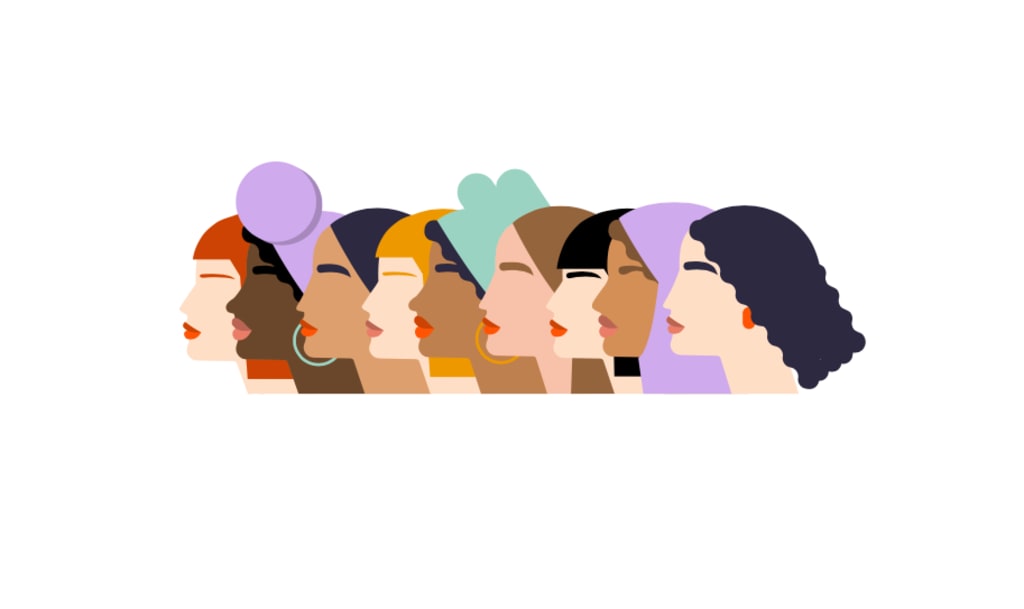
‘Race’ is many things. A social construction; a created concept for grouping people; a movement. And then there are many things ‘race’ is not; the fundamental being that: ‘race' is not our truth.
Anthropology is a discipline focusing on the study of human cultures and societal development. Over the years of anthropology growing as a disciplinary social science, there has been found no truth in proving any fundamental differences between human ‘groups’. ‘Race’ is not our truth because it doesn’t explain the reality of being a human. Humans are different by culture, experience, geography, value but not by biology.
There are many human ‘groups’ that we have created through our time on this earth. Groups vary from family groups, to communities, friends, societies. And then there are groups of race, religion and class, which are the kinds of groups that have built conflict in our world. But if we zoom in closer on the reality of ‘race', it can be understood that actually “human biodiversity is greatest within so-called racial groups and … genetic similarity is evident across so-called ‘races’” (Lewontin 1972 cited in St. Louis 2015: 124). This is what needs to be shared. Humans across labeled religious or ‘ racial' groups are more similar than we realise and these labels we have created, as well as the construction of ‘race’ shows how society has been misinformed right from the beginning. “The science of race read from pigment… or gene has been exposed as false” (Ashmin 2010: 2), supporting how ‘physical race’ is not substantial enough to provide an explanation of our entire humanity. Racial categories may then start more and more to be replaced with other social binaries, and allow us to anticipate a future with an utterly different concept of ‘race’. This majorly results from the treatment and hostility of ‘race’ in the past and the growing desire to change this.
This hostility of ‘race’ is highlighted in Alice Conklin’s book, 'In the Museum of Man’. A detailed historical account of social theory and anthropology in France for 100 years from 1850 to 1950. The essence of her book is how strongly imperialistic and colonial mindsets remain throughout time. For decades, anthropologists tried to prove that there was “no fundamental unity of the species”. Anthropology became a legitimate study to prove that there were differences between humans of different skin colours. They tried to use biology and skull theory for example to prove that there could be determined hierarchies based on biological human differences. For years, this is what people believed because that was what they were being taught by ‘professionals’. Following the tragedies of racial discrimination and mass death based on ‘race' during World War II, in 1950 a UNESCO statement came out politically rebuking scientific racism. It said: “‘race’ is not so much a biological phenomenon as a social myth” (Conklin, 2013). While there was justice with this statement there was irony because it took 6 million deaths within one ‘racial’ group before this happened. This is unfortunately not the only example of irony and horror in the story of ‘race’.
So ‘race’ was politically rebuked yet racism still exists? The hardest part is that political change can happen, but imperialistic-racist mindsets don’t just go away. Some of these mindsets are so deep rooted and are traced through generations of teaching the next of falsehoods about ‘race’. We can however also take pride in how far we have come, but looking around us, it is still so apparent how much further we have to go. While we have interracial marriage we still have social prejudice. While we have had a black president, we still have innocent black people being charged for crimes they didn’t commit.
The world is learning and growing, but fundamentally we have to be aware of the engrained imperialist mindsets that still exist across societies today. People may no longer actively be racist, but may instil racism through their neutrality and avoidance. People may also subconsciously express racism, but what’s important is understanding the history and the different stories of where this current narrative of ‘race’ comes from. To accept that our past is full of injustice and colonialism, because before we can move forward, we must know where we’ve come from.
About the Creator
Becky Maxwell
put yourself first
Keep reading
More stories from Becky Maxwell and writers in The Swamp and other communities.
The 60s Never Saw Kuri
Cultural explosion, an understanding of freedom and sexual liberty turned the 40s into the 60s. The baby boomer era where suddenly people were aware that they could own their own individuality and liberalisms. And in the middle of all this staunch change, a letter was passed between two very unlikely people.
By Becky Maxwell8 years ago in Futurism
European Airlines Continue to Avoid Iran and Iraq Despite Airspace Reopening
Despite the formal reopening of Iranian and Iraqi airspace after a brief closure triggered by heightened geopolitical tensions, many European and international airlines are choosing to keep their aircraft far from the skies above these countries. Instead of flying over Iran and Iraq — historic air routes connecting Europe with Asia — carriers are opting for longer paths over Afghanistan and Central Asia to protect passengers and crews. �
By Fiaz Ahmed Brohi2 days ago in The Swamp
Silver Screen Magic with Mae West
American actress and singer Mae West became a popular film actress during the Great Depression. She started entertaining in vaudeville, then performed on Broadway, and finally went to Hollywood. She signed up with Paramount Pictures and made her debut in the 1932 film “Night After Night.” She also starred in musicals, comedies, and crime dramas. The American Film Institute named her one of the best classic Hollywood actresses.
By Rasma Raisters5 days ago in Geeks




Comments
There are no comments for this story
Be the first to respond and start the conversation.