
Pakistan’s Khawaja Asif Inaugurates Fake ‘Pizza Hut,’ Real One Responds — A Diplomatic and Public Relations Debacle
“Pakistan’s Defence Minister Khawaja Asif inaugurates an unauthorized Pizza Hut outlet in Sialkot, prompting a corporate response and sparking widespread public ridicule.”

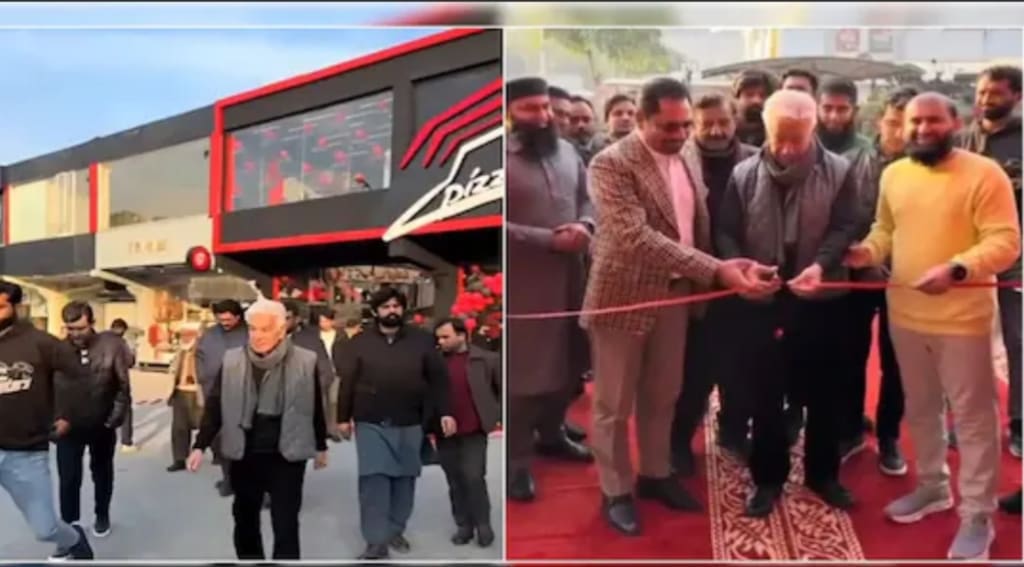
In an unexpected political and public relations mishap on January 20, 2026, Pakistan’s Defence Minister Khawaja Asif found himself at the center of a viral controversy after hosting the grand opening of what was believed to be a Pizza Hut restaurant in Sialkot Cantonment — only for the international pizza chain to publicly declare that the outlet was unauthorised and fake. What began as a ceremonial ribbon‑cutting event quickly spiraled into embarrassment and online ridicule, raising questions about due diligence, trademark misuse, and the optics of political endorsements in Pakistan.
The Inauguration that Went Wrong
Photos and videos shared across social media platforms showed Khawaja Asif, a senior leader from the Pakistan Muslim League‑Nawaz (PML‑N), cutting the ribbon and posing for applause at what appeared to be a new Pizza Hut branch in Sialkot — complete with the brand’s iconic red roof logo and signage. The event was attended by local dignitaries and drew public attention as a positive business development in the region.
However, within hours of the ceremony, Pizza Hut Pakistan issued an official statement confirming that the outlet was not affiliated with the franchise. The company clarified that the Sialkot restaurant had no legal connection to Pizza Hut Pakistan or its parent company, Yum! Brands, and was operating without permission. It further stated that the site did not follow official recipes, quality standards, food safety protocols, or operational guidelines associated with genuine Pizza Hut outlets.
In its response, Pizza Hut Pakistan said it had filed a complaint with relevant authorities to address the trademark misuse and to ensure corrective action. The company also reminded customers that it currently operates a limited number of official outlets — primarily in Lahore and Islamabad — and advised the public to verify store listings through official channels.
Political Fallout and Questions of Due Diligence
The incident swiftly became a source of ridicule and criticism, both online and in traditional media. Many Pakistanis took to platforms such as X (formerly Twitter) and Reddit to mock the apparent lack of verification before a high‑profile minister participated in an inauguration ceremony. Commenters sarcastically framed the event as symbolic of broader lapses in administrative oversight, with one viral post quipping it was a day of “defence and pizza security checking”.
Critics argued that a senior official should have ensured the legitimacy of the business before lending his office and public visibility to the event. “One ribbon cut, one statement issued — that has to be some kind of record,” one user commented, reflecting the sharp and widespread sentiment on social media. Others drew humorous comparisons between political missteps and the unverified restaurant opening, suggesting that the fiasco underscored deeper issues with bureaucratic due diligence in official engagements.
Some observers speculated that the restaurant owner may have presented forged or misleading documents to give the appearance of legitimacy, adding a layer of commercial deceit to the political mistake. Regardless of intent, the outcome was clear: a national politician had unintentionally inaugurated a business that the brand itself disowned.
Brand Protection and Trademark Enforcement
The episode also highlights broader concerns about brand protection and trademark enforcement in Pakistan. Unauthorized establishments using well‑known international brands not only mislead customers but risk damaging the reputation of global franchises. In this case, Pizza Hut’s proactive response — issuing a public clarification and filing a complaint — was aimed at preventing further misuse of its intellectual property and ensuring that consumers are not misled by fraudulent businesses.
Pizza Hut Pakistan’s emphasis on food safety and operational standards points to legitimate concerns about customer well‑being, beyond mere corporate image. An unauthorised restaurant using a globally recognised brand name but lacking proper oversight could pose risks in terms of hygiene, quality, and public trust.
Public Reaction and Media Coverage
Public response has ranged from amusement to frustration. While many users seized on the humour of the situation, others expressed genuine concern about how a government minister could be involved in an event without basic verification. Some critics accused the minister of reflecting political negligence at a time when Pakistan faces more pressing governance challenges.
Traditional news outlets quickly picked up the story, underscoring the viral nature of the controversy. Many presented the incident not merely as a comedy of errors but as a cautionary tale about the importance of procedural rigor when public officials engage in business openings or private sector endorsements.
Political Implications and Accountability
For Khawaja Asif — a seasoned politician who has held various ministerial positions — this episode comes at a sensitive political moment. Critics have argued that missteps like this can erode public confidence in leadership and administrative professionalism. Some commentators have even referred to the incident as emblematic of larger frustrations with political leadership, using terms like “embarrassment” or “fiasco”.
Whether this will have lasting political implications for Asif or his party remains uncertain. However, the immediate blow to credibility in the realms of corporate affairs and public representation is undeniable. The fiasco has prompted calls from some quarters for clearer standards around official participation in private business events, with suggestions that verification protocols should be mandatory to prevent such embarrassment in the future.
Lessons Learned and Moving Forward
The “fake Pizza Hut” controversy in Sialkot serves as a unique example of how global brand recognition intersects with local politics and public perception. At its core, the incident underscores the need for better due diligence, robust trademark protection, and clearer guidelines for political engagement with private enterprises. It also reflects the power of social media to amplify missteps and shape public discourse rapidly.
For the public and policymakers alike, the story highlights that even seemingly minor ceremonial events can have broader implications for governance credibility, brand safety, and consumer trust. The episode may prompt both government officials and private sector entities to adopt more stringent verification practices before participating in or publicizing business openings.
Ultimately, while the event may be remembered for its humour and the viral reactions it generated, it also underscores serious questions about how political and commercial actors interact — and the importance of clarity and accountability in every corner of public life.
About the Creator
Keep reading
More stories from Salaar Jamali and writers in The Swamp and other communities.
What to Know About Trump’s ‘Board of Peace’ for Gaza
As tensions and humanitarian needs in the Gaza Strip continue to generate global concern, U.S. President **Donald Trump has introduced a new and ambitious initiative known as the “Board of Peace” — a high‑profile international body designed to oversee the fragile post‑war transition in Gaza and potentially shape how global conflicts are managed in the future. The proposal has sparked both interest and controversy, attracting international invitations and scrutiny from allied nations and diplomatic institutions.
By Salaar Jamaliabout 8 hours ago in The Swamp
France Latest to Confirm NATO Troop Deployment After Trump Says Greenland ‘Very Important’ for US National Security
France Joins Growing NATO Deployment Push France has become the latest NATO member to confirm the deployment of troops as tensions rise over security in the Arctic and North Atlantic, following remarks by former US President Donald Trump that Greenland is “very important” for US national security. The announcement places Paris alongside several European allies that are strengthening their military presence amid renewed geopolitical competition in the region.
By Aarif Lashari6 days ago in The Swamp
UK Residents and Campaigners Move to Seek Judicial Review Against China’s New Embassy Decision
Opposition to the UK government’s decision to approve plans for a new Chinese mega‑embassy in London has rapidly escalated from protests and political criticism to a formal legal challenge. Local residents, supported by advocacy groups and some political figures, are preparing to seek a judicial review of the decision, arguing that the approval process was flawed, lacked transparency, and imposed unacceptable risks to security, privacy, and community wellbeing. �
By Ayesha Lashari33 minutes ago in The Swamp
Autonomy Is The Real Privilege
Good morning, freedom-seekers! Today we’re gonna be looking at autonomy. A strange word, I know; one many would probably look at blankly and run away from on sight. We’re gonna figure out what it actually means, consider how it’s achieved, and decipher just how deeply most of us are tangled up in dependence without realising it.
By That ‘Freedom’ Guyabout 23 hours ago in Humans

Comments
There are no comments for this story
Be the first to respond and start the conversation.