
France Latest to Confirm NATO Troop Deployment After Trump Says Greenland ‘Very Important’ for US National Security
European allies respond as Arctic security rises to the top of NATO’s agenda
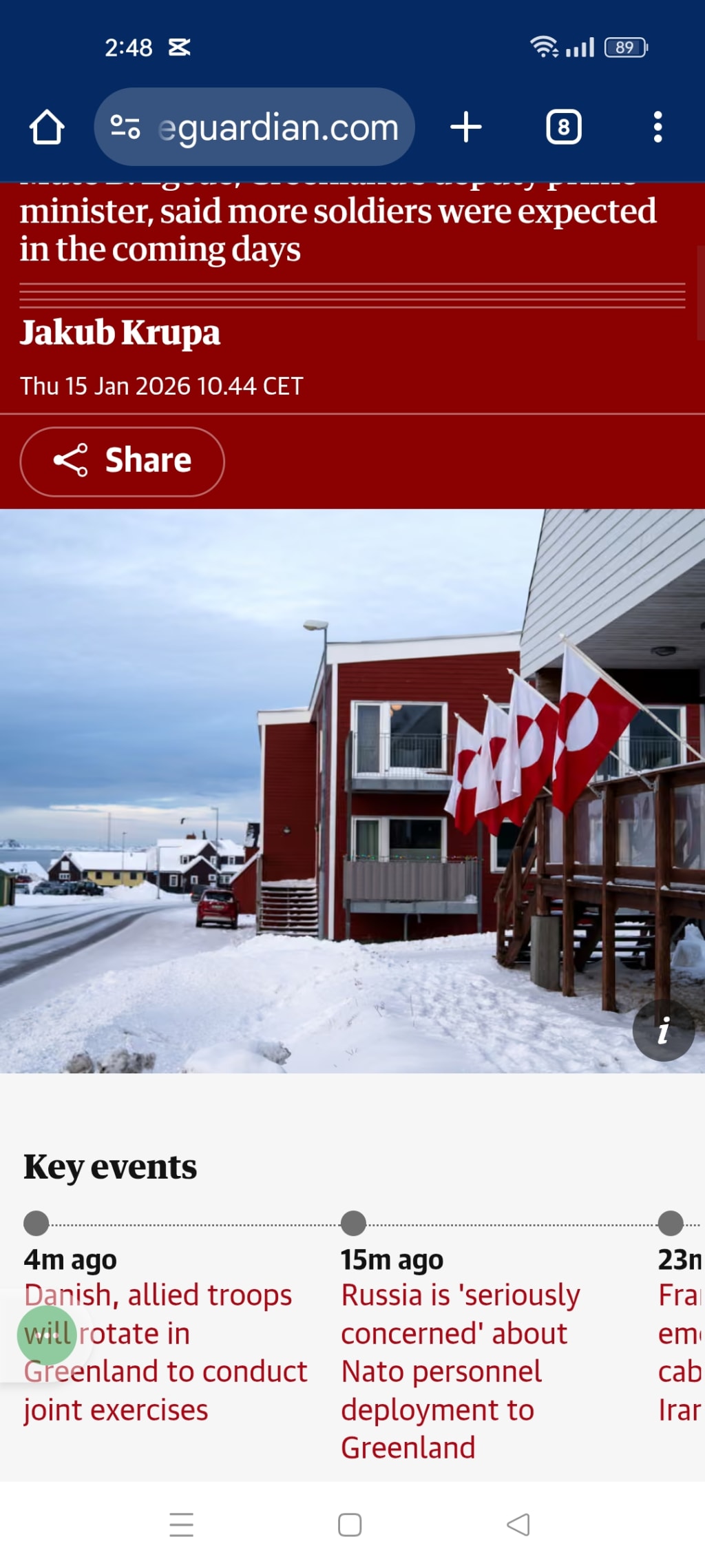
France Joins Growing NATO Deployment Push
France has become the latest NATO member to confirm the deployment of troops as tensions rise over security in the Arctic and North Atlantic, following remarks by former US President Donald Trump that Greenland is “very important” for US national security. The announcement places Paris alongside several European allies that are strengthening their military presence amid renewed geopolitical competition in the region.
French defense officials said the deployment is part of NATO’s collective defense posture, emphasizing that it is defensive in nature and aimed at deterrence, stability, and alliance readiness rather than provocation.
The move reflects how Greenland—once considered a remote outpost—has emerged as a strategic focal point in global security discussions.
Trump’s Comments Rekindle Arctic Debate
Trump’s statement about Greenland has reignited debate across Europe and North America. Speaking to supporters, he highlighted Greenland’s strategic location, linking it to missile defense, Arctic shipping lanes, and US homeland security.
While Trump has previously drawn attention for controversial comments about Greenland, including past suggestions of US control, his latest remarks come at a time of heightened global tensions. European leaders have been careful to avoid escalation but acknowledge that Arctic security is no longer a distant concern.
French officials did not directly reference Trump, but acknowledged that geopolitical rhetoric underscores the need for preparedness.
Why Greenland Matters Strategically
Greenland sits at the crossroads of the North Atlantic and the Arctic, making it critical for early warning systems, missile tracking, and maritime security. The US maintains a long-standing military presence at Pituffik Space Base, which plays a central role in space surveillance and missile defense.
As climate change reduces ice cover, new shipping routes are opening, increasing commercial and military traffic. At the same time, competition over natural resources—including rare earth minerals—has intensified interest from global powers.
For NATO, Greenland represents both an opportunity for cooperation and a vulnerability that requires coordinated defense planning.
France’s Role in NATO’s Northern Strategy
France has traditionally focused its military efforts on Europe’s eastern flank, Africa, and the Mediterranean. However, Paris has increasingly recognized the importance of the Arctic and High North in NATO’s evolving strategy.
Defense analysts say France’s confirmation of troop deployment signals a broader commitment to alliance solidarity, particularly as smaller NATO members express concern about security in the North Atlantic.
“France is sending a message that Arctic security is a collective responsibility,” said one European defense expert. “This isn’t just about one country—it’s about NATO cohesion.”
Other European Allies Step Forward
France’s announcement follows similar moves by other NATO members, including Nordic countries and key European allies. Denmark, which governs Greenland, has already increased its defense spending and patrol presence around the island.
Germany, the UK, and Canada have also stepped up participation in joint exercises and rotational deployments in northern regions. NATO officials stress that these actions are coordinated and transparent, aimed at deterrence rather than confrontation.
Still, the cumulative effect represents one of the most significant shifts in NATO’s northern posture in decades.
Russia and China Loom in the Background
Although not always mentioned explicitly, Russia’s expanded Arctic military infrastructure remains a major factor behind NATO’s decisions. Moscow has invested heavily in Arctic bases, airfields, and naval capabilities, framing the region as central to its national security.
China, while not an Arctic nation, has declared itself a “near-Arctic state” and invested in research stations, shipping, and mining projects. Western officials increasingly view Beijing’s activities as part of a long-term strategy to gain influence in polar regions.
NATO leaders argue that proactive deployments are necessary to maintain balance and prevent miscalculation.
Political Reactions Across Europe
Political reactions across Europe have been mixed. Supporters argue that reinforcing NATO’s presence is essential to deter aggression and protect critical infrastructure. Critics, however, warn against militarizing the Arctic and escalating tensions unnecessarily.
In France, opposition figures have called for greater parliamentary oversight of overseas deployments, while the government insists the move aligns with existing NATO commitments.
Greenlandic leaders, meanwhile, continue to stress the importance of being consulted directly. While supportive of security cooperation, they have repeatedly emphasized self-determination and respect for local communities.
NATO’s Message: Unity and Deterrence
NATO officials have been careful to frame the troop deployments as part of a long-term defensive strategy rather than a reactionary move. Alliance leaders say transparency, coordination, and diplomacy remain central to their approach.
“The Arctic is becoming more accessible, more active, and more contested,” said one NATO official. “Our goal is to ensure it remains stable and predictable.”
France’s involvement strengthens that message, demonstrating that major European powers are aligned on the issue.
Risks of Escalation and Misinterpretation
Despite assurances, experts warn that increased military activity always carries risks. Miscommunication, close encounters, or aggressive rhetoric could heighten tensions in a region traditionally characterized by cooperation.
Environmental groups have also expressed concern, noting that military activity in fragile Arctic ecosystems must be carefully managed to avoid long-term damage.
Balancing security needs with environmental protection and Indigenous rights remains a delicate challenge.
What Comes Next
Further joint exercises, intelligence sharing, and infrastructure investments are expected in the coming months. NATO leaders are also discussing how to integrate climate security into defense planning, acknowledging that environmental change itself is a strategic factor.
France’s confirmation of troop deployment suggests that European engagement in Arctic security will deepen, regardless of political changes in Washington.
Conclusion: Greenland at the Center of a Changing Security Map
France’s decision to confirm NATO troop deployment underscores how Greenland has moved from the geopolitical margins to the center of international security planning. Trump’s remarks may have reignited public debate, but the underlying shift reflects broader, long-term trends.
As climate change reshapes the Arctic and global competition intensifies, NATO’s focus on Greenland and the High North is likely to grow. For Europe and its allies, the challenge will be maintaining unity and deterrence while avoiding unnecessary escalation—ensuring that the Arctic remains a zone of stability rather than conflict.
About the Creator
Keep reading
More stories from Aarif Lashari and writers in The Swamp and other communities.
Zelensky Declares Energy Emergency as Biting Cold Persists
Ukrainian President Volodymyr Zelensky has declared an energy emergency as severe winter conditions grip the country, placing immense strain on an already fragile power system battered by months of war. With temperatures plunging well below freezing in many regions, millions of Ukrainians are facing rolling blackouts, heating shortages, and uncertainty as authorities race to keep essential services running.
By Aarif Lashari5 days ago in The Swamp
A Dart at Dusk
Seconds ago, the sullen sun set on the two of us… my exuberant furry companion and me. A fresh breeze embraces us, delivering welcome relief from the day’s oppressive heat. His typical stumbling and staggering along — apace with a sloth — has turned into trip-trapping, high-stepping, almost skipping along.
By Angie the Archivist 📚🪶6 days ago in Petlife




Comments
There are no comments for this story
Be the first to respond and start the conversation.