Latest Stories
Most recently published stories in The Swamp.
How Much Do You Need in an ISA for a Passive Income That Beats the State Pension. AI-Generated.
For many Britons, the State Pension provides a modest, steady income in retirement. As of 2026, the full State Pension is around £203.85 per week, or roughly £10,600 per year. While it offers a financial foundation, for most retirees it’s not enough to maintain the lifestyle they want. This has led many people to explore Individual Savings Accounts (ISAs) as a vehicle for generating passive income that exceeds the State Pension.
By Muhammad Hassan3 days ago in The Swamp
Verizon’s Response to Its Massive Outage Is What No Company Should Ever Do. AI-Generated.
When a company the size of Verizon experiences a massive outage, millions of customers notice. Text messages don’t go through, calls drop, mobile banking stalls, and businesses relying on cellular service grind to a halt. In these moments, customers are not just inconvenienced — they are frustrated, anxious, and looking for leadership.
By Aarif Lashari3 days ago in The Swamp
Carney ‘Concerned’ About U.S. Escalating Efforts Amid Push to Buy Greenland: A Deepening Geopolitical Storm. AI-Generated.
the United States in its campaign to acquire Greenland—the world’s largest island, strategically positioned in the Arctic and rich in natural resources. Carney’s remarks underscored broader tensions not only between the U.S. and allied nations but also within NATO, raising fundamental questions about sovereignty, international law, and the future of Arctic geopolitics.
By Salaar Jamali3 days ago in The Swamp
Global Leaders Gather in Switzerland to Ponder the Future of a Messy World. AI-Generated.
In a world marked by conflict, climate crises, and economic instability, the small alpine country of Switzerland has once again become the focal point for global diplomacy. Leaders from around the world have gathered in Geneva this week to engage in what many are calling one of the most consequential international meetings of the decade. The purpose? To ponder the future of a world that seems increasingly messy, unpredictable, and interconnected in ways that defy easy solutions.
By Aqib Hussain3 days ago in The Swamp
Trump Tariffs Live: EU Considers $108 Billion Retaliation as Denmark Says ‘Europe Will Not Be Blackmailed’. AI-Generated.
The latest chapter in U.S.-Europe trade tensions has taken center stage. President Donald Trump has threatened sweeping tariffs on European goods, escalating an already tense transatlantic relationship. In response, European leaders, led by Denmark’s Prime Minister Mette Frederiksen, have pushed back strongly, declaring that Europe “will not be blackmailed.” Now, Brussels is considering as much as $108 billion in retaliatory tariffs. This isn’t just about economics—it’s about alliances, sovereignty, and global influence. Here’s everything you need to know, in a clear, blog-style format. What Sparked This Tariff Threat? It all started with Trump’s controversial Greenland proposal. The U.S. President suggested buying the strategic autonomous territory from Denmark, citing national security reasons. Denmark and Greenland’s government flatly rejected the idea. Trump responded by announcing a 10% tariff on imports from eight European countries, threatening to increase it to 25% by June if a deal on Greenland isn’t reached. The countries targeted include: Denmark Sweden France Germany Netherlands Finland United Kingdom Norway This move is widely seen as a coercive tactic, linking trade policy to geopolitical demands—a strategy that European leaders are not taking lightly. Europe Pushes Back: ‘We Will Not Be Blackmailed’ European leaders have responded with a united front. They issued a statement warning that the tariff threats “undermine transatlantic relations and risk a dangerous downward spiral.” Danish PM Mette Frederiksen didn’t mince words: “Europe will not be blackmailed.” Other leaders in Germany, France, and Sweden echoed her sentiment. They emphasized that while Europe prefers dialogue over conflict, it will defend sovereignty and international law at all costs. This message is clear: Europe values its relationship with the U.S., but it won’t compromise under economic threats. Brussels Considers $108 Billion in Retaliation In response, Brussels has convened emergency meetings to explore countermeasures. The EU is considering tariffs on U.S. goods totaling $107.7 billion, essentially mirroring the scale of Trump’s threat. Potential measures could include levies on: Machinery and vehicles Agricultural products Consumer goods In addition, the EU may activate its “Anti-Coercion Instrument”, a legal tool designed to counter economic pressure from powerful partners. If used, it could restrict U.S. access to investment opportunities and public procurement in the EU. Why This Matters Politically and Economically The stakes are high. Markets have already reacted, with the euro and sterling showing signs of volatility. European leaders argue that punitive tariffs on allies are counterproductive, stressing the importance of maintaining transatlantic cooperation. British PM Keir Starmer has criticized the U.S. approach, calling it “completely wrong” and urging negotiations while protecting alliances. Economists warn that a prolonged trade standoff could: Disrupt supply chains Affect investment flows Slow global economic growth This isn’t just a fight over Greenland—it’s a test of how far economic tools can be used in geopolitical disputes. Diplomacy in the Midst of Tension Despite the hard talk, Europe hasn’t closed the door on diplomacy. Officials are keen on negotiations based on: Mutual respect Sovereignty Shared values NATO commitments and Arctic security remain pivotal, even amid disagreements. European leaders are trying to balance firmness with dialogue, showing the world that alliances can survive friction, even when under economic pressure. What Happens Next? Here’s the likely timeline: February 1, 2026: Trump’s 10% tariffs on European goods are set to take effect. June 2026: Tariffs could rise to 25% if no agreement is reached. EU retaliatory measures: Still under discussion, with emergency summits planned to finalize any actions. Financial markets, policymakers, and global observers will be watching closely. Decisions in the coming weeks could reshape transatlantic trade and diplomatic norms. Key Takeaways Greenland is the spark, but trade is the battlefield. Trump’s Greenland proposal is the reason behind the latest tariffs, but the broader fight is about economic and geopolitical influence. Europe stands united. Denmark’s PM and other leaders are sending a clear message: coercion won’t work. Retaliation could be massive. $108 billion in EU counter-tariffs could escalate into a full-blown trade conflict. Diplomacy isn’t dead. Despite tensions, Europe and the U.S. still share security and economic interests, keeping negotiation channels open. Global impact is real. Supply chains, investments, and market stability are all at risk if the standoff continues. Final Thoughts The Trump tariffs saga highlights how trade policy and geopolitics are deeply intertwined. While economic measures are powerful tools, they also carry political and strategic consequences. Europe’s firm stance shows that even in an era of rising power competition, alliances like NATO and the EU-U.S. relationship remain resilient—but not untested. The world will be watching closely as February approaches. Will diplomacy prevail, or are we heading toward a transatlantic trade war that could ripple across the global economy? Stay tuned, because the next few weeks could reshape the balance of power in Europe, the U.S., and beyond.
By Aqib Hussain3 days ago in The Swamp
Businessman Ordered to Demolish Entire £1.2m Home After Building Basement Without Permission. AI-Generated.
an extraordinary and cautionary case, a businessman in the UK has been told to demolish his entire £1.2 million home after building a basement without obtaining the necessary planning permission. What started as a personal project to create extra living space has turned into a legal and financial nightmare, highlighting the serious consequences of ignoring building regulations. The story has captured headlines across the country, not just because of the eye-watering value of the property, but also because it illustrates the delicate balance between homeowners’ ambitions and the law. Basements may seem like a minor addition, but in this instance, they have triggered the most extreme enforcement measure possible. The Ambitious Basement That Sparked the Trouble The businessman reportedly purchased the property with the intention of expanding its usable space. Plans included a modern basement that could function as a home gym, entertainment area, and storage space. The project, however, was undertaken without obtaining planning permission from the local council, a crucial step in the UK where structural changes can affect foundations, neighboring properties, and local drainage systems. When council inspectors visited the property, they found that the basement violated multiple planning and building regulations. Structural assessments suggested that the work could compromise the stability of the home and potentially impact neighboring houses. Given the scale of the unauthorised development, the council decided that demolition of the property was the only enforceable solution. Why Authorities Take Such Strict Action At first glance, ordering the demolition of a £1.2 million home may seem extreme. However, local councils in the UK have increasingly cracked down on unauthorised basement projects, especially in high-value residential areas. Authorities cite several reasons for their strict stance: Structural integrity: Excavating beneath a house without proper engineering can damage foundations and endanger occupants. Neighbor safety: Unauthorized basements may lead to subsidence or flooding affecting adjacent homes. Environmental impact: Basements can alter drainage patterns and affect soil stability. Setting a precedent: Allowing one homeowner to bypass rules could encourage others, leading to wider compliance issues. “Basements aren’t just luxury features; they involve complex engineering,” says Sarah Middleton, a UK property lawyer. “Councils are right to enforce rules. Unauthorized work can be dangerous and extremely costly to rectify.” The Emotional and Financial Fallout For the homeowner, the consequences are profound. Losing a property valued at £1.2 million is a major financial blow, compounded by the legal fees, potential fines, and the cost of demolition. Beyond money, there is the emotional cost of giving up a home that he had invested in over the years. Insurance may not cover damage caused by unapproved construction, and the homeowner may also face delays or obstacles in rebuilding legally. For high-value properties, the stakes are even higher because rebuilding to comply with regulations can be more expensive than the original construction. This case highlights that flouting planning rules has consequences that far exceed the cost or effort saved by skipping permission. Why Some Homeowners Risk Unauthorized Construction Despite the risks, unauthorized basements are not uncommon, particularly in affluent neighborhoods. Homeowners may attempt such projects because: They underestimate the need for planning permission, believing minor modifications don’t require approval. They want to save time or money by bypassing council procedures. They aim to increase property value or functionality quickly. However, cases like this one show that short-term convenience can lead to long-term catastrophe. Cutting corners in construction is never risk-free, and the higher the property value, the more severe the consequences. The Popularity of Basement Extensions Basement extensions have surged in popularity in the UK over the past decade. In urban and suburban areas, homeowners look for ways to add space without expanding the visible footprint of the home. Modern basement designs can include: Home cinemas and entertainment rooms Gyms and fitness spaces Wine cellars or storage facilities Extra bedrooms or office areas However, councils have grown increasingly strict due to past incidents of subsidence, flooding, and disputes with neighbors. Planning permission usually requires detailed: Architectural plans Structural engineering assessments Soil and drainage surveys Party wall agreements with neighbors Skipping any of these steps can trigger enforcement action, as this case demonstrates. Legal Remedies and Appeals Homeowners facing demolition orders can attempt to appeal or apply for retrospective planning permission. Options include: Retrospective approval: Applying after construction to legalize the basement. Modification and remediation: Altering the property to comply with regulations rather than full demolition. Judicial review: Challenging the council’s decision in court. Even with legal avenues, success is far from guaranteed, especially for projects that pose serious structural or environmental risks. Lessons for Homeowners This incident provides several key takeaways: Always obtain planning permission for structural work, especially basements. Hire qualified professionals—architects, engineers, and surveyors—to ensure compliance. Consider long-term costs: Cutting corners may lead to fines, legal battles, or complete loss of property. Understand local regulations: Rules differ by council and property type. Following these precautions protects homeowners financially, legally, and emotionally. A Wider Trend Unauthorized basements, sometimes referred to as “iceberg homes” because most of the construction is hidden underground, have been a growing concern in the UK. Authorities now use drones, inspections, and satellite imagery to detect unapproved developments. The rise of luxury basements has created tension between homeowners seeking extra space and councils aiming to maintain safety and compliance. This case underscores the importance of legal processes and safety regulations in protecting both the property and its surroundings. Conclusion The businessman facing demolition of his £1.2 million home serves as a stark reminder: dreams of extra space cannot bypass the law. While basements and home extensions offer opportunities for comfort and value, undertaking them without permission can lead to devastating financial and emotional consequences. For homeowners, the lesson is clear: ambition must meet regulation. Cutting corners may save time, but it can ultimately destroy the very property and investment you hoped to enhance. This story is more than a cautionary tale—it highlights the importance of planning, compliance, and foresight in modern property ownership, especially when millions of pounds are at stake.
By Muhammad Hassan3 days ago in The Swamp
Massive Trucking Company Files for Chapter 11 Bankruptcy. AI-Generated.
The American trucking industry—long considered the backbone of the nation’s economy—has been hit by another major shock. A massive trucking company has filed for Chapter 11 bankruptcy, sending ripples across supply chains, freight markets, and thousands of workers whose livelihoods depend on the road. While bankruptcy headlines have become more common in recent years, the collapse of a large trucking operator is never just another business failure. It reflects deeper structural problems in logistics, rising operational costs, and an industry struggling to adapt to rapid economic change. This latest filing raises urgent questions: what went wrong, who is affected, and what does it say about the future of freight in America? What Chapter 11 Bankruptcy Really Means Chapter 11 bankruptcy does not necessarily mean the company is shutting down—at least not immediately. Instead, it allows a business to restructure its debts while continuing operations, giving it time to renegotiate contracts, cut costs, and attempt a turnaround under court supervision. For a trucking company, this can include: Renegotiating leases on trucks and trailers Reducing debt tied to fuel, maintenance, or equipment financing Reworking labor contracts Closing unprofitable terminals or routes However, Chapter 11 is often a last resort, and not all companies that enter it successfully emerge. In recent years, several major trucking firms have failed to survive the process, ultimately liquidating assets and laying off workers. Why the Trucking Industry Is Under Severe Pressure The bankruptcy did not happen overnight. Instead, it is the result of multiple converging pressures that have strained trucking companies across the country. 1. Falling Freight Rates After the pandemic-era boom, freight demand slowed sharply. With too many trucks chasing fewer loads, rates collapsed, squeezing margins for carriers already operating on thin profits. 2. Rising Operating Costs Fuel prices, insurance premiums, equipment maintenance, and labor costs have all risen. Even when fuel prices stabilize, long-term contracts often lag behind cost increases, leaving carriers stuck with unprofitable routes. 3. High Interest Rates Many trucking companies rely on debt to finance fleets. As interest rates climbed, loan repayments became more expensive, especially for firms that expanded aggressively during the boom years. 4. Driver Shortages and Turnover Driver retention remains a major challenge. Recruiting and training new drivers is costly, and high turnover disrupts operations and efficiency. Together, these factors created a perfect storm—one that even large, well-known carriers have struggled to survive. The Human Cost Behind the Bankruptcy While financial figures dominate headlines, the human impact is just as significant. Thousands of drivers, mechanics, dispatchers, and administrative staff now face uncertainty. Even under Chapter 11, layoffs, reduced hours, and terminal closures are common. Drivers may worry about unpaid wages, benefits, or lease agreements if they are owner-operators tied to the company. For many workers, trucking is more than a job—it’s a way of life. Long-haul drivers spend weeks away from home, keeping store shelves stocked and factories running. When a major carrier falters, the ripple effect spreads to families, small towns, and local economies that depend on trucking jobs. Owner-operators can be hit especially hard, as they may still owe money on trucks leased through the bankrupt company while suddenly losing access to freight. Supply Chains Feel the Impact A large trucking company does not operate in isolation. Its failure can disrupt: Retail supply chains Manufacturing deliveries Agricultural transport E-commerce fulfillment When a major carrier files for bankruptcy, shippers must quickly find alternative transport, often at higher costs or with delays. Smaller carriers may pick up some of the slack, but capacity gaps can cause short-term disruptions—especially during peak seasons. In an economy already sensitive to inflation and delays, trucking instability adds another layer of uncertainty. A Pattern, Not an Isolated Case This bankruptcy is not a one-off event. Over the past two years, dozens of trucking companies—large and small—have filed for bankruptcy or shut down entirely. Many expanded fleets during the pandemic surge in freight demand, only to be left with excess capacity once the market cooled. Industry analysts note that the sector is undergoing a painful correction. Weaker companies are exiting the market, while stronger players attempt to consolidate, acquire assets cheaply, or renegotiate contracts to survive. However, even major carriers are not immune. Scale alone is no longer a guarantee of stability when margins are razor-thin and costs remain volatile. What Happens Next for the Company? Under Chapter 11, the company will likely: Continue operating while restructuring Seek new financing or debtor-in-possession funding Cut costs by downsizing routes or assets Attempt to regain profitability In some cases, companies emerge leaner and more focused. In others, bankruptcy becomes a bridge to eventual liquidation if restructuring fails. Much will depend on market conditions, freight demand, creditor negotiations, and whether management can restore confidence among customers and employees. What This Means for the Future of Trucking The bankruptcy highlights a broader truth: the trucking industry is changing. Automation, route optimization software, alternative fuels, and stricter environmental regulations are reshaping how freight moves. At the same time, economic volatility has made long-term planning more difficult than ever. Survival increasingly depends on: Efficient fleet management Flexible pricing models Strong cash reserves Adaptability to market swings For policymakers, the wave of trucking bankruptcies raises concerns about labor stability, infrastructure investment, and supply chain resilience. For workers, it underscores the need for protections and transparency in an industry that remains essential—but fragile. A Warning Sign for the Economy Trucking is often seen as a leading indicator of economic health. When trucks stop rolling, it usually signals broader slowdowns in manufacturing, retail, and consumer demand. The Chapter 11 filing of a massive trucking company is therefore more than a corporate setback—it’s a warning sign. It suggests that parts of the economy remain under strain, even as headlines elsewhere talk of recovery. As restructuring unfolds, all eyes will be on whether this company can navigate its way back to stability—or whether it becomes another name added to the growing list of trucking industry casualties. Either way, the road ahead for American trucking remains uncertain, bumpy, and increasingly unforgiving.
By Muhammad Hassan3 days ago in The Swamp
Mexico Refrigerated Transport Market Size and Forecast 2025–2033. AI-Generated.
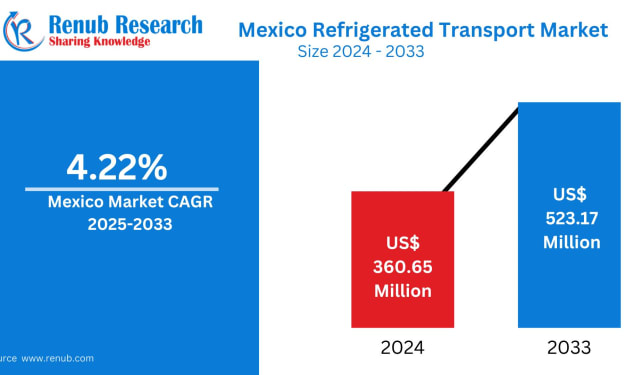
Mexico Refrigerated Transport Market Outlook The Mexico Refrigerated Transport Market is undergoing steady and strategic expansion as the country strengthens its position as a major hub for perishable goods, pharmaceutical distribution, and cross-border trade. According to Renub Research, the market is expected to reach US$ 523.17 million by 2033, rising from US$ 360.65 million in 2024, registering a CAGR of 4.22% from 2025 to 2033.
By Renub Research3 days ago in The Swamp
Saudi Arabia Teleradiology Market Size and Forecast 2025–2033. AI-Generated.
Introduction: A New Era of Remote Diagnostics in Saudi Arabia Saudi Arabia’s healthcare system is undergoing a profound transformation, driven by technology, policy reform, and the national ambition outlined in Vision 2030. Among the most impactful innovations shaping this evolution is teleradiology—a digital healthcare solution that enables medical images to be transmitted and interpreted remotely by qualified radiologists.
By Renub Research3 days ago in The Swamp