
Trump Tariffs Live: EU Considers $108 Billion Retaliation as Denmark Says ‘Europe Will Not Be Blackmailed’
Tensions escalate over Greenland as European leaders unite against U.S. tariff threats, signaling a potential transatlantic trade showdown
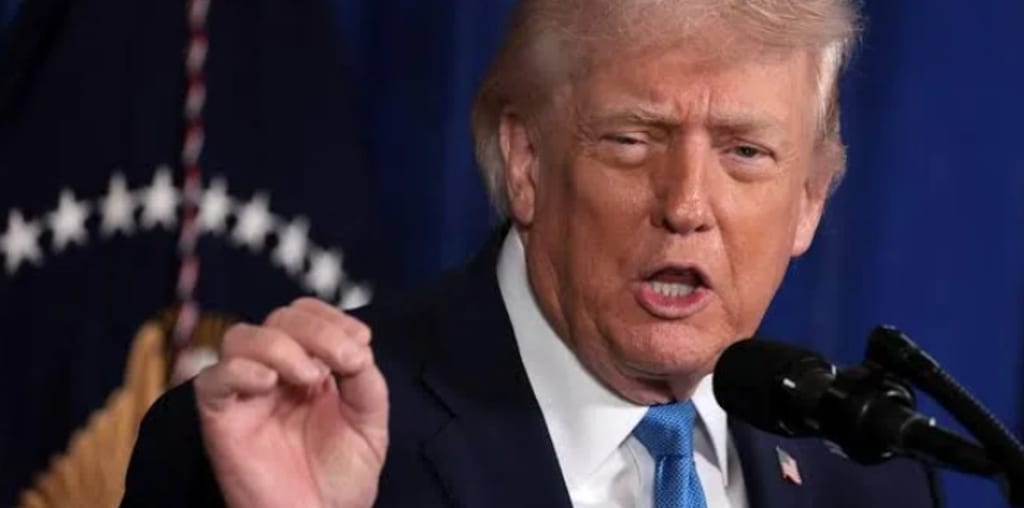
The latest chapter in U.S.-Europe trade tensions has taken center stage. President Donald Trump has threatened sweeping tariffs on European goods, escalating an already tense transatlantic relationship. In response, European leaders, led by Denmark’s Prime Minister Mette Frederiksen, have pushed back strongly, declaring that Europe “will not be blackmailed.” Now, Brussels is considering as much as $108 billion in retaliatory tariffs.
This isn’t just about economics—it’s about alliances, sovereignty, and global influence. Here’s everything you need to know, in a clear, blog-style format.
What Sparked This Tariff Threat?
It all started with Trump’s controversial Greenland proposal. The U.S. President suggested buying the strategic autonomous territory from Denmark, citing national security reasons. Denmark and Greenland’s government flatly rejected the idea.
Trump responded by announcing a 10% tariff on imports from eight European countries, threatening to increase it to 25% by June if a deal on Greenland isn’t reached. The countries targeted include:
Denmark
Sweden
France
Germany
Netherlands
Finland
United Kingdom
Norway
This move is widely seen as a coercive tactic, linking trade policy to geopolitical demands—a strategy that European leaders are not taking lightly.
Europe Pushes Back: ‘We Will Not Be Blackmailed’
European leaders have responded with a united front. They issued a statement warning that the tariff threats “undermine transatlantic relations and risk a dangerous downward spiral.”
Danish PM Mette Frederiksen didn’t mince words:
“Europe will not be blackmailed.”
Other leaders in Germany, France, and Sweden echoed her sentiment. They emphasized that while Europe prefers dialogue over conflict, it will defend sovereignty and international law at all costs.
This message is clear: Europe values its relationship with the U.S., but it won’t compromise under economic threats.
Brussels Considers $108 Billion in Retaliation
In response, Brussels has convened emergency meetings to explore countermeasures. The EU is considering tariffs on U.S. goods totaling $107.7 billion, essentially mirroring the scale of Trump’s threat.
Potential measures could include levies on:
Machinery and vehicles
Agricultural products
Consumer goods
In addition, the EU may activate its “Anti-Coercion Instrument”, a legal tool designed to counter economic pressure from powerful partners. If used, it could restrict U.S. access to investment opportunities and public procurement in the EU.
Why This Matters Politically and Economically
The stakes are high. Markets have already reacted, with the euro and sterling showing signs of volatility. European leaders argue that punitive tariffs on allies are counterproductive, stressing the importance of maintaining transatlantic cooperation.
British PM Keir Starmer has criticized the U.S. approach, calling it “completely wrong” and urging negotiations while protecting alliances. Economists warn that a prolonged trade standoff could:
Disrupt supply chains
Affect investment flows
Slow global economic growth
This isn’t just a fight over Greenland—it’s a test of how far economic tools can be used in geopolitical disputes.
Diplomacy in the Midst of Tension
Despite the hard talk, Europe hasn’t closed the door on diplomacy. Officials are keen on negotiations based on:
Mutual respect
Sovereignty
Shared values
NATO commitments and Arctic security remain pivotal, even amid disagreements. European leaders are trying to balance firmness with dialogue, showing the world that alliances can survive friction, even when under economic pressure.
What Happens Next?
Here’s the likely timeline:
February 1, 2026: Trump’s 10% tariffs on European goods are set to take effect.
June 2026: Tariffs could rise to 25% if no agreement is reached.
EU retaliatory measures: Still under discussion, with emergency summits planned to finalize any actions.
Financial markets, policymakers, and global observers will be watching closely. Decisions in the coming weeks could reshape transatlantic trade and diplomatic norms.
Key Takeaways
Greenland is the spark, but trade is the battlefield. Trump’s Greenland proposal is the reason behind the latest tariffs, but the broader fight is about economic and geopolitical influence.
Europe stands united. Denmark’s PM and other leaders are sending a clear message: coercion won’t work.
Retaliation could be massive. $108 billion in EU counter-tariffs could escalate into a full-blown trade conflict.
Diplomacy isn’t dead. Despite tensions, Europe and the U.S. still share security and economic interests, keeping negotiation channels open.
Global impact is real. Supply chains, investments, and market stability are all at risk if the standoff continues.
Final Thoughts
The Trump tariffs saga highlights how trade policy and geopolitics are deeply intertwined. While economic measures are powerful tools, they also carry political and strategic consequences. Europe’s firm stance shows that even in an era of rising power competition, alliances like NATO and the EU-U.S. relationship remain resilient—but not untested.
The world will be watching closely as February approaches. Will diplomacy prevail, or are we heading toward a transatlantic trade war that could ripple across the global economy?
Stay tuned, because the next few weeks could reshape the balance of power in Europe, the U.S., and beyond.
About the Creator
Keep reading
More stories from Aqib Hussain and writers in The Swamp and other communities.
Canada’s Tariff Cut Just Made This High-Tech Chinese EV 50% Cheaper
Canada has just shaken up the electric vehicle (EV) market in a big way. Thanks to a recent tariff cut, one high-tech Chinese EV just became 50% cheaper for Canadian buyers. That’s huge news for anyone thinking about switching to electric—or keeping an eye on the auto industry.
By Aqib Hussainabout 17 hours ago in The Swamp


Comments
There are no comments for this story
Be the first to respond and start the conversation.