
How AI Stole My Face: The Day I Found Myself on a Stranger's Body
The Alarming Truth About Deepfakes, Identity Theft, and the Future of Digital Privacy

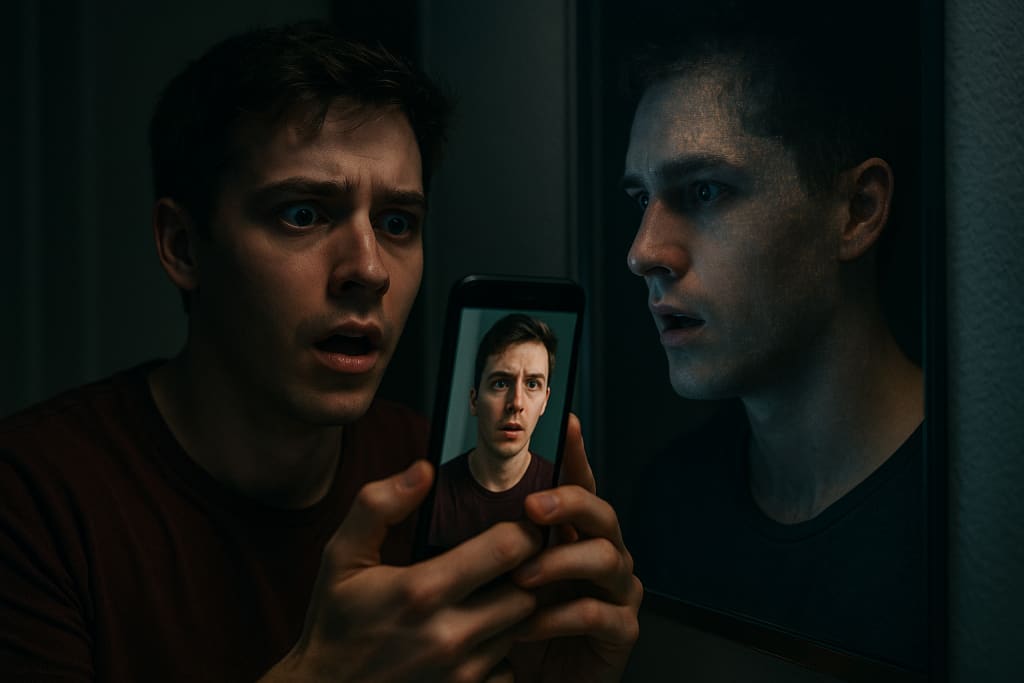
Artificial Intelligence has revolutionized our world, but its rapid evolution has also opened dark doors we never thought we’d face. What began as a marvel of innovation turned into a digital nightmare when I saw my face — my identity — being used on a stranger’s body. This wasn't a prank. It was real. And it changed everything I thought I knew about online safety.
I had always been careful about my digital footprint. My social media accounts were private. I rarely posted selfies. Yet one evening, while scrolling through a popular video-sharing app, I stumbled across a viral clip. My heart dropped. There I was — or rather, someone wearing my face — dancing, laughing, and speaking in a voice eerily similar to mine. Except it wasn’t me.
The Rise of Deepfake Technology and AI Manipulation
The technology behind what I witnessed is called deepfake. It uses AI algorithms and deep learning to superimpose someone’s face onto another person’s body in videos or images. What was once a sci-fi concept has become disturbingly real. With just a few photos, AI can now replicate your facial expressions, voice tone, and even body language with terrifying accuracy.
At first glance, deepfakes might seem like harmless fun — used for entertainment, satire, or movie effects. But when it crosses the line into identity theft or unauthorized impersonation, it becomes a serious threat to personal privacy and reputation. My experience is just one among thousands.
From Shock to Desperation: Trying to Take Back My Face
Seeing my likeness being used inappropriately was like being violated. I was flooded with emotions — disbelief, confusion, rage. Who would do this? And more importantly, why? The comments below the video were filled with likes, laughs, and even inappropriate remarks. No one knew it wasn’t me.
I immediately contacted the platform to report the content. Their response? “We’ll review it within 48 hours.” But 48 hours in viral terms is a lifetime. The video had already been downloaded, reshared, and turned into memes. I was no longer in control of my face.
I tried contacting a cybercrime lawyer and even reached out to local authorities. Most of them weren’t equipped to handle AI-based identity misuse. The laws around deepfakes are still evolving, and catching the person behind the fake was like chasing a ghost in a digital storm.
Digital Identity Theft: A Modern-Day Crisis
This is more than just an embarrassing encounter. It’s a wake-up call. Deepfake videos and AI-generated images are being used to manipulate elections, ruin reputations, commit fraud, and blackmail innocent people. Anyone with a smartphone and internet connection can become a victim.
You don’t have to be famous to be targeted. Sometimes it's random. Sometimes it’s personal. In my case, I suspect it was someone who had access to a few of my old college photos — pictures I thought were safe. AI doesn’t need much. Just a few angles and it can create a full 3D facial model.
Identity theft used to mean stolen credit card numbers or hacked accounts. Now, it means someone can literally become you, saying things you never said, doing things you never did — in front of an audience of millions.
The Psychological Toll of Seeing Yourself Used by AI
I couldn’t sleep for days. Every time I closed my eyes, I saw me doing things I never did. It felt like a horror movie, except the monster was me. Friends messaged me, confused. Some thought it was funny, others were concerned. A few even believed it was real.
That’s when the real damage began. Trust started to erode. I had to explain myself again and again. My professional reputation was on the line. A potential employer even asked me about “that video,” as if it was an actual part of my past. It was humiliating and deeply unjust.
No one warns you about the emotional trauma of digital impersonation. The feeling of being powerless over your own identity is soul-crushing. And the worst part? The internet never forgets. Even if the video is taken down, copies remain — hidden in someone’s gallery, floating in cloud storage, waiting to resurface.
Fighting Back: What I Learned and How You Can Protect Yourself
This experience forced me to become an advocate for digital safety. I began researching how to protect my online identity and here’s what I’ve learned:
Limit your digital exposure. Avoid posting high-resolution selfies or personal videos unless necessary. AI thrives on data. The less you give it, the harder it becomes to replicate you.
Use reverse image search. Regularly check if your face appears somewhere you didn’t expect it to. Tools like Google Reverse Image Search or TinEye can help.
Enable watermarking. When sharing photos or videos, add subtle watermarks or use apps that distort facial features slightly. It won’t ruin your content, but it can confuse AI algorithms.
Educate yourself. Understand the basics of how deepfakes work. The more you know, the better prepared you'll be.
Push for legislation. Advocate for stronger laws regarding AI misuse and deepfake regulation. Support platforms and politicians who take online privacy seriously.
The Role of Big Tech and the Need for Regulation
Let’s be honest: tech companies are profiting from AI innovation, but they’re not doing enough to protect users. Platforms like TikTok, Instagram, and YouTube have millions of AI-generated contents floating around. Their moderation systems are often slow, flawed, or easily manipulated.
There needs to be a global conversation on how to ethically use AI and how to implement fail-safes to prevent abuse. Watermarks, traceable digital fingerprints, and AI detection systems should be a must, not an option.
Governments need to step in. Just as we have laws against identity theft, harassment, and defamation, there should be strict penalties for unauthorized AI impersonation. The legal system needs to catch up before it’s too late.
Looking Forward: Can We Still Trust What We See?
After this experience, I’ve come to realize that we’re entering a post-truth era. Where once “seeing was believing,” now every video, every image, even every voice can be doubted. We no longer ask, “Did this really happen?” We ask, “Is this even real?”
This has massive implications — not just for individuals like me, but for journalism, politics, justice, and history. How can we convict someone based on video evidence when it could be faked? How can we believe a public figure’s speech if it could be AI-generated?
As AI becomes more advanced, we must evolve with it. We need digital literacy to be taught in schools. People must learn to critically analyze content and question authenticity. Otherwise, we risk losing our grip on truth itself.
Conclusion: My Face, My Fight
AI stole my face, but it didn’t steal my voice. Sharing this story is a small step toward reclaiming my identity and warning others before it happens to them. This isn’t just my fight — it’s all of ours. In a world where AI can copy your smile, mimic your voice, and replicate your movements, protecting your identity is no longer a choice. It’s a necessity.
Note:
This article was created with the assistance of AI (ChatGPT), then manually edited for originality, accuracy, and alignment with Vocal Media’s guidelines.
About the Creator
Lana Rosee
🎤 Passionate storyteller & voice of raw emotion. From thoughts to tales, I bring words to life. 💫
Love my content? Hit Subscribe & support the journey! ❤️✨
Keep reading
More stories from Lana Rosee and writers in The Swamp and other communities.
Imran Khan: From Cricket Legend to Political Powerhouse
Imran Khan, a name deeply etched into the hearts of millions across the globe, stands as a symbol of unmatched resilience, charisma, and transformation. From cricket stadiums to political arenas, Imran’s journey has been nothing short of phenomenal. As a cricketer, he brought pride to Pakistan. As a leader, he ignited hope among the masses for a better tomorrow. His life reflects a saga of passion, perseverance, and patriotism that continues to inspire countless individuals worldwide.
By Lana Rosee6 months ago in Humans
Five Graphics That Show Greenland’s Importance to Trump
Greenland, a vast Arctic island with a tiny population, rarely dominates global headlines. Yet during Donald Trump’s presidency and continuing influence on U.S. politics, Greenland emerged as a symbol of American strategic ambition. Trump’s interest was not about tourism or novelty. It reflected deeper calculations tied to security, resources, and global power competition. Through five conceptual “graphics,” we can clearly see why Greenland matters so much to Trump and to U.S. policymakers more broadly.
By Salaar Jamalia day ago in The Swamp
Wild Card Weekend Recap: What Happens Now?
I think I figured out why I love Wild Card Weekend so much. It's because it's the first playoff anything of the calendar year. The NFL season starts in the fall, and once upon a time, the champion was crowned either on or slightly before New Year's. The evolution of the NFL schedule has resulted in the playoffs starting just into the New Year, and currently, the final week of the season falls on the first weekend of the New Year, with Wild Card Weekend coming a week after that. So yes, chronologically, the NFL's Wild Card Weekend serves as the first playoff anything of the calendar year.
By Clyde E. Dawkins6 days ago in Unbalanced



Comments
There are no comments for this story
Be the first to respond and start the conversation.