
Imran Khan: From Cricket Legend to Political Powerhouse
Unveiling the Inspirational Life of Imran Khan Through the Lenses of Leadership, Legacy, and Loyalty

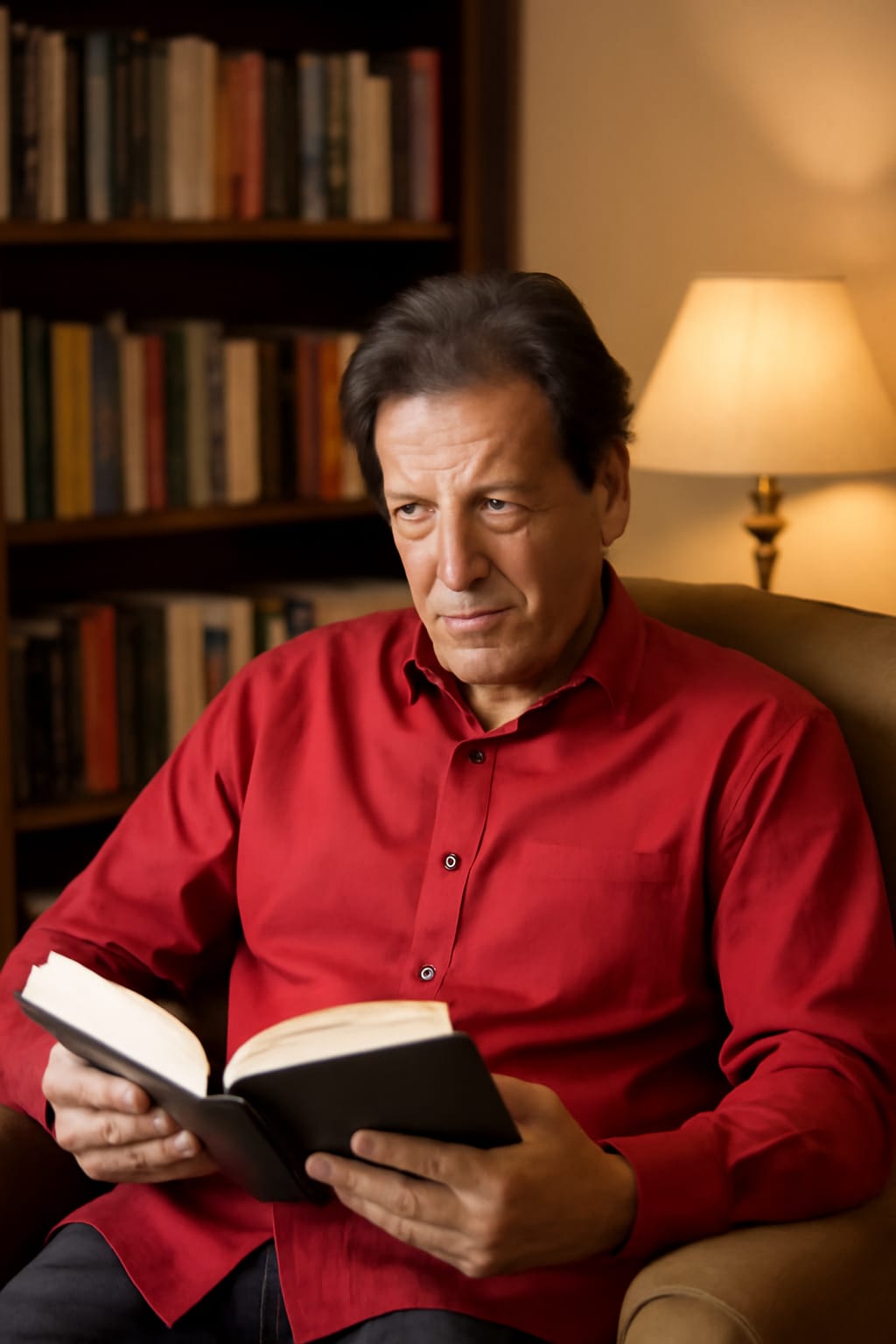
Imran Khan, a name deeply etched into the hearts of millions across the globe, stands as a symbol of unmatched resilience, charisma, and transformation. From cricket stadiums to political arenas, Imran’s journey has been nothing short of phenomenal. As a cricketer, he brought pride to Pakistan. As a leader, he ignited hope among the masses for a better tomorrow. His life reflects a saga of passion, perseverance, and patriotism that continues to inspire countless individuals worldwide.
Born on October 5, 1952, in Lahore, Pakistan, Imran Ahmed Khan Niazi belonged to a well-educated and affluent Pashtun family. His early education at Aitchison College laid the foundation for his excellence in sports, especially cricket. Later, he studied at the prestigious Royal Grammar School in England and went on to pursue philosophy, politics, and economics at Keble College, Oxford. These educational experiences shaped his intellectual framework and prepared him for the multifaceted challenges he would later face.
Imran Khan's cricket career began in the early 1970s when he debuted for the Pakistan national team. Despite a slow start, his determination and natural athleticism soon made him a dominant all-rounder on the international stage. With his reverse swing bowling and aggressive batting style, Khan earned the respect of teammates and adversaries alike. Over the years, he played in 88 Test matches and 175 One Day Internationals (ODIs), earning accolades for his match-winning performances.
The pinnacle of his cricket career was undoubtedly the 1992 Cricket World Cup. As the captain of the national team, Imran Khan led Pakistan to its first-ever World Cup victory. His famous speech encouraging his team to “fight like cornered tigers” became a symbol of Pakistani resilience. This iconic win not only sealed his place in cricketing history but also won him eternal admiration in the hearts of his countrymen.
After retiring from cricket in 1992, Imran Khan took a bold step into philanthropy. His mother’s painful battle with cancer moved him to establish the Shaukat Khanum Memorial Cancer Hospital in Lahore—the first and largest cancer hospital in Pakistan offering free treatment to the underprivileged. Built through public donations, the hospital stands as a testament to Imran's vision, compassion, and determination to uplift the suffering humanity of his homeland.
Khan's philanthropic vision didn't stop there. He later founded Namal College in Mianwali with the goal of providing world-class education to students in rural areas. He has always believed that empowering youth through education is the key to transforming Pakistan. His commitment to health and education laid the groundwork for his eventual foray into politics—a domain where he sought to institutionalize justice and merit.
In 1996, Imran Khan launched his political party, Pakistan Tehreek-e-Insaf (PTI), with the dream of creating a corruption-free and just society. Despite his fame and clean image, his political career initially struggled. PTI failed to win any significant seats in its early elections, and Khan often faced ridicule for his political inexperience and rigid idealism. Yet, like his cricketing days, he never backed down. His commitment to change became stronger with every setback.
Over the years, Imran Khan's message began resonating with the common people, especially the youth. His relentless campaigning against corruption, injustice, and dynastic politics slowly turned PTI into a powerful political force. By 2013, PTI emerged as the second-largest party in terms of popular vote, and in the 2018 general elections, the party won a majority, making Imran Khan the 22nd Prime Minister of Pakistan.
As Prime Minister, Imran Khan faced an uphill task. The country was already battling economic instability, a rising debt burden, and diplomatic challenges. Khan’s government introduced several reforms aimed at reducing corruption, boosting tax collection, and investing in social welfare programs like the Ehsaas Program, which targeted poverty alleviation and women’s empowerment. His flagship Sehat Card initiative provided millions access to free healthcare, a historic step for public health in the country.
On the international stage, Khan adopted a non-aligned and peace-oriented foreign policy. He played a critical role in promoting peace dialogues between the Taliban and the U.S., presented a strong case for Kashmir at the United Nations, and raised concerns about Islamophobia globally. His bold and articulate speeches gained international acclaim and reinforced Pakistan's position on important global issues.
Despite his achievements, Imran Khan's tenure was not free from controversies and criticisms. His opponents accused him of being too rigid, often ignoring political consensus and dialogue. His handling of inflation, increasing fuel prices, and unemployment drew discontent from various segments of society. Furthermore, tensions with opposition parties escalated, leading to political polarization. Critics also questioned the military's alleged support in his rise to power, challenging the democratic legitimacy of his rule.
In April 2022, Khan was removed from office through a vote of no-confidence. While his supporters called it a foreign-backed conspiracy, others viewed it as a consequence of political mismanagement and strained civil-military relations. However, Khan didn’t retreat. He rallied nationwide protests, launched digital campaigns, and maintained his popularity among the youth and middle class, proving that his political journey was far from over.
Beyond politics and sports, Imran Khan has been a subject of intense media coverage due to his personal life. His marriages, particularly to British heiress Jemima Goldsmith and later to Reham Khan and Bushra Bibi, have been widely discussed in tabloids and public forums. While his personal choices have often been controversial, he has always emphasized that public service remains his top priority.
Imran Khan's charisma lies in his ability to connect with people, especially the youth, on an emotional and intellectual level. His straightforwardness, patriotic spirit, and unrelenting attitude continue to attract massive followings. Whether one agrees with his politics or not, his ability to inspire and mobilize a nation cannot be ignored. He is a leader who has lived multiple lives—each marked by trials, triumphs, and transitions.
Today, Imran Khan remains a central figure in Pakistani politics. Despite legal challenges, arrests, and intense opposition, he stands tall with an unshaken belief in his mission to build a "Naya Pakistan." His resilience has sparked comparisons with global icons who faced setbacks but never gave up on their dreams. Whether he returns to power or not, his impact on the political consciousness of Pakistan is undeniable.
Note:
This article was created with the assistance of AI (ChatGPT), then manually edited for originality, accuracy, and alignment with Vocal Media’s guidelines.
About the Creator
Lana Rosee
🎤 Passionate storyteller & voice of raw emotion. From thoughts to tales, I bring words to life. 💫
Love my content? Hit Subscribe & support the journey! ❤️✨
Keep reading
More stories from Lana Rosee and writers in Humans and other communities.
How John Became My Love and Friend
When we talk about love, we often envision a fairytale beginning with roses, sparks, and magical moments. But sometimes, love comes quietly, hidden in laughter, trust, and countless memories. That’s exactly how John became my love and friend. Our story wasn't dramatic or rushed—it was beautifully ordinary, the kind of love that grows slowly and roots itself deep.
By Lana Rosee6 months ago in Humans
Technology Effects on Humans
Introduction Technology has become a very important part of human life. From the moment we wake up until we go to sleep, we use technology in many ways. Mobile phones, computers, the internet, and machines have made life easier and faster. Technology helps humans to learn, work, travel, and communicate. However, along with its benefits, technology also has some negative effects on human health, behavior, and relationships. In this essay, we will discuss how technology affects humans in both positive and negative ways.
By LegacyWordsa day ago in Humans



Comments
There are no comments for this story
Be the first to respond and start the conversation.