
Hong Kong Court Jails Pro-Democracy Media Tycoon Jimmy Lai for 20 Years
Landmark sentence sparks global outrage as press freedom and democracy in Hong Kong face a new low

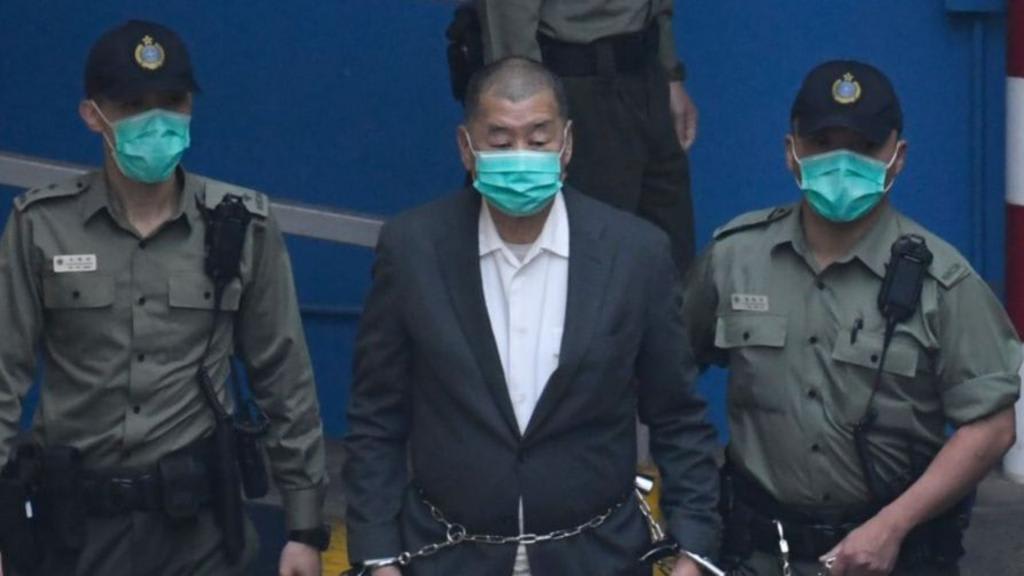
A Hong Kong court has sentenced pro-democracy media tycoon Jimmy Lai to 20 years in prison, in a case that has become one of the most significant symbols of the city’s political transformation. The ruling has sparked widespread international reaction, with human rights groups, Western governments, and press freedom advocates calling the sentence a serious blow to democracy and free expression.
Jimmy Lai, founder of the now-shuttered pro-democracy newspaper Apple Daily, has long been viewed as one of the most outspoken critics of Beijing’s influence in Hong Kong. His imprisonment is being interpreted by many observers as part of a broader crackdown on dissent that has intensified since the introduction of Hong Kong’s national security law.
The case has become a defining moment not only for Hong Kong but also for global debates around press freedom, political rights, and the future of civil liberties under authoritarian pressure.
Who Is Jimmy Lai and Why Is His Case So Important?
Jimmy Lai is one of Hong Kong’s most well-known media figures. He built a reputation as a bold entrepreneur and a vocal supporter of democratic values.
For decades, Lai’s media empire—especially Apple Daily—played a major role in shaping public debate in Hong Kong. The newspaper was widely recognized for:
Supporting pro-democracy movements
Publishing criticism of Beijing and Hong Kong authorities
Covering protests and civil rights issues
Giving a platform to opposition voices
To his supporters, Lai is a symbol of free speech and resistance. To authorities, he represents a figure accused of crossing legal boundaries under Hong Kong’s current political framework.
The 20-Year Sentence: What the Court’s Decision Means
A 20-year prison sentence is considered exceptionally severe, especially for a high-profile figure in his seventies. While legal details may vary depending on charges, the sentence reflects how aggressively Hong Kong’s courts are now enforcing national security-related cases.
In recent years, Hong Kong’s legal system has undergone major changes, with critics arguing that the city’s once-independent judicial environment is increasingly aligned with Beijing’s political goals.
The sentencing of Jimmy Lai sends a clear message:
High-profile dissent will not be tolerated
Pro-democracy activism carries extreme risk
Media criticism of the government can lead to long-term imprisonment
For many Hong Kong citizens, this decision reinforces fears that the city’s freedoms—once protected under the “one country, two systems” model—are disappearing rapidly.
The Role of the National Security Law
Hong Kong’s national security law was introduced in 2020 after massive pro-democracy protests in 2019. Authorities said the law was necessary to restore stability and stop violence.
However, critics argue it has been used to:
Silence political opposition
Criminalize protest movements
Restrict press freedom
Expand police power and surveillance
Redefine dissent as “national security threats”
Under the law, crimes such as “collusion with foreign forces,” “subversion,” and “secession” can carry heavy penalties.
Jimmy Lai’s case is widely seen as one of the most prominent examples of how the law has reshaped Hong Kong’s political reality.
Apple Daily: A Newspaper That Became a Symbol
Before its closure, Apple Daily was not just a newspaper—it was a cultural and political symbol.
The outlet had a huge readership and was known for:
Loud pro-democracy editorial positions
Investigative journalism
Sensational but influential reporting style
Strong criticism of Chinese authorities
In 2021, Apple Daily shut down after police raids, arrests of senior staff, and the freezing of company assets.
For press freedom advocates, the closure marked the end of an era in Hong Kong journalism. The jailing of its founder is now being viewed as the final chapter in that story.
Global Reaction: Condemnation and Concern
Jimmy Lai’s sentencing has drawn attention far beyond Hong Kong. International organizations and governments have raised concerns that the case reflects an alarming decline in political rights.
Critics argue that:
Hong Kong’s autonomy is being eroded
Journalists and publishers are being targeted
Political trials are being normalized
Fear is replacing free debate
Some foreign leaders have called for Lai’s release, describing him as a political prisoner. Meanwhile, Beijing and Hong Kong authorities maintain that the case is about law enforcement, not politics.
This clash in narratives has become central to how Hong Kong is perceived internationally.
Impact on Hong Kong’s Media and Civil Society
The sentencing is expected to have a chilling effect across Hong Kong.
For journalists
Many reporters now fear that:
Critical reporting could be seen as illegal
Interviews with activists could lead to investigation
Publishing international opinions could be risky
Editorial independence is no longer protected
As a result, self-censorship is increasing, and many journalists have left the city.
For activists
Pro-democracy groups have largely dissolved, and many activists have been jailed, fled overseas, or stopped political work entirely.
The message to civil society is clear: organizing resistance may carry severe consequences.
For ordinary citizens
Even those not involved in politics may feel the impact. When press freedom declines, public access to independent information also declines—leaving citizens with fewer perspectives on government decisions and social issues.
What This Means for Hong Kong’s Future
Hong Kong was once considered one of Asia’s most open and globally connected cities. It was famous for:
Independent courts
A free press
A strong civil society
Open political debate
Today, many observers believe the city is moving toward a more tightly controlled model.
Jimmy Lai’s 20-year sentence is being viewed as a turning point—an event that confirms Hong Kong’s transformation into a place where political dissent and independent media are increasingly dangerous.
Final Thoughts: A Defining Moment for Press Freedom
The jailing of Jimmy Lai for 20 years is not just the story of one man. It represents a much larger struggle over the identity of Hong Kong.
Supporters of the sentence argue that stability and national security must come first. Critics argue that without freedom of speech, independent journalism, and political rights, Hong Kong is losing the very qualities that once made it unique.
As the world reacts, one reality remains: Hong Kong’s pro-democracy movement has suffered one of its most significant defeats, and the future of press freedom in the city looks more uncertain than ever.
FAQs (People Also Ask)
Who is Jimmy Lai?
Jimmy Lai is a Hong Kong media tycoon and founder of the pro-democracy newspaper Apple Daily, known for his outspoken criticism of Beijing.
Why was Jimmy Lai sentenced to 20 years?
He was sentenced under charges linked to Hong Kong’s national security framework, which authorities say targets threats to national stability.
What happened to Apple Daily?
Apple Daily shut down in 2021 after police raids, arrests of staff, and the freezing of assets, which supporters say was part of a crackdown on press freedom.
Why is Jimmy Lai’s case important internationally?
His case is widely viewed as a symbol of Hong Kong’s shrinking freedoms and the increasing pressure on independent media and pro-democracy voices.
About the Creator
Asad Ali
I'm Asad Ali, a passionate blogger with 3 years of experience creating engaging and informative content across various niches. I specialize in crafting SEO-friendly articles that drive traffic and deliver value to readers.
The Saddest Thing - The Billionaires Who Rule America Aren't Even Enjoying Themselves
This single post says more about our ruling class than a thousand policy papers. The saddest thing about today's system is that the men robbing the rest of us - sabotaging our economic prospects, our pensions, our access to affordable healthcare - are not even happy.
By Scott Christenson🌴6 days ago in The Swamp
Astronomers Pinpoint a Repeating Fast Radio Burst to a Mysterious, Steady Source of Radio Emission
Space is full of surprises, but few have puzzled scientists as much as fast radio bursts (FRBs). These powerful flashes of radio energy last only milliseconds, yet they can outshine entire galaxies during that tiny moment. For years, astronomers have been trying to uncover where these mysterious signals come from—and now, they’ve made a major breakthrough.
By Sajida Sikandar2 days ago in The Swamp
Bartender
On the heels of grief, pain bears down hard. On the heels of death, pain awakens the quiet place between the end of our own life and now. Feeling anything is like seeing a film and in black and white, slow motion, all sound turned off. Just watching. Gritting teeth, awkward smiles and bloody red eyes move around, scanning the others who are feeling something I don't want to feel, but I do. Escapism is all I have ever known. ~
By ROCK aka Andrea Polla (Simmons)a day ago in Poets




Comments
There are no comments for this story
Be the first to respond and start the conversation.