
Here’s a comprehensive article based on the latest developments
Transatlantic Tensions Rise as Europe Scrambles to Respond to U.S. Tariff Threats Linked to Greenland
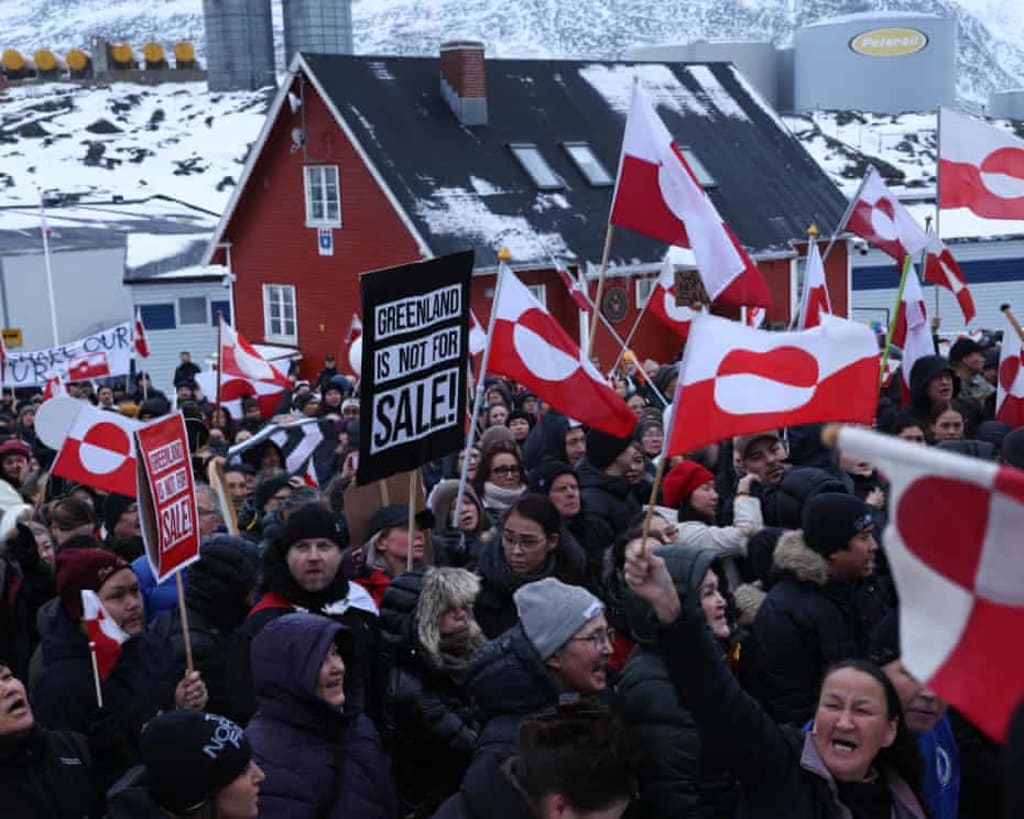
:
---
EU Ambassadors Summoned for Emergency Talks After Trump Threatens Tariffs Over Greenland – Europe Live
In an extraordinary escalation of transatlantic tensions, European Union ambassadors were summoned for emergency talks as leaders scramble to respond to U.S. President Donald Trump’s unprecedented threat to impose tariffs on multiple European countries over the issue of Greenland — a semi-autonomous Danish territory in the Arctic with huge geopolitical significance.
This crisis marks a dramatic departure from normal diplomatic and trade relations, pitting long-standing allies against one another over questions of national sovereignty, global influence, and strategic security in the Arctic.
---
What Trump Announced — Tariffs as Leverage
On January 17, 2026, President Trump took to Truth Social to announce that he intends to impose escalating tariffs on eight European nations unless the United States is granted permission to buy Greenland.
Under his proposed plan:
A 10% tariff on goods from Denmark, Norway, Sweden, France, Germany, the Netherlands, Finland and the United Kingdom would take effect on February 1, 2026.
That tariff would rise to 25% by June 1 if no deal is reached.
Trump framed it as a national security imperative, arguing Greenland’s location and resources pose strategic concerns for the U.S. if left outside American control.
The tariffs would remain in place “until such time as a Deal is reached for the Complete and Total purchase of Greenland,” Trump wrote — a clause that has shocked many international observers because it ties economic penalties to territorial negotiation.
---
Why Greenland Matters
Greenland, while sparsely populated, is rich in natural resources and is strategically positioned in the Arctic — a region growing in importance as climate change opens new shipping routes and access to critical minerals. Its location also influences global military posture, particularly for NATO allies monitoring the presence of Russia and China in the Arctic.
The United States previously attempted in 2019 to purchase Greenland, a move that was unanimously dismissed by Danish and Greenlandic leaders at that time. The renewed push by Trump has reignited concerns about sovereignty and respect for international norms.
---
European Reaction: Unity and Condemnation
European leaders reacted swiftly and in unison, condemning the tariff threat as unacceptable and harmful to transatlantic relations — relations built over decades of cooperation through NATO and shared economic ties.
French President Emmanuel Macron declared that “no amount of intimidation” would alter Europe’s stance on Greenland’s sovereignty. At the same time, EU Commission President Ursula von der Leyen and EU Council President António Costa warned that tariffs could trigger a “dangerous downward spiral” in relations with the U.S., potentially harming economic growth and regional security.
UK officials have similarly rejected Trump’s pressure, stressing that Britain’s position on Greenland — as part of the Danish Realm — remains non-negotiable even in the face of punitive tariffs.
NATO allies also expressed concern that economic coercion might damage the transatlantic alliance and inadvertently benefit rival powers, such as Russia and China, by highlighting divisions among Western partners.
---
Emergency Talks: EU Ambassadors Convened
In response to the tariff threat, the EU’s rotating presidency — currently held by Cyprus — called for an emergency meeting of ambassadors from all 27 member states on Sunday evening in Brussels. The goal: coordinate a collective diplomatic and economic response to Trump’s tariffs and discuss possible countermeasures.
This type of emergency diplomatic convening is rare and signals the severity with which EU nations view the crisis. Options under discussion include:
Joint EU diplomatic protests delivered to Washington.
Economic countermeasures or retaliatory tariffs.
Reassessment of the stalled EU-U.S. trade agreement.
Legal challenges through the World Trade Organization.
The aim is to present a united front against what many European leaders see as undue economic pressure.
---
Legal and Political Challenges
Experts have questioned whether Trump’s proposed tariffs are legally enforceable under the rules of the World Trade Organization (WTO) and existing U.S. trade law. The EU could bring a complaint to the WTO, potentially leading to years of litigation. Meanwhile, the U.S. constitution and federal statutes limit the president’s unilateral authority to impose tariffs for political or territorial leverage.
Domestically within the U.S., some lawmakers — even Republicans — have raised alarms that using tariffs as a bargaining chip threatens the credibility of American foreign policy and may undermine NATO solidarity.
---
Broader Implications for Transatlantic Ties
If fully enacted, Trump’s tariff threats could have lasting repercussions:
The transatlantic trade relationship, already fragile, could deteriorate further.
NATO cooperation might suffer if trust between the U.S. and European allies erodes.
Global markets could react negatively, especially in sectors dependent on European exports to the U.S.
Strategic cooperation in the Arctic and on shared security concerns could become strained.
Even as dialogue continues, this episode illustrates how geopolitical tensions can intersect with economic policy — sometimes in unpredictable and disruptive ways. European leaders are now focused on both protecting the sovereignty of Greenland and safeguarding the broader framework of transatlantic cooperation that has endured since World War II.
---
Conclusion: A Pivotal Moment in EU-U.S. Relations
The clash over Greenland and Trump’s tariff threats represents a pivotal moment in EU-U.S. diplomacy — one that tests decades of alliance and challenges the norms of international negotiation. As EU ambassadors meet in Brussels, the world watches to see whether cooperation prevails over confrontation, or whether this dispute will mark a new era of friction between historic partners.
---
If you’d like more background on Greenland’s geopolitical importance or how WTO trade rules might apply, let me know!
About the Creator
Keep reading
More stories from Salaar Jamali and writers in The Swamp and other communities.
What Is ICE and What Powers Do Its Agents Have to Use Force?
Immigration and Customs Enforcement, commonly known as ICE, is one of the most debated and scrutinized law enforcement agencies in the United States. Frequently appearing in headlines related to immigration enforcement, border security, and public protests, ICE often raises questions about what it does, how it operates, and the authority its agents have to use force. Understanding ICE’s role and legal powers is essential for grasping how immigration law is enforced in the US and where the limits of that enforcement lie.
By Salaar Jamaliabout 15 hours ago in The Swamp
Xi Stresses the Need to Win the Fight Against Corruption in China
Corruption has long been one of the most dangerous internal threats facing modern China. From bribery and abuse of power to deep-rooted patronage networks within the Communist Party, corruption has undermined public trust and threatened political stability. That is why Chinese President Xi Jinping’s repeated insistence on “winning the fight against corruption” is not just rhetoric—it is a cornerstone of his leadership and governance strategy. As China navigates economic slowdown, geopolitical pressure, and domestic uncertainty, Xi’s message is clear: the battle against corruption is far from over, and failure is not an option. Why Corruption Is a Critical Issue for China Corruption in China is not merely a legal or moral problem; it is a political one. For a one-party system that derives legitimacy from performance and discipline, corruption directly challenges the authority of the Communist Party. Before Xi came to power in 2012, public anger over corrupt officials had reached worrying levels. Lavish lifestyles, misuse of public funds, and unchecked local power created a growing gap between party elites and ordinary citizens. This environment posed a long-term risk to social stability—something the Chinese leadership views as an existential concern. Xi’s solution was decisive: a sweeping anti-corruption campaign that would target both high-ranking leaders and low-level officials alike. “Tigers and Flies”: Xi’s Signature Campaign One of the most famous phrases associated with Xi’s leadership is his pledge to go after both “tigers and flies”—a metaphor for powerful senior officials and minor bureaucrats. Over the past decade, the campaign has led to: The investigation and punishment of hundreds of thousands of officials The downfall of senior party figures once considered untouchable A culture of fear and discipline within government institutions By stressing the need to “win” this fight, Xi signals that corruption is not a temporary challenge but a permanent threat that must be continuously controlled. Power, Discipline, and Party Survival Critics outside China often argue that the anti-corruption drive doubles as a political purge, eliminating rivals and consolidating Xi’s power. While this interpretation is widely debated, it misses a crucial point: discipline is central to the Communist Party’s survival strategy. For Xi, corruption weakens loyalty, undermines governance, and erodes ideological unity. In a system without electoral competition, internal discipline replaces democratic accountability. The anti-corruption campaign serves as a mechanism to enforce obedience and ensure that officials align with central leadership. In this sense, Xi’s emphasis on corruption is not only about clean governance—it is about control. Public Support and Popular Appeal Despite concerns from international observers, the campaign has enjoyed significant domestic support. Many ordinary Chinese citizens view it as long overdue, especially after decades of rapid growth that enriched elites while leaving inequalities unresolved. Highly publicized investigations send a powerful message: no official is above the law. This narrative strengthens Xi’s image as a leader willing to confront entrenched interests for the sake of national integrity. Public trust, in turn, becomes a political asset—one that Xi carefully cultivates through strong language and visible enforcement. Economic Consequences of Anti-Corruption The anti-corruption drive has also had economic side effects. In some sectors, officials have become overly cautious, delaying decisions out of fear of investigation. This phenomenon—often described as “policy paralysis”—has slowed local governance and investment approvals. Yet Xi appears willing to accept these short-term costs. From his perspective, unchecked corruption poses a far greater long-term risk to economic sustainability and investor confidence. By institutionalizing anti-corruption mechanisms, Beijing aims to create a more predictable and disciplined administrative environment—even if it takes time to adjust. A Message to the Party—and the World Xi’s renewed emphasis on fighting corruption also sends a message beyond China’s borders. At a time when Western democracies grapple with political scandals and institutional mistrust, Beijing presents its model as one of order, discipline, and centralized accountability. Whether or not this model appeals globally, it reinforces China’s narrative of governance efficiency and internal strength. Corruption, in Xi’s framing, is not a flaw of the system but a challenge the system is capable of correcting. Why Xi Says the Fight Must Be “Won” Language matters in Chinese political culture. By framing corruption as a “fight” that must be “won,” Xi elevates the issue to the level of national survival. This framing justifies extraordinary measures, continuous oversight, and permanent vigilance. It also ensures that the campaign does not end with a single victory. Winning, in this context, means maintaining pressure indefinitely—turning anti-corruption into a defining feature of governance rather than a temporary policy. What Comes Next for China As Xi continues to consolidate authority, the anti-corruption campaign is likely to become more institutionalized rather than less intense. New regulations, internal party inspections, and digital oversight tools suggest the fight will evolve, not fade. For Chinese officials, the message is unmistakable: loyalty, discipline, and obedience are non-negotiable. For citizens, the campaign offers reassurance that abuses of power will not go unchecked—at least in principle. Final Thoughts Xi Jinping’s insistence on winning the fight against corruption reflects more than a desire for clean governance. It reveals how power, legitimacy, and discipline intersect in modern China. In a system built on centralized authority, corruption is not just misconduct—it is a threat to the political order itself. Whether viewed as reform, control, or both, the anti-corruption campaign remains one of the most defining elements of Xi’s leadership—and a key lens through which to understand China’s future.
By Muhammad Hassan6 days ago in The Swamp



Comments
There are no comments for this story
Be the first to respond and start the conversation.