
Balochistan in Turmoil: Coordinated Separatist Attacks Shake Pakistan’s Restive Province
A Deadly Day in Southwestern Pakistan Unfolds as Violence Escalates


Quetta, Balochistan — January 31, 2026 — Balochistan, Pakistan’s largest but least developed province, has once again become the epicenter of violent conflict. On Saturday, a series of coordinated attacks by Baloch separatist militants rocked the region, leaving dozens dead, including civilians and security personnel, and prompting one of the most significant militant flare-ups in recent memory.
The insurgent offensive, claimed by the Baloch Liberation Army (BLA) — an outlawed separatist group — targeted multiple locations across the province, including police stations, paramilitary installations, and a high-security prison. The attacks occurred early in the morning and were reported to be simultaneous, highly organized, and deadly.
A Deadly Wave: Casualties Among Civilians and Forces
According to official reports, at least 21 people were killed during the coordinated offensive. Among the dead were 11 civilians and 10 security personnel, highlighting the widespread human toll of the violence.
The majority of civilian casualties occurred in the port city of Gwadar, a strategically important economic hub due to its role in China-Pakistan Economic Corridor projects. Provincial police official Ibad Khan confirmed that ethnic Baloch civilians, including women and children, were among those killed.
In response to the attack, security forces reported significant militant casualties, with authorities claiming that 67 insurgents were killed on Saturday alone. Over the preceding 48 hours, total militant deaths have been reported at 108 fighters, marking this episode as one of the deadliest clashes between separatists and state forces in decades.
Scale and Scope: What Happened on the Ground
The assault was multi-pronged. According to eyewitness and security reports:
Police Stations Targeted:
Several police outposts in the provincial capital Quetta came under fire.
Paramilitary Checkpoints:
Attackers reportedly struck paramilitary facilities using small arms and explosives.
Prison Assault Attempt:
A bid to breach a high-security prison in Mastung was reported, though it was largely thwarted by security forces.
Infrastructure Sabotage: Railway tracks were destroyed, disrupting train services and compounding the chaos across the province.X
Hostage and Abduction Efforts: Some officials reported attempted abductions, but details remain limited amidst ongoing operations.
In a propaganda move, the BLA released videos showing female fighters participating in the attacks, a rare but symbolic inclusion that underscores the group’s evolving tactics and attempt to project broader support.
Government and Military Response
The Pakistani government has condemned the attacks, with Interior Minister Mohsin Naqvi stressing the state’s resolve to counter terrorism. In a statement released on Saturday, Naqvi emphasised that while security personnel were killed, the overall threat was being successfully countered and many attacks were foiled due to swift action by the forces.
Balochistan’s Chief Minister, Sarfraz Bugti, took to social media to reaffirm that security forces were actively pursuing the attackers, vowing to restore stability and punish the perpetrators.
Authorities have also ramped up security operations across the province, launching raids on militant hideouts, and tightening checkpoints in major cities. The military has reportedly increased troop deployments in the most volatile districts to prevent further escalation.
The Root of the Conflict: Long-Standing Separatist Struggle
Balochistan has long been one of Pakistan’s most restive regions. Despite its rich natural resources — including gas, minerals, and strategic coastal access — the province remains economically marginalised relative to other parts of the country. Many Baloch nationalist groups argue that local communities have been denied a fair share of development benefits. These grievances, compounded by historical mistrust and intermittent state crackdowns, have fuelled decades-long insurgency.
The BLA and allied groups have repeatedly claimed responsibility for high-profile attacks, including suicide bombings, sabotage of infrastructure, and assaults on security installations. In 2025, for instance, a school bus bombing in Khuzdar left multiple children dead, and militants hijacked the Jaffar Express train, taking hundreds of passengers hostage.
Civilians in the Crossfire: Human Cost and Displacement
It is civilians, especially in rural districts and urban centres like Quetta and Gwadar, who suffer most from this ongoing conflict. Frequent attacks, internet and transport disruptions, and aggressive security sweeps have created an atmosphere of fear and uncertainty for ordinary residents. Many families have lost loved ones, and local businesses face economic strain due to insecurity and movement restrictions.
Blockades, shutdowns, and internet suspensions, previously implemented during periods of heightened alert, have further disrupted daily life, affecting education, healthcare access, and commerce. Previous closures of mobile internet across all 36 districts illustrated the extent to which security protocols can paralyse civilian life.
Looking Ahead: Can Peace Be Restored?
With violence spreading and casualties rising, the question of how to achieve lasting peace in Balochistan looms large. The government maintains that military strength and counter-terrorism operations are essential, but critics argue that political dialogue and socio-economic investment must accompany any security strategy.
Previous efforts to offer talks and development programs have been announced, but mistrust remains high among local communities. Without addressing the underlying causes — including economic inequity and political exclusion — the cycle of violence may continue.
For now, as security forces work to stabilize the situation after Saturday’s deadly assault, Balochistan faces a fragile moment — one that will test both the resilience of its people and the effectiveness of Pakistan’s counter-insurgency approach.
If you want, I can also provide a concise timeline of recent events in Balochistan or an explainer on the Baloch separatist movement’s history — just let me know!
About the Creator
sehzeen fatima
Sehzeeen Fatima is a writer with a Master’s in Science who shares inspiring stories about sports, life, and people. She writes in simple, clear language to connect with readers and spark meaningful thought.
Keep reading
More stories from sehzeen fatima and writers in The Swamp and other communities.
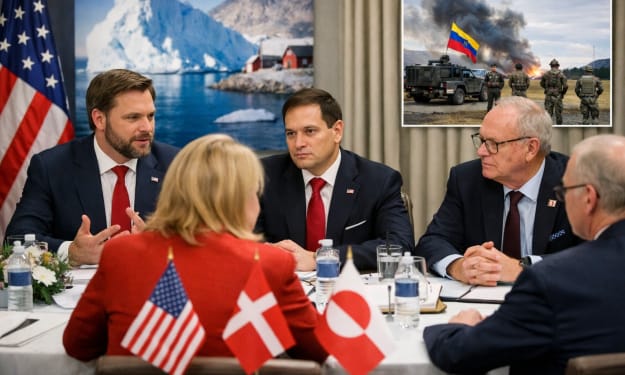
U.S. Officials Meet on Greenland as Congress Challenges Trump’s War Powers
The United States is facing a busy and tense moment in foreign policy. In the same week, top U.S. officials held an important meeting about Greenland, while Congress moved closer to a vote that could limit President Donald Trump’s power to use the military in Venezuela. These two events may seem unrelated, but together they show growing concern at home and abroad about how far U.S. power should go.
By sehzeen fatima17 days ago in The Swamp
Russian Airstrikes Pound Ukraine Amid US-Brokered Peace Talks in Abu Dhabi
Tensions rise as diplomatic efforts continue Ukraine is facing renewed military pressure as Russian airstrikes target key cities and infrastructure, coinciding with ongoing US-brokered peace talks in Abu Dhabi. Despite diplomatic efforts to reduce hostilities, the violence on the ground highlights the challenges of negotiating an end to the conflict. The strikes have caused significant damage to residential areas, transportation networks, and industrial facilities, putting civilians at risk and disrupting daily life across affected regions. The Context of the Airstrikes Russian forces have intensified their aerial operations in recent weeks, targeting areas with strategic and economic significance. Analysts suggest the timing of the attacks may be intended to pressure Ukrainian negotiators during the peace talks. While diplomats gather in Abu Dhabi to discuss potential ceasefires and humanitarian corridors, the violence in Ukraine continues unabated, emphasizing the complexity of achieving a resolution. Impact on Civilians and Infrastructure The airstrikes have had devastating effects on the population: Loss of Life and Injuries – Reports indicate that civilians have been killed or injured, prompting urgent calls for international humanitarian support. Displacement – Thousands of residents are fleeing affected cities, seeking shelter in safer areas, including temporary accommodations in neighboring regions. Damage to Infrastructure – Power plants, water supplies, and hospitals have been affected, creating long-term challenges for essential services. Psychological Toll – The constant threat of airstrikes adds stress and fear, particularly among children and the elderly. Humanitarian organizations are coordinating relief efforts, but access to conflict zones remains extremely challenging due to ongoing military activity. The US-Brokered Peace Talks In Abu Dhabi, diplomats from Ukraine, Russia, and the United States are engaged in discussions aimed at reducing hostilities and opening channels for negotiations. Key topics include: Ceasefire agreements in specific regions Humanitarian corridors for civilians and aid delivery Steps toward broader diplomatic solutions to end the conflict Despite these efforts, analysts caution that progress is likely to be slow, as military actions on the ground continue to complicate trust and negotiation. Why Attacks Continue During Talks Several reasons explain why airstrikes persist even while diplomatic negotiations are underway: Leverage in Negotiations – Military pressure can be used as a bargaining tool to influence concessions. Ongoing Strategic Objectives – Both sides continue operations to secure key territory and resources, regardless of diplomacy. Limited Enforcement of Agreements – Without a binding ceasefire in place, airstrikes and other military actions can continue. Experts warn that violence during negotiations is not unusual, but it underscores the urgent need for international monitoring and protection of civilians. Global Reactions and Concerns The international community has expressed deep concern about the ongoing attacks: United Nations – Urging immediate protection of civilians and access for humanitarian aid. European Union – Condemning the violence and calling for uninterrupted diplomatic engagement. United States – Coordinating the peace talks while continuing support for Ukraine’s defense and humanitarian needs. The continuation of airstrikes during negotiations has also sparked debates over accountability, the enforcement of international law, and the effectiveness of diplomacy under active conflict conditions. Humanitarian Challenges Aid organizations are facing significant obstacles: Blocked or damaged supply routes hinder the delivery of food, medicine, and emergency equipment. Displacement of civilians creates a need for shelters, medical care, and social support. Psychological support is critical for individuals traumatized by repeated attacks. International cooperation is crucial to ensure that relief reaches those most in need, even as the security situation remains unstable. Looking Ahead The situation in Ukraine remains fluid and unpredictable. While peace talks provide hope for a reduction in hostilities, the reality on the ground suggests that negotiations will be complicated and protracted. Experts suggest several possible scenarios: Temporary Ceasefire – Short-term agreements may allow aid delivery and reduce civilian casualties. Escalation – Continued airstrikes could prolong conflict and deepen humanitarian crises. Diplomatic Breakthrough – Rare but possible, resulting in lasting agreements that pave the way for peace. Regardless of the outcome, coordination between international actors, continued diplomatic pressure, and humanitarian support remain essential. Conclusion The airstrikes in Ukraine amid US-brokered peace talks in Abu Dhabi illustrate the complex interplay between military action and diplomacy. Civilians continue to bear the brunt of violence, highlighting the urgent need for protective measures, humanitarian aid, and international engagement. While hope exists that diplomacy can eventually reduce hostilities, the conflict serves as a stark reminder of how negotiation and warfare can coexist, making the path to peace both delicate and challenging.
By Fiaz Ahmed 7 days ago in The Swamp
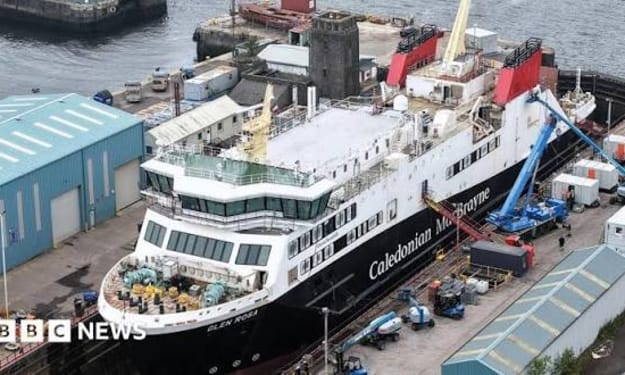
Glen Rosa Ferry Costs Rise by £12.5m After Latest Six-Month Delay
Project delays and cost increases continue to challenge Scotland’s new ferry initiative The Glen Rosa ferry project, a key part of Scotland’s ambitious plan to modernize its maritime transport, has experienced another setback. Officials have announced that costs have increased by £12.5 million following a six-month delay in construction and delivery. The project, designed to serve routes around Arran and other western isles, has already faced scrutiny for repeated delays and budget overruns.
By Fiaz Ahmed a day ago in The Swamp


Comments
There are no comments for this story
Be the first to respond and start the conversation.