
Affection and Healing for Yourself: A Journey to Inner Peace
“Discover Practical Ways to Nurture Yourself and Heal from Emotional Stress”

In today’s fast-paced world, it’s easy to forget the importance of self-affection and self-healing. Many people dedicate themselves to work, family, and social obligations, often neglecting the most important relationship of all—the one with themselves. Cultivating love, compassion, and healing for oneself is not selfish; it is essential for emotional well-being, resilience, and overall health.
This guide explores practical strategies to foster self-affection, emotional healing, and mental rejuvenation, allowing individuals to live more balanced and fulfilling lives.
Why Self-Affection Matters
Self-affection is the practice of treating yourself with the same kindness and understanding you would offer to a loved one. It means recognizing your worth, forgiving your mistakes, and acknowledging your achievements without judgment.
Research in psychology shows that individuals who practice self-compassion experience:
Lower stress levels
Improved emotional resilience
Better physical health
Increased life satisfaction
Without self-affection, people are more likely to fall into cycles of self-criticism, anxiety, and emotional burnout.
Understanding Self-Healing
Self-healing involves acknowledging emotional wounds and actively working to restore your mental and emotional balance. Unlike external healing from medical interventions, self-healing focuses on the mind-body connection.
Key elements of self-healing include:
Emotional awareness: Understanding your feelings without suppression
Mindfulness: Staying present and accepting life’s moments without judgment
Forgiveness: Letting go of resentment toward yourself and others
Through self-healing, you cultivate a sense of inner peace, reduce stress, and create space for personal growth.
Practical Ways to Cultivate Affection for Yourself
Practice Self-Compassion Daily
Speak to yourself kindly. Replace harsh self-criticism with supportive words. Simple affirmations like “I am enough” or “I am worthy of love” can rewire your thinking patterns over time.
Set Healthy Boundaries
Protect your emotional and physical energy by learning to say no when necessary. Boundaries are essential to maintain balance and prevent burnout.
Engage in Self-Care Rituals
Self-care is not just spa days or luxury items. It includes activities that nourish your mind, body, and soul, such as meditation, journaling, walking in nature, or even quiet reflection.
Celebrate Your Achievements
Take time to recognize even small accomplishments. Celebrate progress instead of focusing solely on setbacks.
Forgive Yourself
Mistakes are part of life. Holding onto guilt or regret hinders healing. Practice self-forgiveness and view mistakes as opportunities for growth.
Techniques for Emotional Healing
Mindfulness Meditation
Mindfulness helps you become aware of your emotions without judgment. By observing thoughts and feelings, you learn to respond thoughtfully rather than react impulsively.
Journaling
Writing down your thoughts and emotions is a powerful tool for self-reflection. It helps identify patterns, release pent-up emotions, and gain clarity on difficult situations.
Visualization
Imagine yourself healed, happy, and at peace. Visualization techniques train the mind to focus on positive outcomes and can accelerate emotional recovery.
Therapeutic Practices
Counseling, guided meditation, or therapy can support self-healing by providing tools to process trauma and emotional challenges effectively.
The Role of Physical Wellness
Healing and affection are not limited to the mind—they are intertwined with physical well-being. Practices like:
Regular exercise
Balanced nutrition
Adequate sleep
…support emotional resilience and foster a stronger connection with oneself. Treating your body with respect enhances the healing process and reinforces self-affection.
Overcoming Common Obstacles
Many people struggle with self-affection due to:
Past trauma or emotional pain
Cultural or societal messages that prioritize others over oneself
Habitual self-criticism
Acknowledging these barriers is the first step toward overcoming them. Small, consistent practices, patience, and sometimes professional guidance can make profound differences over time.
Benefits of Prioritizing Affection and Healing
When you actively nurture yourself, the benefits extend beyond personal well-being:
Improved relationships: Self-love allows you to give and receive love more authentically
Better decision-making: Emotional clarity leads to wiser choices
Increased resilience: Coping with challenges becomes easier when your foundation is strong
Greater life satisfaction: A harmonious inner life reflects outwardly in all areas
Conclusion
Affection and healing for yourself are not indulgences—they are necessities for a balanced and fulfilling life. In cultivating self-compassion, emotional awareness, and self-care practices, you create a foundation of strength that empowers you to thrive, even in the face of life’s challenges.
The journey may require patience, reflection, and effort, but the rewards—a peaceful mind, healthier relationships, and lasting emotional resilience—are invaluable.
Remember: the relationship you have with yourself sets the tone for every other relationship in your life. Investing in your own healing and affection is the most important gift you can give yourself.
About the Creator
Keep reading
More stories from Aarif Lashari and writers in The Swamp and other communities.
Jobs Slump at Fastest Rate in Five Years: UK Employment Hits Turbulent Patch
The UK labor market is showing signs of strain as recent figures reveal that jobs are declining at the fastest rate in five years. Analysts warn that this slowdown could have far-reaching consequences for households, businesses, and the broader economy, marking a period of heightened uncertainty for workers and employers alike.
By Aarif Lashariabout 18 hours ago in The Swamp
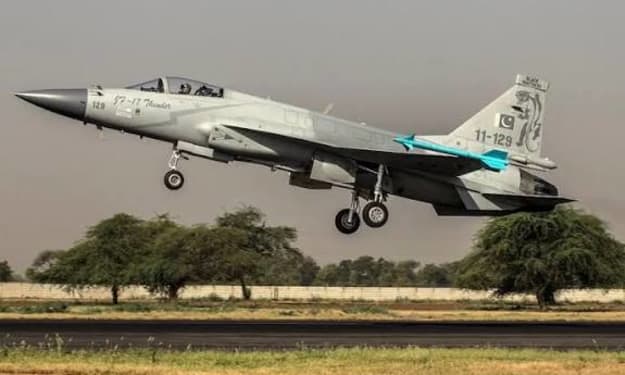
Ex-Air Commodore Explains Why Pakistan’s JF-17 Excels in Today’s Fighter Jet Market
In an era where modern air combat is defined as much by affordability and adaptability as by raw power, Pakistan’s JF-17 Thunder has emerged as one of the most competitive multirole fighter jets in the global market. According to a former Pakistan Air Force (PAF) Air Commodore, the aircraft’s growing appeal lies not in trying to outmatch fifth-generation stealth fighters, but in offering a smart, balanced solution for countries seeking reliable air power without unsustainable costs. Designed for Real-World Needs The JF-17 was conceived with a clear purpose: to meet the operational requirements of air forces that cannot afford expensive Western fighters or are constrained by political and logistical barriers. The ex-Air Commodore explains that many nations do not need ultra-high-end platforms; instead, they require jets that are versatile, easy to maintain, and capable of performing multiple missions effectively. From air defense and ground attack to maritime strike and reconnaissance, the JF-17 is built as a true multirole aircraft. Its design philosophy prioritizes flexibility, allowing air forces to tailor the jet according to their specific security environments. Cost-Effectiveness Without Compromise One of the JF-17’s strongest advantages is its cost-effectiveness. Compared to Western fighters such as the F-16 or Eurofighter Typhoon, the JF-17 costs significantly less to acquire, operate, and maintain. The former Air Commodore highlights that affordability does not mean sacrificing combat capability. Lower lifecycle costs make the JF-17 especially attractive to developing countries that need to modernize their air fleets without placing excessive strain on national budgets. Maintenance requirements are simpler, spare parts are more accessible, and training pipelines are shorter—factors that collectively enhance operational readiness. Modern Avionics and Combat Systems Contrary to outdated perceptions, the JF-17 is far from technologically basic. The latest Block III variant incorporates advanced avionics, including an Active Electronically Scanned Array (AESA) radar, modern electronic warfare systems, and an improved cockpit with a wide-area display and helmet-mounted sight. The ex-Air Commodore notes that these upgrades significantly enhance situational awareness and survivability in contested airspace. AESA radar, in particular, places the JF-17 in a competitive category, enabling better target detection, tracking, and engagement compared to older mechanically scanned systems. Weapons Integration and Operational Flexibility Another key reason for the JF-17’s success is its broad weapons compatibility. The aircraft can carry a wide range of air-to-air, air-to-ground, and anti-ship missiles, including beyond-visual-range (BVR) weapons. This allows operators to adapt the jet for diverse mission profiles without relying on a single supplier. The former Air Commodore emphasizes that this flexibility reduces political dependency. Unlike some Western platforms that come with strict usage and upgrade restrictions, the JF-17 offers greater autonomy in weapons integration, a crucial factor for many countries navigating complex geopolitical realities. Proven in Service, Not Just on Paper Operational credibility is essential in today’s fighter jet market, and the JF-17 has demonstrated its reliability through active service with the Pakistan Air Force. It has participated in numerous exercises and real-world operations, showcasing its effectiveness in both defensive and offensive roles. According to the retired Air Commodore, combat-proven platforms inspire confidence among potential buyers. The JF-17’s consistent performance under demanding conditions reinforces its reputation as a dependable aircraft rather than a purely experimental design. Export Success and Strategic Appeal The JF-17’s export record further underscores its market strength. Countries such as Myanmar and Nigeria have inducted the aircraft, while others have expressed interest. For many air forces, the jet represents a strategic entry point into modern air combat capability without long-term financial or political constraints. The ex-Air Commodore points out that Pakistan’s willingness to offer technology transfer, training, and long-term support makes the JF-17 package even more appealing. This partnership-based approach contrasts with traditional arms deals that often leave buyers dependent and constrained. A Fighter Built for Today’s Realities In a fighter jet market dominated by expensive fifth-generation platforms, the JF-17 occupies a vital middle ground. It does not aim to replace stealth fighters, but it excels as a practical, modern, and affordable solution for nations focused on sovereignty, readiness, and sustainability. As the former Air Commodore concludes, the JF-17’s success lies in understanding what most air forces truly need: a reliable aircraft that delivers modern combat capability without overwhelming costs or political limitations. In today’s complex security environment, that balance makes Pakistan’s JF-17 Thunder not just competitive, but highly relevant.
By Fiaz Ahmed Brohi5 days ago in The Swamp
Trump Pushes for Lower Rates and Ban on Investor Home Purchases to Tackle Housing Affordability
As housing affordability remains one of the most pressing economic issues for American families, former U.S. President Donald Trump has renewed his focus on the housing market with a bold set of proposals. Trump is calling for lower interest rates and a ban on investor home purchases, arguing that these measures are necessary to restore affordability and give ordinary Americans a fair chance at homeownership.
By Muhammad Hassan14 minutes ago in The Swamp
Affection and Healing for Yourself
During the night of the last quarter moon, I gathered my ritual supplies. I carefully handled the chunk of black tourmaline that would protect me from your overall negative and narcissistic energy. I carefully walked the house with my stick of selenite in hand, asking the universe to cleanse our working space.
By Alisha Wilkins ✒️🦋🖋️2 days ago in Fiction



Comments
There are no comments for this story
Be the first to respond and start the conversation.