
Ex-Air Commodore Explains Why Pakistan’s JF-17 Excels in Today’s Fighter Jet Market
A Cost-Effective, Combat-Proven Fighter Offering Modern Technology, Flexibility, and Strategic Independence

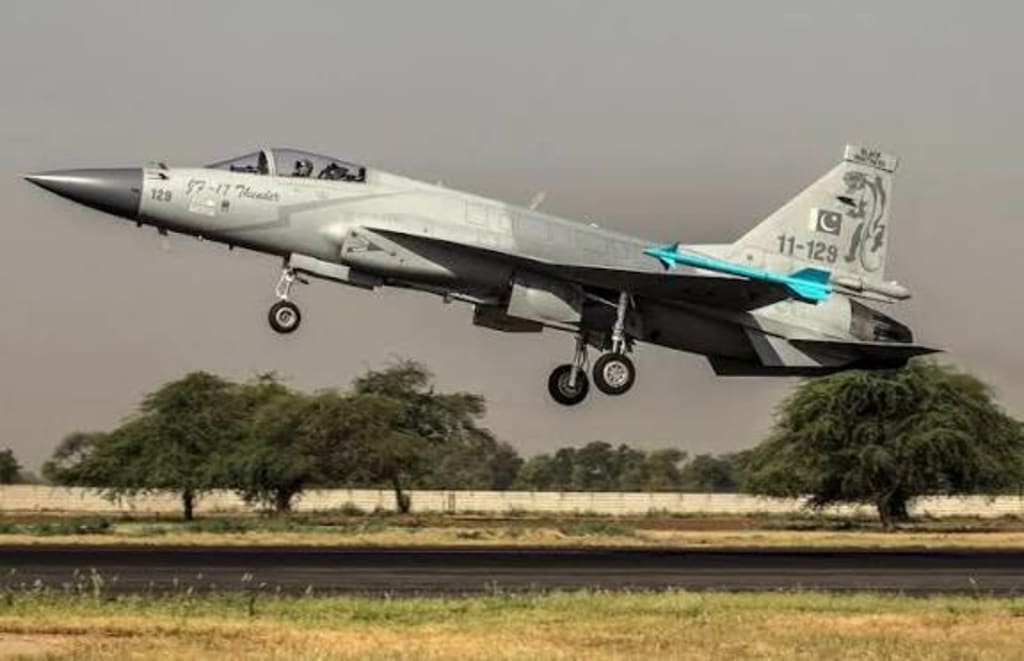
In an era where modern air combat is defined as much by affordability and adaptability as by raw power, Pakistan’s JF-17 Thunder has emerged as one of the most competitive multirole fighter jets in the global market. According to a former Pakistan Air Force (PAF) Air Commodore, the aircraft’s growing appeal lies not in trying to outmatch fifth-generation stealth fighters, but in offering a smart, balanced solution for countries seeking reliable air power without unsustainable costs.
Designed for Real-World Needs
The JF-17 was conceived with a clear purpose: to meet the operational requirements of air forces that cannot afford expensive Western fighters or are constrained by political and logistical barriers. The ex-Air Commodore explains that many nations do not need ultra-high-end platforms; instead, they require jets that are versatile, easy to maintain, and capable of performing multiple missions effectively.
From air defense and ground attack to maritime strike and reconnaissance, the JF-17 is built as a true multirole aircraft. Its design philosophy prioritizes flexibility, allowing air forces to tailor the jet according to their specific security environments.
Cost-Effectiveness Without Compromise
One of the JF-17’s strongest advantages is its cost-effectiveness. Compared to Western fighters such as the F-16 or Eurofighter Typhoon, the JF-17 costs significantly less to acquire, operate, and maintain. The former Air Commodore highlights that affordability does not mean sacrificing combat capability.
Lower lifecycle costs make the JF-17 especially attractive to developing countries that need to modernize their air fleets without placing excessive strain on national budgets. Maintenance requirements are simpler, spare parts are more accessible, and training pipelines are shorter—factors that collectively enhance operational readiness.
Modern Avionics and Combat Systems
Contrary to outdated perceptions, the JF-17 is far from technologically basic. The latest Block III variant incorporates advanced avionics, including an Active Electronically Scanned Array (AESA) radar, modern electronic warfare systems, and an improved cockpit with a wide-area display and helmet-mounted sight.
The ex-Air Commodore notes that these upgrades significantly enhance situational awareness and survivability in contested airspace. AESA radar, in particular, places the JF-17 in a competitive category, enabling better target detection, tracking, and engagement compared to older mechanically scanned systems.
Weapons Integration and Operational Flexibility
Another key reason for the JF-17’s success is its broad weapons compatibility. The aircraft can carry a wide range of air-to-air, air-to-ground, and anti-ship missiles, including beyond-visual-range (BVR) weapons. This allows operators to adapt the jet for diverse mission profiles without relying on a single supplier.
The former Air Commodore emphasizes that this flexibility reduces political dependency. Unlike some Western platforms that come with strict usage and upgrade restrictions, the JF-17 offers greater autonomy in weapons integration, a crucial factor for many countries navigating complex geopolitical realities.
Proven in Service, Not Just on Paper
Operational credibility is essential in today’s fighter jet market, and the JF-17 has demonstrated its reliability through active service with the Pakistan Air Force. It has participated in numerous exercises and real-world operations, showcasing its effectiveness in both defensive and offensive roles.
According to the retired Air Commodore, combat-proven platforms inspire confidence among potential buyers. The JF-17’s consistent performance under demanding conditions reinforces its reputation as a dependable aircraft rather than a purely experimental design.
Export Success and Strategic Appeal
The JF-17’s export record further underscores its market strength. Countries such as Myanmar and Nigeria have inducted the aircraft, while others have expressed interest. For many air forces, the jet represents a strategic entry point into modern air combat capability without long-term financial or political constraints.
The ex-Air Commodore points out that Pakistan’s willingness to offer technology transfer, training, and long-term support makes the JF-17 package even more appealing. This partnership-based approach contrasts with traditional arms deals that often leave buyers dependent and constrained.
A Fighter Built for Today’s Realities
In a fighter jet market dominated by expensive fifth-generation platforms, the JF-17 occupies a vital middle ground. It does not aim to replace stealth fighters, but it excels as a practical, modern, and affordable solution for nations focused on sovereignty, readiness, and sustainability.
As the former Air Commodore concludes, the JF-17’s success lies in understanding what most air forces truly need: a reliable aircraft that delivers modern combat capability without overwhelming costs or political limitations. In today’s complex security environment, that balance makes Pakistan’s JF-17 Thunder not just competitive, but highly relevant.
About the Creator
Fiaz Ahmed Brohi
I am a passionate writer with a love for exploring and creating content on trending topics. Always curious, always sharing stories that engage and inspire.
Keep reading
More stories from Fiaz Ahmed Brohi and writers in The Swamp and other communities.
What Next for Iran’s Supreme Leader? Navigating Crisis, Protest, and Uncertain Succession
Iran’s Supreme Leader Ayatollah Ali Khamenei stands at a crossroads. As one of the longest-serving heads of state in the Middle East, his authority has shaped Tehran’s domestic and foreign policy for decades. But mounting internal unrest, economic collapse, and growing questions about succession are forcing Iran and the world to confront an urgent and complex question: What comes next for Iran’s Supreme Leader? A Leader Under Pressure At age 86, Ayatollah Khamenei’s grip on power faces unprecedented challenges. Since late 2025, Iran has experienced widespread protests rooted in economic hardship, rising inflation, government corruption, and disillusionment with the clerical ruling system. These demonstrations have quickly evolved from localized unrest into nationwide calls for profound political change, including criticism of the highest religious authority in the land. � rtvonline.com +1 In response, state security forces have launched a brutal crackdown on protesters, employing live fire, mass detentions, and severe communication blackouts meant to stifle information and prevent mobilization. Reports indicate that thousands have been arrested and hundreds killed, underscoring the gravity of the crisis. � Wikipedia Khamenei has doubled down in rhetoric, dismissing protesters as “rioters” and insisting that dissent must be suppressed to preserve national stability. But his hardline stance has deepened public frustration and fueled calls for a regime transformation. � Al Jazeera The Question of Succession Unlike many modern leaders, the position of Supreme Leader in Iran is not hereditary, yet succession remains a critical concern. Constitutional mechanisms vest ultimate authority in the Leader of the Islamic Republic, not the president or parliament, and succession is determined by the Assembly of Experts—a clerical body often aligned with conservative elements of the state. Speculation about what happens after Khamenei has intensified due to his age and the turmoil gripping the nation. Within elite political circles, the debate centers on two paths: the continuation of clerical rule under a new hardline figure, or a potential shift toward a more inclusive or even transitional leadership model. � euronews Notably, Tehran Times and other regime-aligned outlets have dismissed rumors that Khamenei would install one of his sons, such as Mojtaba, as his successor, reinforcing that succession decisions will conform to strict constitutional criteria. � euronews Opposition Voices and Alternative Visions While hardliners remain influential, the streets of Iran tell a different story. Protesters have chanted slogans targeting Khamenei and even calling for the nationalist figure Reza Pahlavi—son of the last shah—to return as a symbol of broader political change. Such slogans reflect the diversity of opposition sentiment, which ranges from secular democratic reform to more radical shifts away from the Islamic Republic. � ایندیپندنت فارسی +1 In exile, Pahlavi has positioned himself as a potential transitional leader, advocating for referendums and democratic governance rather than a return to monarchy. His supporters see him as a unifying figure who could guide Iran through a post-regime transition, although his actual influence within Iran remains debated. � theguardian.com Other opposition groups, including reformers, secularists, and even some nationalist factions, offer varying visions for Iran’s future. Some advocate for constitutional reforms within a republican framework, while others push for more grassroots, decentralized governance. The diversity of these voices illustrates that the future leadership landscape is neither singular nor predictable. � Reddit Regional and Global Implications What happens next in Iran is not just a domestic matter. Tehran’s foreign policy under Khamenei has been defined by its regional network of alliances and proxy relationships—often referred to as the “Axis of Resistance”—which has included armed allies in Lebanon, Iraq, Syria, and Yemen. � Foreign Affairs Forum A leadership transition could have significant implications for these networks and for the broader geopolitical balance in the Middle East. A weakened or transitioning leadership might be less able to project power externally, while a resurgence of consolidated clerical authority could mean continued resistance to Western influence and ongoing tensions with neighbors. International pressure, particularly from the United States and Europe, has evolved alongside these internal struggles. In early 2026, Washington imposed new sanctions on Iranian officials and related economic networks while pausing direct military action. These measures aim to increase pressure on the regime without escalating conflict. � wsj.com Paths Forward: Stability, Reform, or Transformation Several scenarios could unfold in the coming months and years: Regime Consolidation: Hardliners could tighten control, suppressing dissent and maintaining the clerical status quo, possibly under new leadership selected by the Assembly of Experts. Internal Reform: The establishment of limited reforms aimed at appeasing public demands without fundamentally altering the system—an approach that may buy time but risks further unrest. Transitional Leadership: A negotiated shift toward a transitional governing body, potentially influenced by figures like Pahlavi or other reformist leaders, leading to constitutional changes. Widespread Upheaval: Continued protests could intensify, leading to unpredictable outcomes ranging from civil conflict to a more rapid regime collapse. The only certainty is that the future of Iran’s Supreme Leader and the system he represents is being questioned like never before. As the internal crisis deepens, the world watches not just who will succeed Khamenei, but what leadership model will emerge from decades of entrenched authoritarian rule.
By Fiaz Ahmed Brohia day ago in The Swamp
Meta Blocks 550,000 Accounts Under Australia’s Social Media Ban
Australia’s Social Media Ban Hits Hard Meta, the parent company of Facebook and Instagram, has blocked more than 550,000 accounts in response to Australia’s new social media regulations. The move comes as the government enforces stricter rules designed to combat misinformation, online harassment, and harmful content, including material deemed illegal or unsafe. While this is the largest enforcement action of its kind, it reflects a growing trend: governments are no longer treating social media platforms as free-for-all spaces. Regulators are increasingly holding tech giants accountable for what happens on their platforms—sometimes forcing them to act quickly and decisively, even at scale. What Australia’s Social Media Ban Entails Australia’s legislation, aimed at protecting citizens online, gives authorities the power to demand removal or restriction of content considered illegal, unsafe, or harmful. Social media companies that fail to comply face heavy fines. The law targets a range of issues, including: Misinformation and fake news Content promoting self-harm or suicide Hate speech and harassment Material that violates national security or public order For Meta, compliance meant identifying, reviewing, and blocking hundreds of thousands of accounts—a task of unprecedented scale. How Meta Responded Meta confirmed it had blocked over 550,000 accounts, including both individual users and pages, primarily to comply with government orders. The company also ramped up automated systems and human moderation teams in Australia to monitor content and enforce the new rules. The scale of the action highlights how governments can now influence the digital landscape, especially when platforms operate within their borders. However, Meta’s approach has sparked debate about accuracy, fairness, and free expression. Critics argue that large-scale account blocking can inadvertently silence legitimate users alongside harmful actors. Free Speech vs. Safety: A Delicate Balance Australia’s social media ban raises challenging questions about the balance between free expression and online safety. Supporters argue that strict enforcement is necessary to protect citizens, prevent the spread of dangerous misinformation, and curb online harassment. Critics warn that sweeping measures can unintentionally suppress legitimate voices, limit public debate, and give tech companies enormous power to decide what is acceptable. This tension is not unique to Australia—it reflects a global debate over how much control governments should have over online platforms. The Human and Technical Challenges Blocking over half a million accounts is no small feat. Meta relies on both automated systems and human moderators to identify content that violates laws. While technology can flag obvious violations, subtle issues like satire, context, and regional differences require human review. This raises questions about errors and fairness. Could legitimate accounts be blocked? How transparent is the process? Meta says it tries to balance compliance with user rights, but incidents of overreach or mistakes are almost inevitable at this scale. International Implications Australia’s social media ban is likely to influence other countries considering stricter regulation of digital platforms. Governments in Europe, Asia, and North America are watching closely to see how social media companies respond to legal pressure. The action by Meta signals to regulators worldwide that tech giants can and will comply with national laws, even when it involves mass enforcement. At the same time, it highlights the challenges of global platforms operating under multiple jurisdictions, each with different legal and cultural standards. Meta’s Broader Strategy Meta’s large-scale blocking of accounts is part of a broader strategy to adapt to increasing regulation worldwide. Over the past few years, governments have enacted laws targeting misinformation, online harassment, hate speech, and data privacy. Companies like Meta face a delicate balancing act: comply with local laws, protect users, and maintain global platform consistency. Australia’s enforcement highlights how reactive and adaptive tech companies must become in a rapidly changing regulatory landscape. Public Reaction and Controversy The public reaction has been mixed. Many Australians support strong measures to curb online harm, especially after high-profile cases of online abuse or misinformation. At the same time, some worry about overreach, censorship, and the lack of transparency in mass account blocking. Social media users, advocacy groups, and legal experts are calling for clearer guidelines and appeals processes, so that users whose accounts were mistakenly blocked can have their voices restored. This conversation is likely to intensify as governments continue to regulate online speech more aggressively. Looking Ahead: What This Means for Social Media Australia’s social media ban—and Meta’s response—marks a turning point in the regulation of online platforms. Governments now have tools to enforce compliance, while social media companies must adapt quickly or face legal consequences. For users, it signals a changing landscape where content is increasingly monitored and regulated. For companies, it demonstrates the high stakes of non-compliance and the operational challenges of moderating millions of accounts worldwide. The broader implication is clear: social media is no longer a free-for-all environment. National laws, safety concerns, and global scrutiny now dictate how platforms operate, shaping the way millions of people interact online. Final Thoughts Meta’s blocking of 550,000 accounts under Australia’s social media ban is a powerful example of how governments and tech companies are grappling with the complexities of online regulation. Balancing safety, legality, and free expression is a high-stakes challenge that will only grow as the digital landscape evolves. For Australia, it is a test of regulatory power. For Meta, it is a test of operational capacity and ethical responsibility. And for users worldwide, it is a reminder that the rules of the online world are changing—and that compliance, safety, and governance now shape how we experience social media every day.
By Muhammad Hassan7 days ago in The Swamp
The Devil's Cut
“Comrade, finally you’re awake.” The voice was smooth, sensual. A flickering incandescent bar was all that lit the white, sterile room. All Vladimir remembered was everything going black. He tried to move his arms and found them strapped to the gurney.
By Matthew J. Fromm5 days ago in Fiction


Comments
There are no comments for this story
Be the first to respond and start the conversation.