
Trump Pushes for Lower Rates and Ban on Investor Home Purchases to Tackle Housing Affordability
Former President Unveils Aggressive Proposals Aimed at Cooling Prices and Helping First-Time Buyers

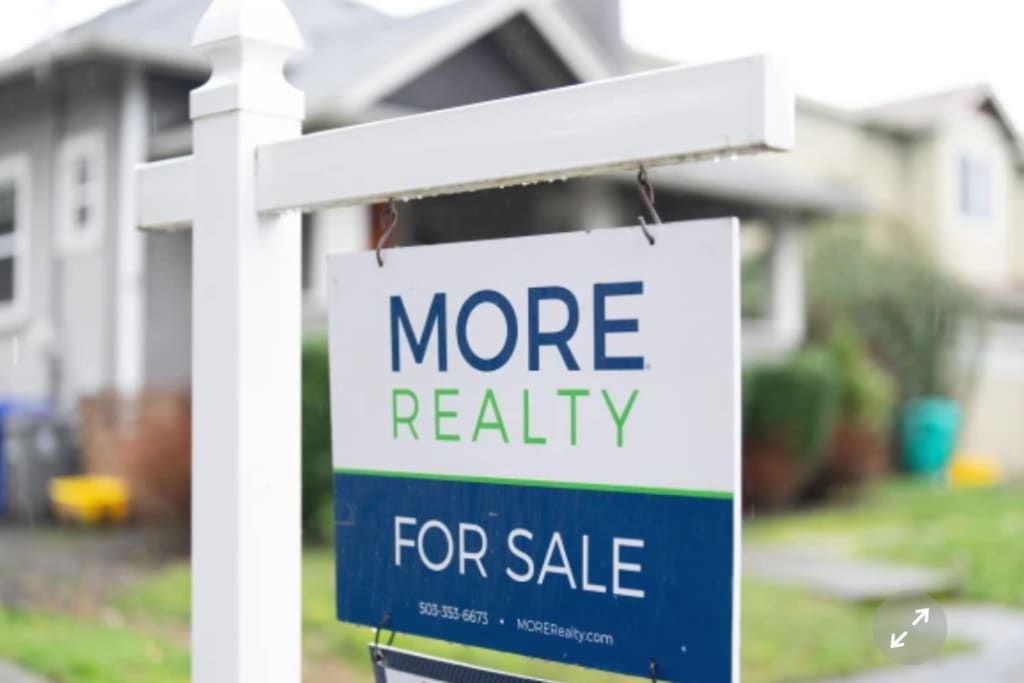
As housing affordability remains one of the most pressing economic issues for American families, former U.S. President Donald Trump has renewed his focus on the housing market with a bold set of proposals. Trump is calling for lower interest rates and a ban on investor home purchases, arguing that these measures are necessary to restore affordability and give ordinary Americans a fair chance at homeownership.
The proposals come at a time when high mortgage rates, limited housing supply, and rising home prices have pushed homeownership out of reach for many, particularly first-time buyers and younger households. While Trump’s ideas have energized supporters, they have also sparked intense debate among economists, housing experts, and policymakers.
A Housing Market Under Pressure
The U.S. housing market has struggled to regain balance following years of disruption. After a pandemic-era boom fueled by ultra-low interest rates, the rapid rise in borrowing costs has sharply reduced affordability. Mortgage rates hovering well above recent historical norms have increased monthly payments, even as home prices remain elevated.
At the same time, housing supply remains constrained. Many homeowners are reluctant to sell because they are locked into low-rate mortgages, limiting inventory and keeping prices high. Investors, including large institutional buyers, have also played a growing role in certain markets, further intensifying competition for available homes.
Trump has framed his proposals as a direct response to these pressures, arguing that the current system favors investors and Wall Street over working families.
Trump’s Call for Lower Interest Rates
Central to Trump’s housing strategy is his push for lower interest rates. He has argued that high rates are choking demand, slowing construction, and making mortgages unaffordable for millions of Americans.
While interest rates are set by the Federal Reserve—not the White House—Trump has long criticized the Fed’s policies and has called for a more accommodative approach. Supporters of lower rates say that easing borrowing costs would immediately reduce monthly payments and help revive housing demand.
Critics, however, warn that cutting rates too aggressively could reignite inflation, particularly if housing supply remains limited. They argue that without addressing underlying supply issues, lower rates could simply push prices higher again.
Banning Investor Home Purchases
Perhaps the most controversial element of Trump’s proposal is a ban on investor purchases of single-family homes, particularly by large institutional buyers. Trump claims that investors are crowding out individual buyers, driving up prices, and turning homes into speculative assets rather than places to live.
In some fast-growing markets, investors have accounted for a significant share of home purchases, often paying cash and outbidding traditional buyers. Trump argues that restricting this activity would reduce competition, stabilize prices, and open more opportunities for families trying to buy their first home.
Housing advocates have welcomed the idea in principle, saying it addresses a real imbalance in the market. However, critics caution that implementing such a ban would be legally complex and could have unintended consequences, including reduced rental supply.
Economic and Legal Challenges
Trump’s proposals face significant practical hurdles. The president does not have direct authority over interest rates, and limiting investor purchases would likely require congressional action and careful legal design.
Economists also note that not all investors are the same. While large corporate buyers often draw criticism, smaller investors play a key role in maintaining rental housing, particularly in areas with limited supply. A broad ban could disrupt rental markets and push rents higher.
Additionally, enforcement could prove difficult. Defining who qualifies as an “investor” and preventing workarounds would require detailed regulation and oversight.
Supporters See a Populist Appeal
Supporters of Trump’s housing agenda see it as a populist response to a system they believe is rigged against everyday Americans. They argue that housing should be treated as a basic necessity, not a financial commodity dominated by investors and institutions.
For first-time buyers, especially younger Americans struggling with student debt and rising living costs, the proposals resonate strongly. Many feel locked out of homeownership and view investor competition as a major barrier.
Trump’s framing of the issue aligns with broader public frustration over affordability and economic inequality, making housing a potent political issue.
Critics Warn of Market Distortions
Opponents argue that Trump’s proposals oversimplify a complex problem. They contend that the root cause of housing unaffordability is undersupply, driven by restrictive zoning laws, high construction costs, and labor shortages.
From this perspective, banning investors or pressuring for lower rates addresses symptoms rather than causes. Critics argue that policies focused on boosting housing construction—such as zoning reform and incentives for builders—would be more effective in the long run.
Some also worry that political pressure on the Federal Reserve could undermine its independence, potentially destabilizing financial markets.
Political Implications
Housing affordability is emerging as a central issue in the broader political debate, and Trump’s proposals reflect an effort to tap into widespread voter anxiety. By positioning himself as a champion of homebuyers over investors, Trump is seeking to draw a clear contrast with current policies.
Whether the proposals gain traction will depend on public response, congressional dynamics, and broader economic conditions. Even if not fully implemented, the ideas could shape the policy conversation and push housing affordability higher on the national agenda.
Conclusion
Trump’s push for lower interest rates and a ban on investor home purchases represents one of the most aggressive housing affordability proposals in recent years. While the ideas have clear populist appeal and address real frustrations, they also raise serious economic, legal, and practical questions.
The housing crisis is the result of years of structural challenges, and no single policy is likely to provide a quick fix. Still, Trump’s proposals have succeeded in spotlighting the issue and forcing a broader debate about who the housing market should serve.
As affordability pressures continue to mount, housing policy is likely to remain a defining economic and political issue—one where bold ideas, even controversial ones, are increasingly part of the conversation.
About the Creator
Muhammad Hassan
Muhammad Hassan | Content writer with 2 years of experience crafting engaging articles on world news, current affairs, and trending topics. I simplify complex stories to keep readers informed and connected.
Keep reading
More stories from Muhammad Hassan and writers in The Swamp and other communities.
2027 Volvo EX60 Revealed: Long Range, Fast Charging, and a Tesla Port
Volvo has officially revealed the 2027 Volvo EX60, and the all-electric SUV is shaping up to be one of the most important models in the company’s transition to a fully electric future. Designed as the electric successor to the popular XC60, the EX60 brings together long-range capability, ultra-fast charging, and—most notably—a built-in Tesla-compatible charging port, marking a significant shift in how automakers approach EV infrastructure.
By Muhammad Hassan2 months ago in The Swamp
The Forsyth House Fire
Since 1851, Forsyth House has stood on the corner of Union Street and Gordon Street in the heart of Glasgow. Its iconic, or was... because on Sunday 8th of March, 2026, a fire broke out in a small, seemingly un-named shop in the building and tore all that history down. As I write, the rubble is still unsettled and the street is still blocked off. Central Station is quiet on the upper level, and around 30 small businesses have quite literally gone up in smoke.
By S. A. Crawford3 days ago in The Swamp



Comments
There are no comments for this story
Be the first to respond and start the conversation.