
A Simple* Guide on What Happens Next for Exiting the European Union
What on earth is going on and what happens next?

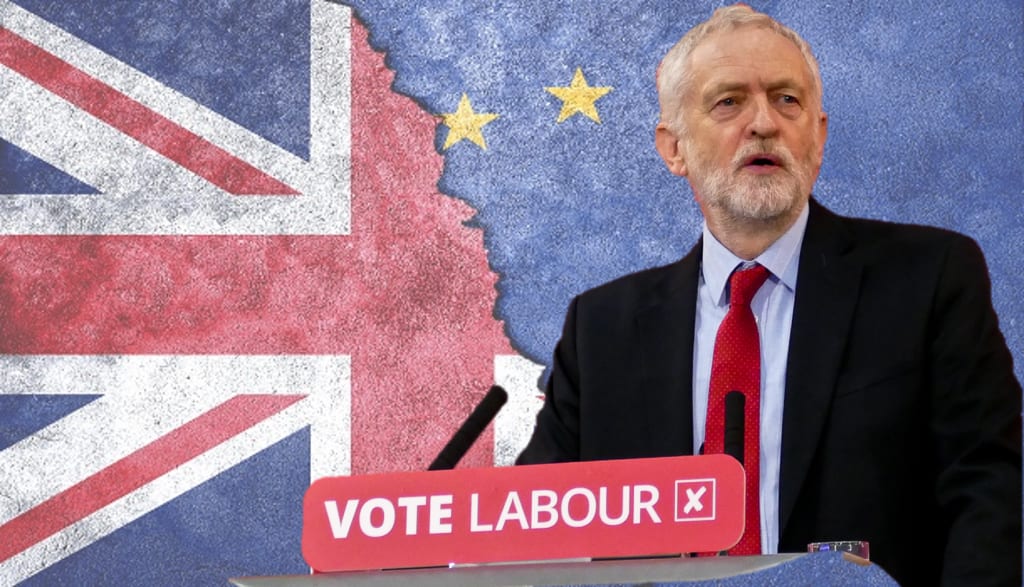
When Hilary Benn put forward his Withdrawal Bill, it meant that the Prime Minister will have to come back from Brussels in mid-October with a deal that passes through Parliament, otherwise the United Kingdom won't leave until January 31, 2020.
This is to prevent the UK from having no agreements in place for things such as trade and for how people move across borders in European countries; this would be called 'no-deal.'
Now, this is where things get confusing. One of the Prime Minister's closest colleagues, Jacob Rees-Mogg, is trying to push for a vote to allow an early General Election. However, MPs in Labour, the Scottish Nationalist Party and the Liberal Democrats—known as the Opposition—don't support one that falls before the original leave date of 31st October.
Boris Johnson has shot himself in the foot a little bit. He decided to shut down parliament on either Monday the 9th, Tuesday the 10th or Wednesday the 11th in September, so he doesn't have time to do everything he wants to do. He wants a vote to be passed, but there won't be enough time to do it, and it has already been rejected once.
It will then look as though the PM will come back from Brussels in October without having negotiated any deal with the EU, and this will mean he is likely to extend the leave date to 31st January 2020 and call a General Election, which will then be backed by Opposition MPs, because no-deal won't be able to happen.
Then it's all about whether Labour or Liberal Democrats back Remain and decide we won't have Brexit after all... *who said it was simple?
How will anything get passed by Parliament though, if every time a Bill comes forward, MPs reject it?
I hear you, I hear you. It's a fair point. There does seem to be some deadlock. A main contentious issue is to do with the border of the Republic and Northern Ireland. This is an EU border, as Northern Ireland is part of the United Kingdom and the Republic of Ireland are in the EU.
In the 1990s there was an agreement that will end fighting between these politically and religiously war-torn countries called the Good Friday Agreement. Because of this, it is very difficult to put a border between the two countries as it will evoke those previous and long-standing ill-feelings. But many people in the Conservative group feel this as necessary, otherwise the UK are essentially still a part of the EU.
You might have heard of the 'backstop.' This is basically a plan that means if there is no agreement in place for the Irish border, then there is a back-up on how it operates. But again, Tories think that this keeps the UK in the EU. Like I said earlier, this is not simple.
Due to the mess of Brexit, some Conservative MPs are no longer part of the party—they have been removed for voting against them, a move that has been condemned by other MPs. This doesn't play into the hands of the PM, especially if he wants to have a General Election.
Where do we go from here? I'm not sure—you just have to wait and see. A new day brings new challenges. This will probably be rendered useless soon.
About the Creator
Keep reading
More stories from writers in The Swamp and other communities.
Trump Tariff Threats Over Greenland Prompt Calls for Unprecedented EU Counter‑Measures
Imagine a single statement triggering a transatlantic trade and political crisis. That’s exactly what happened when U.S. President Donald Trump threatened tariffs over Greenland, sparking calls within the European Union for unprecedented counter-measures. What started as a geopolitical dispute over a remote Arctic island has escalated into a potential trade confrontation with serious implications for NATO, global markets, and U.S.-EU relations.
By Aarif Lasharia day ago in The Swamp




Comments
There are no comments for this story
Be the first to respond and start the conversation.