
Trump Tariff Threats Over Greenland Prompt Calls for Unprecedented EU Counter‑Measures
Trump Tariff Threats Over Greenland Prompt Calls for Unprecedented EU Counter-Measures
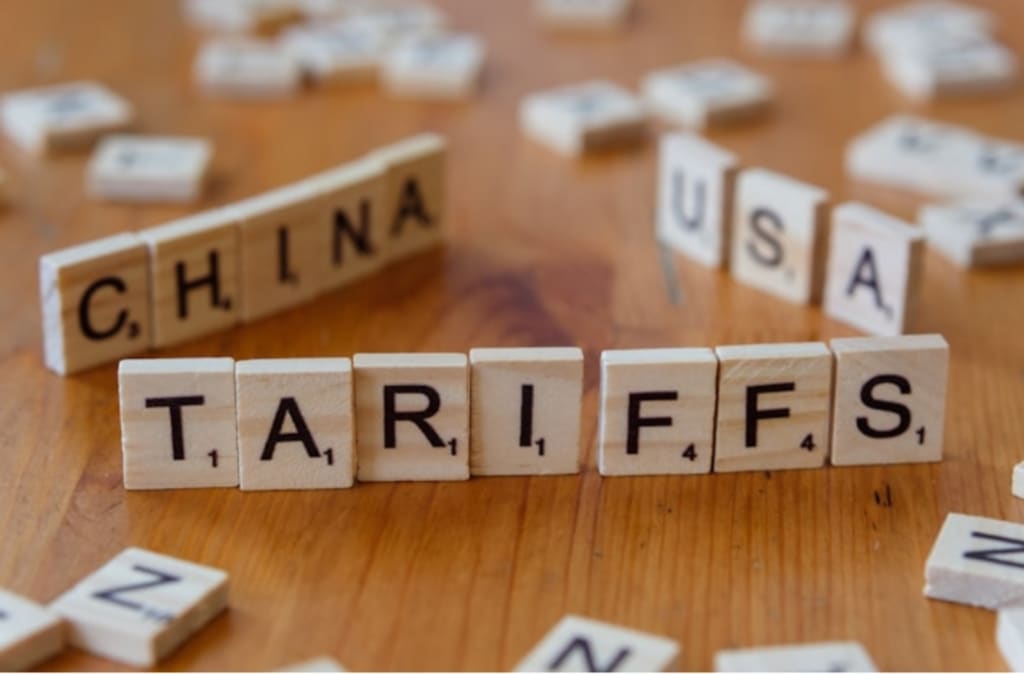
Imagine a single statement triggering a transatlantic trade and political crisis. That’s exactly what happened when U.S. President Donald Trump threatened tariffs over Greenland, sparking calls within the European Union for unprecedented counter-measures. What started as a geopolitical dispute over a remote Arctic island has escalated into a potential trade confrontation with serious implications for NATO, global markets, and U.S.-EU relations.
From Arctic Geopolitics to Trade Tensions
The controversy revolves around Greenland, an autonomous territory of Denmark with significant strategic and economic importance. Trump has expressed interest in increasing U.S. influence—or even control—over the island, citing its Arctic location, natural resources, and military significance.
Denmark and Greenland have rejected the idea, but Trump escalated tensions by threatening 10% tariffs on goods from Denmark, Sweden, France, Germany, the Netherlands, Finland, the UK, and Norway starting February 1, with the rate rising to 25% by June if his demands are ignored.
European leaders immediately denounced these threats as “unacceptable” and coercive, warning that such tactics could undermine decades of transatlantic cooperation.
EU Considers the “Bazooka” Response
In Brussels, policymakers are debating a strong response using the European Union’s Anti-Coercion Instrument (ACI)—nicknamed the EU’s “bazooka.” This powerful tool is designed to defend Europe against economic coercion by third countries.
French President Emmanuel Macron has urged the EU to activate the ACI, stating that Europe must defend its sovereignty and credibility. Leaders in Germany and Scandinavia have also stressed that retaliatory measures must be considered if Trump implements his tariffs.
If triggered, the ACI could allow the EU to restrict U.S. access to European markets, including goods, services, and investment—a significant step that has never been taken before.
Diplomatic Pressure and Emergency Summits
To avoid a full-blown trade war, the EU is seeking diplomacy alongside preparations for retaliation. Emergency meetings in Brussels have been convened, and a high-level summit is planned to discuss next steps.
European officials aim to engage directly with the U.S. at the World Economic Forum in Davos, hoping to resolve the dispute before it escalates. Meanwhile, European leaders emphasize solidarity with Denmark and Greenland, insisting that the island’s future decisions belong to its people—not outside pressure.
Not all European leaders are pushing for escalation. Some advocate continued dialogue to avoid economic fallout that could affect both sides.
NATO Strains Under Economic Pressure
Trump’s tariff threat also raises concerns within NATO. UK Prime Minister Keir Starmer publicly condemned the idea of targeting NATO allies with tariffs, stressing the importance of diplomacy while firmly rejecting coercion over Greenland.
The episode has raised questions about alliance unity, especially as Arctic security becomes increasingly vital. Military exercises in Greenland and surrounding regions are reportedly being strengthened amid the growing crisis.
Economic Stakes Are High
The EU and U.S. are major trading partners, with interconnected industries in automotive, agriculture, technology, and services. Even limited tariffs could disrupt supply chains, increase prices, and create market volatility.
Some European capitals are reportedly preparing a counter-tariff package worth up to €93 billion, targeting U.S. exports and access to the EU market if Trump moves forward. This could mark one of the most serious transatlantic trade disputes in decades.
Political pressures compound the situation. In the U.S., Trump’s stance resonates with supporters who prioritize Arctic strategy and national security. In Europe, public opinion is increasingly critical of economic coercion by an ally.
A Turning Point for Transatlantic Relations
This Greenland dispute could signal a new phase in EU trade policy, pushing Europe toward a more assertive approach when dealing with economic threats. After years of diplomatic engagement and free-trade agreements, many leaders now argue that credible deterrence requires action, not just dialogue.
Whether Trump’s tariff threats materialize or remain rhetorical, the episode is already reshaping transatlantic relations. Policymakers in Brussels, Washington, and beyond will be watching closely to see if diplomacy prevails—or if this sparks a deeper economic and strategic rivalry.
Final Thoughts
The Trump-Greenland tariff saga highlights the delicate balance between diplomacy, economic power, and alliance unity. It also raises fundamental questions about how nations respond when a major ally uses economic coercion as leverage.
For Europe, this could be a defining moment: act decisively to protect its sovereignty or risk ceding influence to stronger economic powers. For the U.S., it’s a reminder that even rhetorical threats can ripple across global markets and alliances.
Ultimately, the Greenland dispute is more than about an Arctic island—it’s about the future of transatlantic cooperation, trade, and geopolitical influence in a rapidly shifting world.
If you want, I can also add ready-to-use SEO meta description, tags, and a suggested category for Vocal Media, so you can post it directly.
Do you want me to do that ne
About the Creator
Keep reading
More stories from Aarif Lashari and writers in The Swamp and other communities.
Supreme Court Tests Limits of Trump’s Power Over the Economy in Fight Over Fed’s Lisa Cook
In a case that could have far-reaching implications for the U.S. economy, the Supreme Court is examining the limits of former President Donald Trump’s influence over Federal Reserve appointments. At the center of this debate is Lisa Cook, a respected economist nominated to serve on the Fed’s Board of Governors. The legal challenge raises profound questions about the balance of power, the independence of the central bank, and how political dynamics can ripple through the financial system.
By Aarif Lasharia day ago in The Swamp
ASELSAN Demonstrates Full-Spectrum Naval Capabilities at DIMDEX 2026
At DIMDEX 2026 (Doha International Maritime Defence Exhibition and Conference), ASELSAN once again positioned itself as a key player in modern naval defense by unveiling a comprehensive portfolio of maritime technologies. The exhibition, known for bringing together the world’s leading naval forces, defense contractors, and policymakers, provided the ideal platform for ASELSAN to demonstrate how its systems address the evolving challenges of naval warfare in an era defined by multi-domain operations, asymmetric threats, and rapid technological change. A Strategic Showcase at a Global Forum DIMDEX has grown into one of the most influential maritime defense exhibitions in the Middle East, attracting global attention due to the region’s strategic waterways and security dynamics. ASELSAN’s presence at the 2026 edition reflected not only Türkiye’s ambitions in the naval defense sector but also the company’s maturity as a provider of end-to-end naval solutions. Rather than focusing on a single product, ASELSAN presented a full-spectrum approach, emphasizing integration, interoperability, and operational flexibility. Advanced Naval Sensors and Radars One of the highlights of ASELSAN’s exhibition was its suite of naval radar systems, designed to deliver superior situational awareness in complex maritime environments. These radars are capable of detecting and tracking multiple targets simultaneously, including surface vessels, low-flying aircraft, and asymmetric threats such as unmanned aerial and surface vehicles. By leveraging advanced signal processing and electronic scanning technologies, ASELSAN’s radars enhance detection accuracy while reducing reaction time—an increasingly critical factor in modern naval engagements. The company emphasized that these systems are optimized for operation in cluttered environments, such as congested sea lanes and littoral zones, where conventional sensors often struggle. Integrated Combat Management Systems Beyond sensors, ASELSAN showcased its combat management systems (CMS), which serve as the digital backbone of modern warships. These systems integrate data from radars, sonar, electronic warfare, and weapon platforms into a unified operational picture, enabling commanders to make faster and more informed decisions. At DIMDEX 2026, ASELSAN highlighted how its CMS solutions are modular and scalable, making them suitable for a wide range of naval platforms—from patrol boats and corvettes to frigates and amphibious vessels. This flexibility is particularly attractive to navies seeking cost-effective modernization without committing to entirely new fleets. Electronic Warfare and Self-Protection Solutions Electronic warfare (EW) emerged as another key pillar of ASELSAN’s naval offering. As naval battlespaces become increasingly contested in the electromagnetic spectrum, the ability to detect, deceive, and disrupt enemy sensors is essential. ASELSAN’s EW systems are designed to provide early warning against radar and missile threats while enabling both defensive and offensive electronic countermeasures. The company also demonstrated self-protection suites that combine soft-kill and hard-kill options, allowing vessels to respond dynamically to incoming threats. These systems are particularly relevant in regions where naval platforms face risks from anti-ship missiles, drones, and fast-attack craft. Naval Weapons and Fire Control Systems ASELSAN’s portfolio at DIMDEX 2026 also included naval weapon systems and fire control solutions, underscoring its ability to deliver integrated combat effectiveness. Fire control radars and electro-optical targeting systems were presented as key enablers for precision engagement, ensuring that naval guns and missile systems operate with maximum accuracy under all weather and visibility conditions. By integrating these systems with its combat management architecture, ASELSAN demonstrated how navies can achieve seamless coordination between detection, decision-making, and engagement. Emphasis on Indigenous Capability and Export Growth A recurring theme in ASELSAN’s presentation was indigenous development paired with global collaboration. The company highlighted its growing export footprint and partnerships with international shipbuilders and naval forces. This approach allows ASELSAN to tailor solutions to specific operational needs while maintaining control over critical technologies. At a time when supply chain security and technological sovereignty are becoming strategic priorities, ASELSAN’s emphasis on domestically developed systems resonated strongly with regional and international audiences at DIMDEX. Looking Ahead: The Future of Naval Warfare ASELSAN’s demonstration at DIMDEX 2026 made it clear that the future of naval warfare lies in integration, digitalization, and adaptability. As threats evolve to include unmanned systems, cyber challenges, and hybrid warfare tactics, navies require solutions that can evolve just as quickly. By presenting a full-spectrum naval portfolio—from sensors and electronic warfare to weapons and command systems—ASELSAN reinforced its position as a comprehensive maritime defense partner rather than a niche supplier. Conclusion ASELSAN’s strong showing at DIMDEX 2026 underscored Türkiye’s growing influence in the global naval defense market. Through advanced technology, system integration, and a clear focus on future operational needs, the company demonstrated that it is well-equipped to support modern navies facing increasingly complex security environments. For defense observers and maritime strategists alike, ASELSAN’s presence at DIMDEX served as a compelling reminder that naval power today is as much about information and integration as it is about firepower.
By Fiaz Ahmed Brohi2 days ago in The Swamp
Silver Screen Magic with Mae West
American actress and singer Mae West became a popular film actress during the Great Depression. She started entertaining in vaudeville, then performed on Broadway, and finally went to Hollywood. She signed up with Paramount Pictures and made her debut in the 1932 film “Night After Night.” She also starred in musicals, comedies, and crime dramas. The American Film Institute named her one of the best classic Hollywood actresses.
By Rasma Raisters7 days ago in Geeks


Comments
There are no comments for this story
Be the first to respond and start the conversation.