
Adventures in Brewing
It's not a Hobby. It's a Craft.

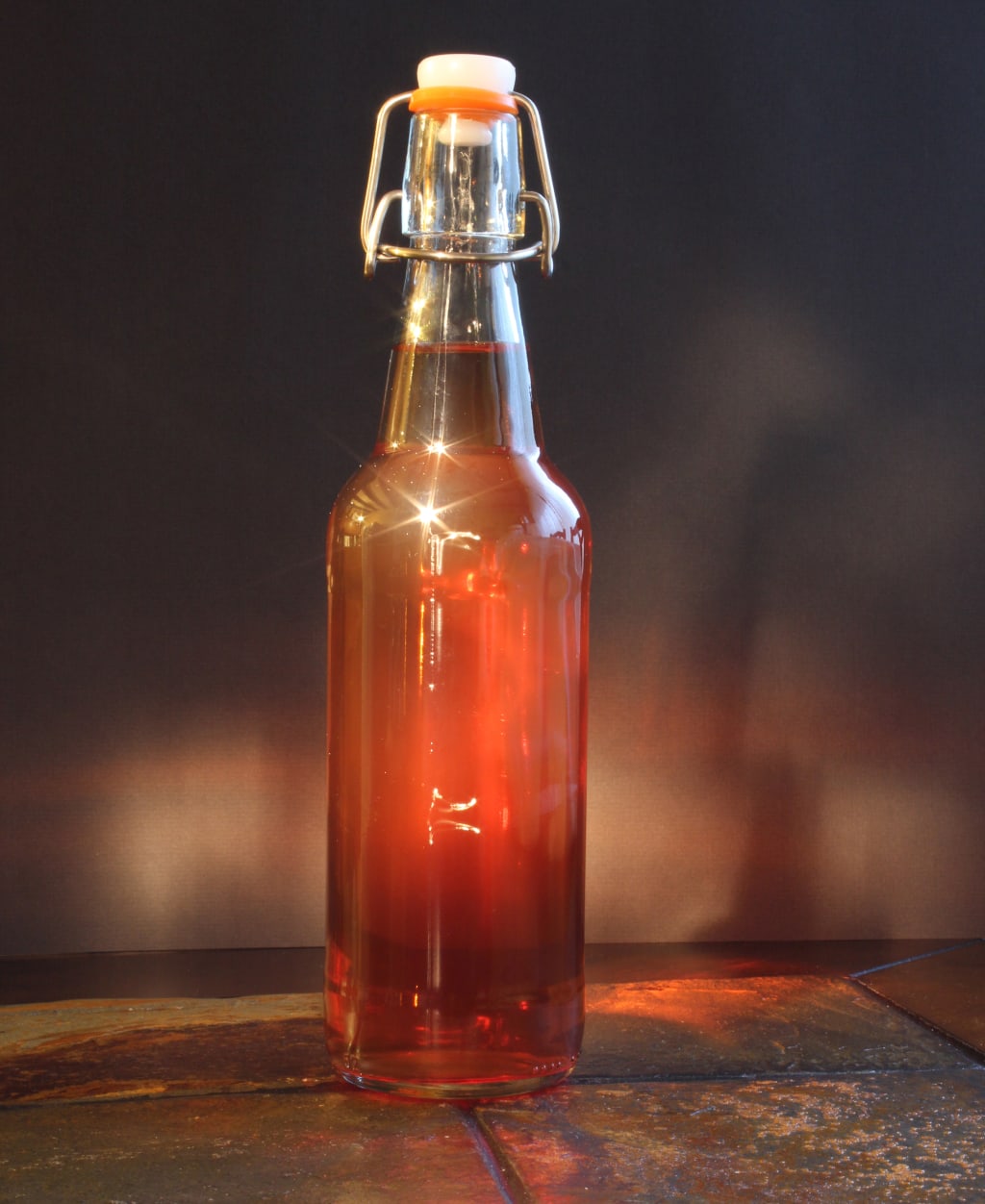
Sometime in 2012, my lovely wife, Pam and I moved to the Redwood Coast of Northern California to help out my daughter and spend time with the grandkids. We made some wonderful memories there and became familiar with a few artisanal cultures. (If you ever want to visit a community full of artists and craftspersons, check out Arcata, California and its neighboring communities, Eureka and McKinleyvillle.)
One of the crafts I took an interest in was home brewing, i.e. the making of hard cider, beer and wine. Let me start by clearing up a couple of common misconceptions: It is legal in all 50 of the United States of America to brew your own fermented alcoholic beverages AND to share it with friends, though it is illegal to sell it. Each state has specific regulations on quantity, ABV (Alcohol by Volume) and other concerns, so do your research if you decide to try it. There is also a Federal law against distilling in the home, so making moonshine will definitely get you into hot water.
The second misconception is that homebrewers are heavy drinkers. The satisfaction comes from the creation of a quality beverage in your own home, with your own hands, using fresh, natural ingredients. It also offers the challenge of creating your own recipes and sharing them. The vast majority of homebrewers are also strong advocates of drinking responsibly.
Alright, with that out of the way, I'll come right out and say that I dove in headfirst. (Not literally; that would definitely be irresponsible.) We had 2 apple trees and a pear tree in our yard, so naturally, I went down the hard road right away: cider with natural fermentation. In other words, I used the fruit from the trees and the wild yeasts present on them for fermentation. What I learned from that was there's a reason they're called “wild” yeasts.
To understand that, it'll help to know what happens during the fermentation process. In very simple terms, yeast is a fungus that consumes sugar. In an oxygen-rich environment, the yeast will multiply as it eats, and the process will continue until the sugar is gone. Most natural sugars are fermentable, meaning yeast will consume them.

Brewing is a controlled fermentation process. It usually starts with a very sugary solution known as “wort” for beer or “must” for cider or wine. The liquid is placed in a sanitized container, a measured amount of specialty brewing yeast is added and the mixture is oxygenated (shaken or stirred). It's then sealed from any contact with oxygen, and conditions such as temperature are kept under strict control.
In this anaerobic (oxygen-free) environment, the yeast will feed on the sugar and multiply until the oxygen in the liquid is used up. At that point, it starts to convert the sugar to carbon dioxide and alcohol. That will continue until the sugar is gone. So, in this basic example, the amount of alcohol produced depends on the amount of fermentable sugar available in the solution. It's a bit more complex than that, but this is only a basic description of how your beer, wine or cider is born.
Brewing is most often done in three stages: primary, secondary and tertiary and those may be followed by one or more flavoring, clarifying, fining and conditioning stages as well as aging. Between stages, the solution is carefully transferred to another clean, sanitized container, making sure anything that touches the vessels, including you, is thoroughly sanitized. It's also important to handle the transfer in a way that minimizes the introduction of oxygen. This process, called “racking,” is often accomplished with a simple siphon pump and plastic tubing, both of which of course, must also be sanitized.

After the brewing and refining stages are complete, the finished (and taste-tested) product is bottled in any of several types of sanitized containers, where it's usually left to bottle-age for a period of time. In the case of a wine, this aging process may last a year or a few decades, to mellow the flavor.
You may also carbonate the product at this stage, by introducing a very small amount of sugar, which will produce more CO2 that's forced into the liquid as pressure builds in the bottle. Here's where you'll learn another important term: bottle bombs. It's important to be sure the initial fermentation is complete and stopped and to avoid adding enough sugar to over-pressurize the bottles.

Fermentation times vary greatly, depending on may factors. A simple hard apple cider may take about a month. Beers and wines often take much longer. On the other hand, a simple cider without a lot of added sugar can be ready after a week and refrigerated in an open jug or pitchers, which will slow the fermentation and let you sample the goods earlier if you're in a hurry. Personally, I prefer a more mature, flavorful product.

There's much more you can do with this basic idea, of course, such as splitting batches and adding various flavors. Experimentation and keeping good records can help you create really special products, like seasonal ales or ciders.
Finally, let me be very clear about the rabbit hole! You don't have to invest much at all to dabble in brewing. Gallon batches are fun and don't require a lot of transfer equipment, etc. The most common fermentation vessels are food-grade 6-gallon buckets with resealable lids, equipped with simple airlocks and pouring spigots. A couple of those won't be a huge investment and 2 is enough to alternate for the whole process.
However, if you find you really enjoy the craft, as Pam and I do (She's my partner in this as well as everything else I do.) you're going to accumulate a lot of equipment over time. Aside from the basics needed to sample and test your solution during the processes, there's sanitizing solution, bottles, caps, corks (and a corker) and a whole range of cleaning equipment. Imagine cleaning, rinsing, drying and sanitizing enough 12-ounce bottles and caps to hold a 6-gallon batch of cider, just as one example.
You'll also need a place to put everything, including those full buckets that you don't want disturbed during fermentation. There there are the empty bottles to be stored and you'll need a place to leave the filled ones undisturbed while aging and/or carbonating. If you want to have multiple batches going, you'll need a bit more space. Then you have to have room for filling, capping and so on. Oh, and sunlight isn't good for most brews, so the fewer windows, the better.
Pam and I dedicated a portion of the house to this, with a folding table we set up on bottling day. We affectionately dubbed this area “Brew Corner” which rhymes with “Pooh Corner” only by coincidence.
Brew Corner has been inactive for several months now, as we've been focused on moving back to Wyoming. Once we've settled in up there, we'll designate and christen a new space to play. Fortunately, I keep meticulous records on spreadsheets, so we'll be able to get one of our favorites going in no time.
-o-
I hope you've enjoyed this little (or not so little) glimpse in to one of our hobbies. To those dedicated to an alcohol-free lifestyle, please know that I respect and support you in that.
I'm very interested in any and all feedback on this article. If there's any interest, I'd be happy to post a series of instructional pieces on brewing, as well as sharing a few of my favorite recipes. (We have one VERY popular cider flavor combination and one unique fruit wine flavor that I may or may not reveal at a later date.) That's what this community is for, no?
***
This article was inspired in an odd way by a piece written by Mike Singleton-Mikey Dred, which I recommend reading, here:
In short, Mike's article caused me to go community browsing. While doing so, I noticed another possible indication that not enough attention is being paid to some communities. Now, I didn't go through the 1,900+ stories listed in the Proof community, but I did notice that in the Latest Stories list, there are currently two (2) that actually belong in the community, at least judging by the titles.
In any case, I realized I might have something to contribute to the community, and here's the first attempt. Thanks for reading!
About the Creator
Dana Crandell
Dad, Stepdad, Grandpa, Husband, lover of Nature and dogs.
Poet, Writer, Editor, Photographer, Artist
My poetry collection: Life, Love & Ludicrosity
Reader insights
Outstanding
Excellent work. Looking forward to reading more!
Top insights
Excellent storytelling
Original narrative & well developed characters
Expert insights and opinions
Arguments were carefully researched and presented
Heartfelt and relatable
The story invoked strong personal emotions
Keep reading
More stories from Dana Crandell and writers in Proof and other communities.
Acritochromacy
Here's a link to this fun challenge:" Here's my entry: Acritochromacy: color blindness My Connection: I have lived with two forms of this condition my entire life. I was born with the first, and it's only partial. I'm red/green color blind, which isn't exactly what people tend to think it is, at least in my case. I've adapted, and it works to my advantage in a weird way. The second type is the product of my early childhood, in a small, Arizona border town with a wonderful mix of skin colors. As children, it was the last thing that stood out about our friends, although we talked frankly to each other about it, as kids do. I'm fortunate and grateful to have learned that kind of color blindness.
By Dana Crandellabout a year ago in Poets
Irresistible Chocolate Cocktails: Sweet Treats for Dessert Lovers
Chocolate and cocktails are a match made in heaven. When the rich, velvety taste of cocoa meets the spirited kick of alcohol, magic happens. Whether you want to impress guests or just treat yourself after dinner, chocolate cocktails offer that perfect blend of sweetness and indulgence. These drinks are dessert in a glass, smooth and luscious, with enough complexity to keep your palate intrigued.
By Marcus Petrov2 days ago in Proof
Seasonal Fruit Cocktails: Fresh, Natural, and Healthy Mixology
When the sun shines bright and the days grow longer, nothing beats a cocktail that celebrates the vibrant flavors of seasonal fruit. Seasonal fruit cocktails are the ultimate expression of fresh, natural ingredients paired with the art of healthy mixology. These drinks don’t just taste amazing—they’re a feast for your senses and a boost for your wellbeing.
By Stella Rossi4 days ago in Proof
Boundless
A geographical map could take you there. To the places I've been, to the sights I've seen, to the landscapes I've climbed. But no compass could point you in the direction of my memories. To the experiences I've lived, to the happiness I've felt, to the wonder I've held so close to my heart.
By Alyssa Musso6 days ago in Writers


Comments (9)
Fascinating stuff! I had no idea there was any stigma around it. We get together with friends every year to share homebrew products and recipes. It's great fun I always say I will brew something for it, and I never do!
So cool!
I love this Dana!! Alex (husband) and I used to be home brewers, as well. We stopped when we moved into our new house a few years ago because we had trouble dedicating a space to the process of fermentation!! I got a particularly good laugh out of the bit when you mentioned that brew corner rhymes with pooh corner, because I always found the fermentation process to have quite the odour!! 😅
Nice that you guys have a small space dedicated to brewing. I think my parents would love that, although it's hard to brew here in Singapore, due to lack of space, mostly. Cheers, literally and figuratively!
Thanks for this excellent story and thank you for the shoutout. Hopefully, this will be a Top Story to start to destroy my list (which I would love to happen)
That was fascinating. I tried making beer one time back when it was just getting cool. Sometime in the 90s. It was gross. It seems you're happier with your brewing skills, which is obviously a good thing.
You took me back! My father was a big enthusiast of home brewing (meads, tinctures, liqueurs, fruit-flavoured vodkas and much more). I still remember the smell but was too young to sample them... Myself, I have only dabbled in cider so far but it might be a nice little hobby to take up after I retire...
I am guilty of not seeing Proof; So glad I did as my wife are or were creators of wine. Not that crappy stuff wither, if you let it age properly. I had people, some wine snobs, blown away by the finished product. Alas wine is a time beverage and i no longer wish to continue so the sell off of equipment is almost complete. Now you got me thinking beer... Great article
It's so crazy, because I was just looking through all the communities the other day and thinking so many are wasted with no new stories for months. So glad you were inspired by Mike's piece to do this as I found it fascinating. I've never gotten into it myself but I had friends that used to bottle their own. I always enjoyed sampling their creations. I'd watch videos or read more pieces on this subject :) And you've bee holding out!! Now Kenny, Jason and I will be hoping for some home brew to go with the Mexican food at our get together that is in my imagination. Oh and Cathy will bring the ham and pineapple pizza...hahahah. And Donna and I will bring the fancy coffee!!