Ekphrastic
The Timeless Voice: A Journey Through the Origins of Poetry
Long before the invention of writing, before books, screens, or pens, there were stories. And among those stories, some were different—they sang. These were the first poems, born from the rhythm of human life: the beat of the heart, the sway of walking feet, the cycles of seasons, and the rise and fall of the sun. Poetry likely began as an oral tradition, a way for early humans to preserve memories, explain the mysteries of the world, and connect deeply with one another. With no written records, they used rhythm, repetition, and rhyme to remember. A well-crafted line was easier to recall, and in this way, poems became the keepers of knowledge, history, and feeling. In ancient Mesopotamia, one of the world’s earliest civilizations, poetry appeared in written form over 4,000 years ago. The Epic of Gilgamesh, inscribed on clay tablets in cuneiform script, is one of the oldest surviving pieces of literature. This story-poem told of gods, kings, friendship, death, and the search for immortality—universal themes that echo through poetry even today. Farther west, in Egypt, poetry was carved into tomb walls and written on papyrus. These poems often praised the gods or expressed love and longing. Meanwhile, in India, the Rigveda, a sacred collection of hymns in Sanskrit, was being composed around 1500 BCE. These poetic verses blended religion, philosophy, and the rhythms of recitation in ways still admired and practiced. By the time of ancient Greece, poetry had become central to education, culture, and identity. Homer’s epics, The Iliad and The Odyssey, told of war, adventure, loyalty, and fate. Greek poets like Sappho and Pindar introduced lyrical poetry—short, emotional pieces meant to be sung, often accompanied by the lyre. Poetry wasn't just entertainment; it was a way to explore what it meant to be human. Rome continued this tradition, with poets like Virgil and Ovid shaping Latin literature. Their works blended myth and personal reflection, laying a foundation that would inspire European poets for centuries. After the fall of the Roman Empire, poetry didn’t vanish—it simply changed shape. In medieval times, poetry lived in monasteries, castles, and village squares. Troubadours in France and minstrels in England sang ballads of love and loss. In Persia, poets like Rumi and Hafez used verse to express spiritual longing and divine love. In China and Japan, poets captured nature’s beauty and fleeting moments in elegant, minimalistic forms such as tanka and haiku. The Renaissance brought a rebirth of poetic exploration. Shakespeare, the towering figure of English literature, wove poetry into his plays and sonnets, shaping the English language with unforgettable lines. Across Europe, poets began to explore individual emotion, political ideals, and artistic beauty through new styles and forms. By the 19th and 20th centuries, poetry was transforming again. The Romantics celebrated nature, emotion, and the imagination. Later, modernists like T.S. Eliot and Langston Hughes broke traditional forms to reflect the complexity of the modern world. Free verse, spoken word, and performance poetry began to thrive, opening doors for poets from all backgrounds to share their voices. Today, poetry is as diverse and alive as ever. It lives in books, songs, slams, Instagram posts, and classroom lessons. It whispers in love letters and shouts in protests. From ancient chants around a fire to digital poems shared around the globe, poetry has never stopped evolving. Why has it lasted so long? Because poetry is a mirror—and a voice. It reflects who we are and gives us words when words are hardest to find. Whether it’s the cry of a warrior, the longing of a lover, or the hope of a child, poetry captures the soul of humanity. And as long as we have stories to tell and feelings to feel, poetry will remain—our timeless voice.
By Muhammad Saad 3 months ago in Poets
Whispers of the Wild
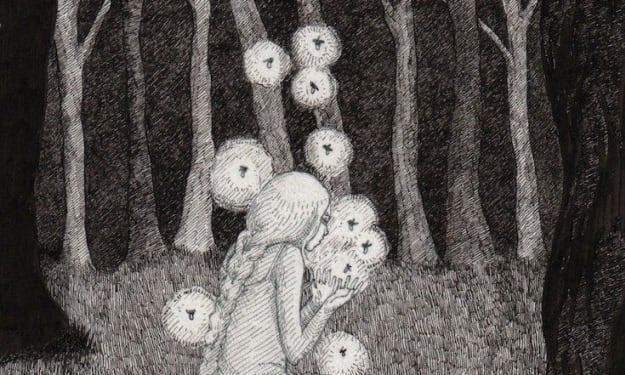
Whispers of the Wild Discovering Nature's Secrets Through the Power of Poetry Nestled at the edge of a quiet village, where the meadows meet the forest and the breeze always smells like pine and wildflowers, a young writer named Elara often wandered. She didn’t carry much — just a small leather-bound notebook and a pencil worn down from constant use. Elara wasn’t looking for grand adventures or hidden treasures. She was searching for something much quieter: inspiration. From an early age, Elara had found peace in the rhythms of nature. While others rushed through their busy lives, she learned to pause — to listen to the rustle of leaves, the rush of a nearby stream, the chorus of birds greeting the morning sun. These were the sounds she called the “whispers of the wild.” And over time, she realized that these gentle voices were not only comforting but full of wisdom. One crisp autumn morning, she set out for her favorite spot — a moss-covered rock near the edge of a quiet forest glade. The sun was just beginning to rise, casting long golden rays through the trees. As she sat, the world seemed to hush. A squirrel chattered in a nearby oak. A robin fluttered down and landed on a branch just above her. And somewhere far off, a brook laughed over stones. Elara opened her notebook and began to write. The poem that flowed from her pencil wasn’t planned. It was as though the forest itself was speaking through her. The words came easily: > Beneath the boughs where silence grows, A secret world in stillness flows. The trees, they speak in ancient rhyme, A language older than our time. The river hums a lullaby, While morning paints the waking sky. And in this place, both fierce and mild, I hear the whispers of the wild. As the final line formed, Elara felt a deep sense of connection — not just to the forest, but to something larger. Nature, she realized, was a poet in its own right. Every rustling leaf, every shifting cloud, every rising tide was a stanza in an ever-changing poem. And those who took the time to truly listen could learn something from it: patience, presence, and the quiet power of observation. In the weeks that followed, Elara began collecting her nature poems into a small collection. She titled it Whispers of the Wild. At first, she shared it only with family and friends. But word spread quickly, and soon her poems were being read in schools, libraries, and nature centers. Teachers praised the way her words helped students see the natural world with fresh eyes. Park rangers printed her verses on trail signs to encourage hikers to slow down and look more closely. Elara’s poetry became more than art — it became a bridge between people and the planet. She was often invited to speak at environmental events, where she reminded people that sometimes, the most powerful way to protect nature is to learn to love it. And the best way to love it? Start by noticing it. Let it move you. Let it speak. Years later, Elara still returns to that quiet forest glade, notebook in hand. The trees are taller now, and the robin she once watched has long since flown. But the whispers remain — soft, steady, and full of wonder. And every time she writes, she adds her voice to theirs.
By Muhammad Saad 3 months ago in Poets
Verses by the Sea
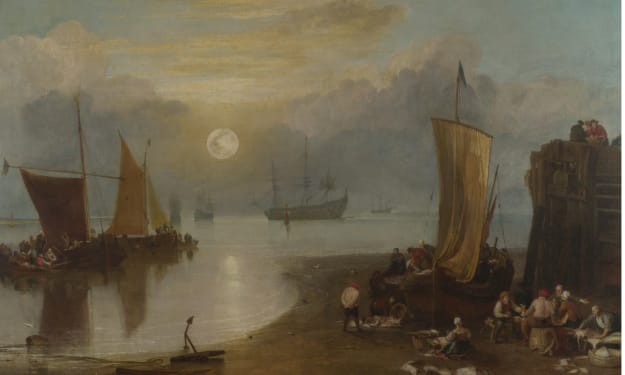
Verses by the Sea — A Poet’s Peaceful Reflections on the Shore Beneath a sky of amber light, Where sea and silence softly meet, A poet finds their soul take flight With every wave that greets their feet. The ocean hums a gentle tune, Its rhythm calm, its meaning deep— A lullaby to sun and moon, A cradle where the muses sleep. The pen moves slow, then starts to glide, As thoughts like seagulls rise and soar. No need to rush, no need to hide— Each line becomes a whispered shore. The breeze, a friend with salty breath, Turns pages like the hands of time. The tide erases fear of death, And life returns in every rhyme. So here the poet sits, alone— Yet held by sky, by sea, by sand. With verses carved from wind and stone, And truth unfolding in their hand.
By Muhammad Saad 3 months ago in Poets
What is poetry
The Window Maya sat by the window of her grandmother’s old cottage, a steaming mug of tea in her hands and a wool blanket wrapped around her shoulders. The autumn wind whispered through the trees outside, scattering golden leaves across the garden like forgotten memories. It had been years since she’d last been here, and everything smelled like time—dust, dried lavender, and something older, quieter. The window was the same. It framed the garden like a painting. Ivy crept along the wooden sill. As a child, Maya believed the window was magical. Her grandmother used to tell her that if you stared through it long enough, you wouldn’t just see the garden—you’d see what the garden remembered. Back then, it felt like a story to help her sleep. But now, at twenty-eight, sitting in the same chair her grandmother used to rock in, Maya wondered if there was more truth in her grandmother’s stories than she realized. She reached for the journal she found in a drawer earlier that morning. It was bound in worn leather, its pages filled with neat handwriting and old poems, each dated, each signed: L.R.—Lilian Rose, her grandmother. She flipped through them, stopping at one that seemed different. It was titled “The Window Remembers.” She read the poem aloud, her voice soft, hesitant: "Through pane of glass and time’s slow thread, The window watches what’s long dead. But those who sit and truly see, May glimpse what once was, used to be." As she read the final line, a chill ran down her spine. She looked out again. The garden shimmered, just for a second. The apple tree that now stood bare and twisted suddenly blossomed, white flowers blooming in an impossible instant. A younger version of her grandmother appeared beneath it—laughing, holding hands with a man Maya had never seen before. Maya blinked, and they were gone. The tree was bare again. The garden was quiet. She stared at the window, her breath caught in her throat. Had she imagined it? She flipped back through the journal, searching for clues. Page after page told of the garden, of love, loss, and someone named Thomas. She’d never heard of him before. There were poems about waiting, of a love who went to war and never returned. Her grandfather’s name was William. Who was Thomas? Curious and a little shaken, Maya went outside. The wind tugged at her sweater as she walked to the tree. At its base was an old stone, nearly buried in earth and moss. She cleared it with trembling hands. “Thomas Hale – 1922–1944” A date. A name. Real. Her grandmother had never mentioned him. Never once. Yet he was buried in the garden, remembered in poems, and shown through a window that may have held more than just glass. Back inside, the window stood still, silent. Maya sat again, her thoughts spinning. What was the truth of her grandmother’s life? What parts had she hidden in poems? How many of our memories are buried under silence? She picked up the journal and turned to the last blank page. Taking a pen from the drawer, she began to write. Not a poem. A letter. To herself. To her future. To the people who would one day sit by the same window and wonder. And outside, unnoticed, a single white blossom bloomed on the apple tree.
By Muhammad Saad 3 months ago in Poets