Acrostic
The Living Verse
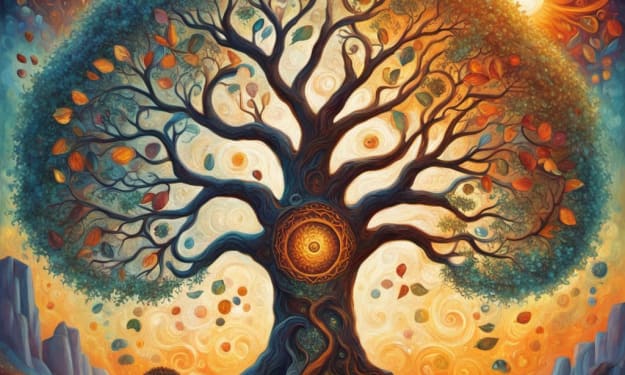
The Living Verse How Poetry Evolved to Captivate Hearts Across Generations For as long as humanity has spoken, we’ve sung. Long before we had books or screens, we had verses—chanted around fires, whispered between lovers, shouted in protests, and written into the fabric of our cultures. Once, poetry lived in the voices of ancient storytellers. In dusty temples of Mesopotamia and the open-air theatres of Greece, people gathered not to read but to listen. Words had rhythm and music then, echoing like drumbeats through time. Homer’s Iliad, chanted by bards, wasn’t just a tale of war—it was a heartbeat passed from one generation to the next. In ancient China, poets like Li Bai painted emotions with brushstrokes of verse. In India, the Vedas sang of creation and spirit. In Persia, Rumi’s poetry spun with love so profound it’s still quoted on social media today—centuries later. As time turned its pages, poetry changed its form, but never its soul. In the Middle Ages, monks preserved poems in illuminated manuscripts, gilded with gold and hope. In the Renaissance, sonnets bloomed in the hands of Shakespeare and Petrarch, capturing the ache of love in fourteen lines. Romantic poets like Wordsworth and Shelley later carried us into nature’s arms, while Emily Dickinson quietly revolutionized verse from her room, her poems found only after her death. And then—something remarkable happened. The printing press. Suddenly, poetry could travel. It no longer needed to be memorized and passed on by word of mouth. It was printed, bound, and shared. A book of poems could sit on a kitchen table, a library shelf, or be passed from hand to hand. And people read—sometimes alone, sometimes aloud, always together in feeling. The 20th century brought yet another evolution. Poets like Langston Hughes gave voice to the African American experience. Maya Angelou reminded us, “Still, I rise.” Bob Dylan wrote verses that danced with protest and peace. Poetry moved into jazz clubs, street corners, schools. It became accessible, raw, real. And then came the internet. Suddenly, everyone had a voice—and poetry, long thought to be fading, bloomed like never before. Spoken word artists filled cafes and auditoriums. Poems, once confined to dusty textbooks, became viral sensations. A few lines typed on a phone could move millions. Instagram poets like Rupi Kaur wrote about love, loss, healing—and connected with readers around the globe. TikTok poets recited verses that went straight to the heart. Poetry was no longer just for the elite or the academic. It belonged to everyone. Teenagers scribbled poems in journals and posted them online. Grandparents discovered verses that spoke to memories they hadn’t touched in years. At protests, rallies, and vigils, people turned to poetry—not to escape the world, but to understand it. Schools introduced poetry slams and creative writing clubs. Hospitals used poetry therapy to help patients heal. Parents read bedtime poems to children, planting the seeds of imagination. And here we are today—standing in the flow of that river of verse. We scroll past a poem on a screen and stop. A few short lines capture exactly how we feel. We send it to a friend, and they reply: “That’s exactly what I needed.” We realize that poetry—this ancient, evolving art—isn’t old-fashioned or distant. It’s alive. And it lives in us. The power of poetry is not just in rhyme or rhythm, but in recognition. In seven words, it can say what we’ve struggled to explain for years. It connects us across cultures, generations, and continents. In an age of endless noise, poetry offers quiet truth. From cave walls to Twitter feeds, from sacred texts to slam poetry stages, from love sonnets to healing verses—poetry has never died. It simply changes clothes. It remains what it always was: The voice of the soul, speaking in its most beautiful form. And in every heart it touches, it lives again.
By Muhammad Saad 3 months ago in Poets
Whispers of the Wild
Whispers of the Wild Where Earth Sings and Skies Listen Beneath the boughs where silence dwells, The forest hums in secret spells. Leaves converse in rustling rhyme, A language older than all time. The sun spills gold on waking trees, And dances soft with every breeze. Each petal holds the dawn's first light, A quiet spark in morning’s flight. The river writes in liquid song, A melody that flows so long— It sings of mountains, stars, and rain, Of roots that reach through joy and pain. The sky bends low to kiss the land, With clouds that drift like painter’s hand. The winds, like whispers, gently guide, The soul to peace, the heart to pride. Here, nothing rushes, all is wise, The earth reflects in open skies. And in this stillness, we become— A part of all, yet bound to none. So breathe it in—this wild, this grace, The beating heart of every place. For nature calls in tones so true, And all it asks… is "Be here too."
By Muhammad Saad 3 months ago in Poets
The Power of Poetry: A Journey Through 100 Uplifting Lines
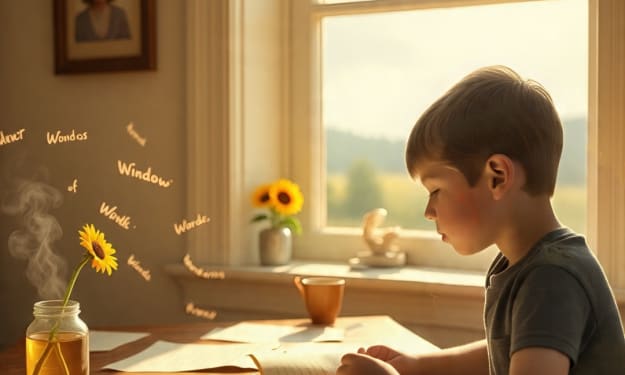
The Power of Poetry: A Journey Through 100 Uplifting Lines Discover the Beauty, Strength, and Truth in Verse That Inspires and Heals In a quiet village nestled between golden fields and rolling hills, lived a young girl named Mira. She was known for her bright eyes and quiet spirit, always seen with a notebook in hand. While others chased noise and news, Mira sought the quiet music of words. Her mother had been a poet—gentle, wise, and full of light. She had passed away when Mira was only ten, leaving behind a single letter and a worn leather journal filled with her verses. One rainy afternoon, Mira sat by her window, the journal resting on her knees. She whispered, “If poems could speak, would they bring her voice back?” That question became the beginning of her journey. She decided she would write a single poem—a long one, 100 lines strong—to carry forward her mother’s spirit and share the healing poetry had brought her. She titled it: “A Light Within: 100 Lines of Hope” A Light Within: 100 Lines of Hope (Poem begins — 100 lines) 1. In every dawn, a promise lies, 2. Beneath the gold of waking skies. 3. A whispered breeze, a bird in flight, 4. The world begins again in light. 5. Though nights are long and shadows deep, 6. The earth still turns while angels sleep. 7. And stars, like poems, softly shine— 8. A gentle hand, a sacred sign. 9. When hearts are cracked by loss or fear, 10. Let every tear bring something near. 11. For in our pain, a seed is sown, 12. And from it, love and strength have grown. 13. The smallest word, the kindest touch, 14. Can steady hands that shake too much. 15. A line of verse, a melody, 16. Can set a weary spirit free. 17. I write not just for those who weep, 18. But those who dare to dream in sleep. 19. I write for joy, for peace, for flame— 20. For all the things we cannot name. 21. Each poem a lantern in the night, 22. A thread that pulls us toward the light. 23. Each stanza, like a heartbeat strong, 24. Each rhyme a place where souls belong. 25. Remember this when days are grey: 26. The storm will pass, the clouds give way. 27. The sun will rise, as sunflowers do— 28. And shine again inside of you. 29. Be kind, be brave, be fully you, 30. In all you feel, in all you do. 31. No step is small, no voice too low— 32. The softest seeds still choose to grow. 33. If you have stumbled, rise again. 34. The ground is not the end, but when 35. You lift yourself and breathe once more, 36. You’ll find your wings begin to soar. 37. Don’t chase the stars—be one instead. 38. Let kindness be the path you tread. 39. And when the world forgets your name, 40. Let love remain your lasting flame. 41. There’s beauty in the broken parts, 42. In scarred-up hands and healing hearts. 43. Perfection isn’t where you’ll find 44. The deepest truths of humankind. 45. So share your story, write your song, 46. And know that you have always belonged. 47. In laughter, tears, in dreams you’ve spun— 48. There lives the light of everyone. 49. Forgive the past, release its weight. 50. The future waits beyond the gate. 51. And as you step through morning’s hue, 52. Know this: the world makes room for you. 53. Walk barefoot in the morning dew, 54. Let skies of silver wash you new. 55. Let every breath remind your soul 56. That healing too can make you whole. 57. The quiet holds a secret sound— 58. A music humming underground. 59. It sings of roots and rise and rain, 60. Of all that’s lost and all we gain. 61. You are a poem, not yet done— 62. A rhythm dancing in the sun. 63. A verse that winds through time and space, 64. A sacred, irreplaceable grace. 65. Speak softly when the world is loud. 66. Be humble even when you’re proud. 67. And in your silence, may you find 68. The gentle language of the kind. 69. No storm will ever stay too long— 70. The soul was made to carry song. 71. And when you tremble, when you fall, 72. May courage answer every call. 73. The road is long, the map unclear, 74. But faith will always draw you near. 75. Not to a place, but to a way— 76. A journey shaped by each new day. 77. So light a candle in the dark, 78. And dare to be your truest spark. 79. Let kindness be the fire you feed— 80. It’s always been the thing we need. 81. Love deeply, even when it’s hard. 82. Forgiveness is a soft reward. 83. And gratitude, a steady tide— 84. It keeps the heart alive inside. 85. Find joy in things both big and small— 86. A morning breeze, a sparrow’s call. 87. A word well said, a silent nod— 88. The quiet, quiet grace of God. 89. And when your time to rest arrives, 90. May love be all you leave behind. 91. A single line, a glowing thread— 92. A light to guide when you have fled. 93. For poems last when we are gone, 94. They echo soft, they carry on. 95. And in their lines, we meet again— 96. As mother, daughter, now as friends. 97. So here I write these hundred lines, 98. To share her soul, to echo mine. 99. And if you read them, may you see— 100. The light within is also me. --- As Mira finished the final line, the clouds parted. Light spilled across her desk, just like it had in her mother’s old study. She closed the journal, smiled softly, and knew something sacred had passed between pages. Not just a poem—but healing. A connection. A legacy. Poetry hadn’t just helped her remember. It helped her begin again.
By Muhammad Saad 3 months ago in Poets