
How to stop a dog from fixating on a cat
Some dogs lock in on things so intensely that they ignore everything else—whether it’s a toy, a cat, or another dog. While focus is great for training, fixation can quickly turn into problem behaviors like lunging, barking, or obsessive staring. The good news? You can teach your dog to shift attention on cue, stay calm around distractions, and focus on you instead of fixating on the wrong things. This guide breaks down simple, effective steps to help your dog develop better self-control, making walks, playtime, and daily life more enjoyable for both of you. Fixation is fixable!
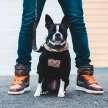

We all love a dog that pays attention, especially when it comes to training. But some dogs take focus to a whole new level—staring at things like they’re trying to bend reality with their minds. They lock in on a toy, another dog, or even a cat, and boom—before you know it, fixation turns into lunging, barking, or, worse, obsessive behavior. If this sounds like your pup, don’t worry. Fixation is a common issue, and with the right approach, you can help your dog learn to relax and refocus.
Why Is Fixation a Problem?
Fixation might not seem like a big deal at first, but it can quickly spiral into something more serious. If your dog is fixated on another dog, it could turn into reactivity. If it’s a moving object (like a cat or a car), it could lead to dangerous chasing behaviors. And if it's an inanimate object? Well, hello, canine OCD.
Helping your dog break fixation:
- Improves obedience in high-stress situations (like when they spot a bunny on a walk).
- Teaches them to shift their attention on cue.
- Helps prevent compulsive behaviors that can be tough to undo.
Let’s break fixation down and help your dog regain some balance.
Step 1: Switching Focus (Starting Small)
Before you go straight to fixing your dog’s obsession with the neighbor’s cat, start with something simple—like toys. Many dogs that fixate do so with their favorite playthings. So, let’s use that to our advantage.
The Toy Swap Game
- Play with one toy (tug, fetch, whatever gets your dog engaged).
- While holding the first toy, bring out a second one. Don’t move it yet.
- Wait for your dog to release the first toy.
- If they don’t switch, try moving the second toy around or hiding the first toy behind your back.
- The second they engage with the new toy—praise like crazy! Then give them back the first toy as a reward.
With repetition, this helps your dog break focus on command.
Step 2: Putting It on Cue
Once your dog understands that switching focus is a good thing, it’s time to add a verbal cue like “switch”, “look”, or “focus.” This cue tells your dog that they need to shift their attention from one object to another.
- Say the cue as they switch toys.
- Reward every time they do it.
- Eventually, apply this cue to other fixations (like staring at the cat or the dog next door).
This is different from a “leave it” command. With “leave it,” the goal is to ignore the object entirely. With “switch,” we want the dog to refocus on something better (like you!).
Step 3: Fixation on YOU (The Good Kind)
Instead of letting your dog fixate on distractions, teach them that the best thing to focus on is YOU. Here’s how:
- Teach a “watch me” cue. Reward eye contact when they look at you.
- Reinforce voluntary check-ins. If they look at you on their own, give them a treat.
- Try a nose-targeting game. Teach your dog to “touch” your hand with their nose on walks to break focus from distractions.
- Use the auto-look technique. Reward when they look at something, then look back at you.
Every dog is different, so a mix of these techniques will give you options depending on the situation.
Step 4: Addressing Problem Fixations
Fixating on the Cat
If your dog is treating your cat like the world’s most interesting prey toy, it’s time to intervene.
- Don’t just call your dog away. Instead, redirect them with something fun. “Staring at the cat isn’t fun, but focusing on me is.”
- Claim the space. If your dog is eye-locking on the cat, step between them and gently nudge them back.
- Use a leash indoors. If fixation gets intense, have a leash on your dog inside so you can redirect without chasing them down.
- Never let fixation lead to chasing. If the cat runs, that’s a reward for your dog. Prevent the chase before it happens.
If your dog fixates on the cat even when you're not around, you may need baby gates or supervised separation while training.
Step 5: Fixation on the Door (Or Windows)
Some dogs obsess over movement outside—whether it’s a passing dog, a squirrel, or a shadow. If your dog is launching at the door like it’s a portal to another world, try these solutions:
Ways to Stop Door Fixation
- Never reward jumping at the door. Don’t open it when they’re acting out.
- Cover the window. If they can’t see it, they can’t fixate on it.
- Interrupt the fixation. Walk up, block the door, and reclaim the space.
- Use noise deterrents (if necessary). A firm verbal correction or shaking a can with pennies (not at the dog, just near them) can break their focus.
Shock collars? Hard pass. They don’t teach your dog why they need to stop—just that random pain happens sometimes. Instead, focus on redirection and training.
Step 6: Fixation on Other Dogs
If your dog turns into a barking mess when another dog walks by, you need to work on structured focus.
- Increase distance. The closer the trigger, the harder it is to break fixation. Work from a safe distance first.
- Use a focus command. Get your dog to look at you before they fixate.
- Reward calmness. If they look at another dog without reacting—reward!
- Use movement. Walking in a curve instead of straight past the other dog helps break fixation.
Over time, this teaches your dog that looking at other dogs calmly is more rewarding than reacting.
Conclusion: Fixation is Fixable
Fixation isn’t just a quirk—it’s a sign that your dog needs guidance. Whether it’s a toy, a cat, or a dog across the street, helping them learn to switch focus, redirect to you, and stay engaged in training will make life easier for both of you.
Key Takeaways
- Start small with toy swaps.
- Put “switch” or “focus” on cue.
- Reinforce fixation on you, not distractions.
- Use space, movement, and positive reinforcement to break unhealthy fixation.
- Stay consistent. The longer fixation goes uncorrected, the harder it is to fix.
With patience and the right approach, you can help your dog become a well-balanced, relaxed companion. And let’s be honest—less barking and lunging means happier walks for everyone. Your dog will thank you (probably with a big goofy grin and a wagging tail).
Thanks for your reading.
About the Creator
The Ones Left Behind:
Shelters overflow every week with wagging tails and hopeful eyes. The young ones—the puppies and kittens—disappear within hours, scooped up by families eager for a blank slate. The old ones stay behind. They wait days, then weeks, often in silent confusion, still listening for footsteps they recognize.
By Dr. Mozelle Martinabout 2 hours ago in Petlife



Comments
There are no comments for this story
Be the first to respond and start the conversation.