
Why Productivity Might Be Killing Your Creativity
When getting more done means thinking less

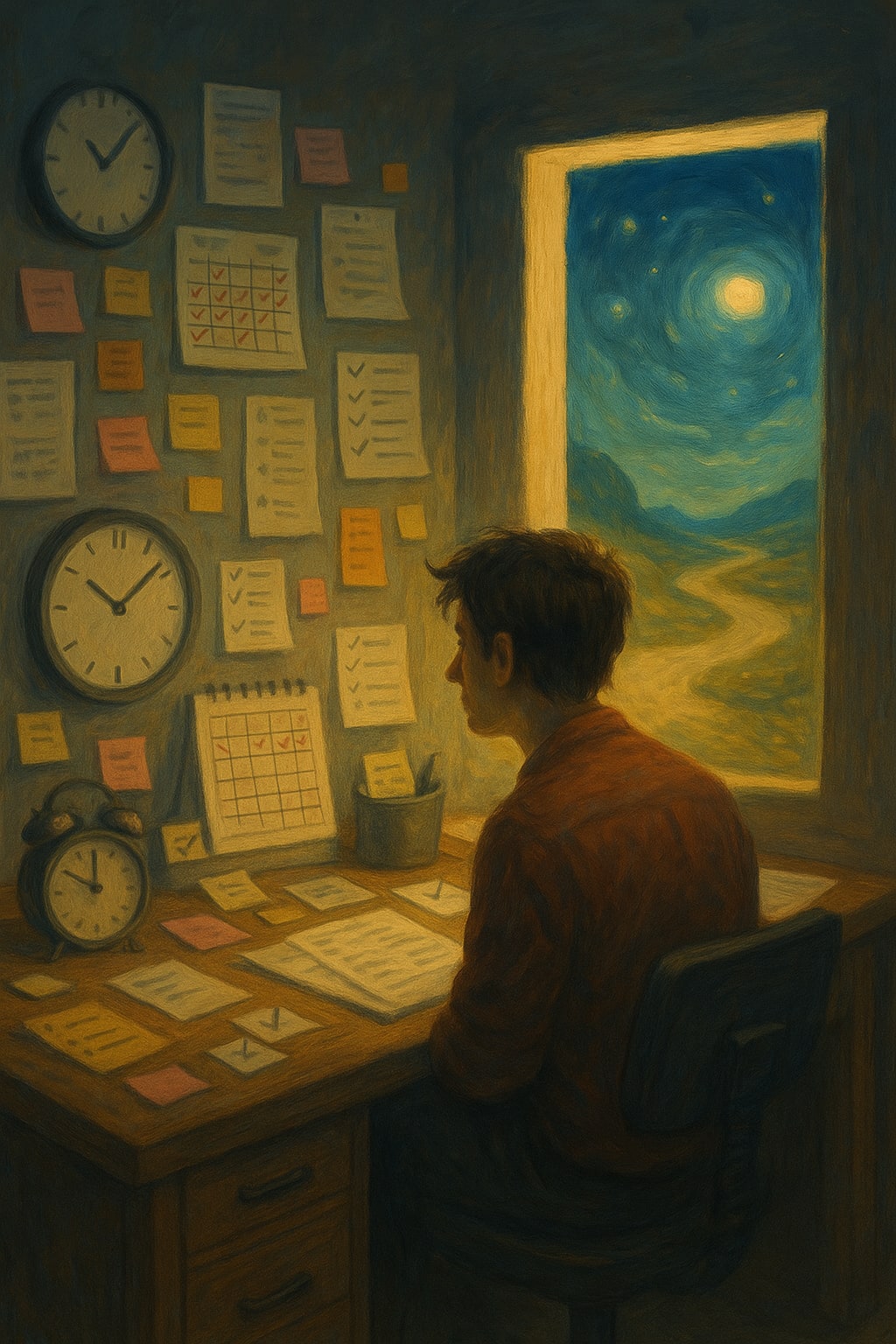
In a world obsessed with productivity—where hustle is glorified, calendars are color-coded, and every minute must be accounted for—there’s an inconvenient truth we rarely stop to consider:
Maybe our obsession with getting things done is slowly killing our ability to think.
In the race to check boxes, respond faster, and optimize everything, something quieter but far more vital is being lost: creativity.
And the most dangerous part? We don’t even notice it slipping away.
The Rise of the Productivity Cult
Let’s start with how we got here.
We live in the golden age of productivity tools. From Notion to Trello, Pomodoro timers to habit trackers, there’s no shortage of ways to do more, faster. We measure our worth by output, our days by efficiency, and our success by how busy we feel.
But beneath the surface of all this optimization is a cultural myth:
“If I’m productive, I must be progressing.”
It feels good to be busy. It feels like movement. But is it meaningful movement? Or just motion for motion’s sake?
Creativity doesn’t thrive under pressure. It suffocates.
Creativity Requires Space
Contrary to the productivity ethos, creativity is not something you can schedule between meetings or summon in a 15-minute window.
Creative ideas are slow. Messy. Nonlinear. They emerge when the mind wanders, not when it’s locked into a task.
Some of the greatest breakthroughs in history didn’t happen in brainstorming sessions—they happened in bathtubs (Archimedes), while walking (Darwin), or even daydreaming in boredom.
But we’ve engineered all the silence out of our lives:
We check emails while brushing our teeth.
We listen to podcasts while walking.
We answer Slack messages during lunch.
Every possible pause has been filled. Every moment is now “productive.” And so, our creativity starves.
The Illusion of Constant Output
Productivity culture teaches us that we should always be creating, publishing, or delivering something.
But true creativity doesn’t work like a factory. It ebbs and flows. It needs incubation. It needs “wasted time.”
Author Neil Gaiman once said:
“You have to let yourself get bored... That’s where ideas come from.”
Yet most of us are terrified of boredom. It feels like failure. It feels like laziness.
So instead of allowing stillness, we chase small dopamine hits from tasks that make us feel useful, even when they’re not moving us forward.
And slowly, the creative spark dims.
When Structure Becomes a Cage
To be clear, structure isn’t the enemy. Systems can support creativity—when designed wisely.
But rigid productivity systems can become a cage. When every hour is planned, when spontaneity is erased, when we fear “unstructured time,” we risk becoming machines in our own lives.
Ask yourself:
Do you feel guilty when you’re not producing?
Do you struggle to relax without checking something off a list?
Do you avoid activities that don’t have clear outcomes?
If yes, then productivity has likely crossed the line from tool to tyrant.
Creativity Needs Play, Not Pressure
Productivity demands results. Creativity demands curiosity.
Playfulness, experimentation, even failure—they’re essential ingredients of innovation. But they have no place in the metrics of productivity culture.
Think about the last time you created something for no reason.
No deadline. No goal. Just for joy.
Now ask yourself: Why did that stop?
For many, the answer is adulthood. For others, it’s the workplace. But for most, it’s the invisible voice that whispers:
“If it doesn’t lead to something, it’s a waste of time.”
This is the creativity killer.
Reclaiming Creative Time in a Productive World
So how do we push back?
How do we create a space for imagination in a culture that worships execution?
1. Schedule Unstructured Time
Block out time not for tasks, but for nothing. Let your mind wander. Doodle. Daydream. Stare out the window. This is not laziness—it’s refueling.
2. Redefine “Success”
Instead of asking, “What did I finish today?” ask,
→ “What did I imagine today?”
→ “What made me curious?”
→ “Did I feel awe or wonder?”
Shift the focus from output to exploration.
3. Let Boredom Breathe
Leave gaps in your day. Don’t fill every silence. Carry a notebook, not your phone. See what thoughts emerge when you’re not consuming.
4. Create for No Reason
Draw badly. Write nonsense. Build something silly. Not everything you make must be shared, monetized, or productive. Create for you.
When Less Doing Means More Becoming
Paradoxically, doing less may be the most creative act of all.
Because in the stillness—beneath the noise of hustle and deadlines and deliverables—there is something more profound waiting to surface: your original thoughts.
Your inner voice. Your unique perspective.
The things no algorithm or productivity guru can optimize.
So take a break from being efficient.
Close the planner. Miss a meeting. Ignore the timer.
And instead, give yourself permission to be useless for a little while.
Because from that beautiful, unmeasurable space...
Ideas are born.
About the Creator
Ahmet Kıvanç Demirkıran
As a technology and innovation enthusiast, I aim to bring fresh perspectives to my readers, drawing from my experience.
Keep reading
More stories from Ahmet Kıvanç Demirkıran and writers in Motivation and other communities.



Comments (2)
good
So true, Ahmet. This was a great article...and I so agree that productivity hampers creativity.....we want things done in a certain way, in a certain amount of time, which can stem it. Well said.