self help
Self help, because you are your greatest asset.
Weekly Planning For People Who Want Big Resluts
Big results rarely come from dramatic bursts of effort. They come from structured, repeated weeks. Most people underestimate the power of one well-designed week. They think transformation requires massive overhauls, extreme motivation, or perfect discipline. In reality, success compounds through consistent, intentional planning.
By Stacy Valentineabout 5 hours ago in Motivation
Unreliable
There is a particular kind of anxiety that begins before the phone is even picked up. It lives in the pause. In the rehearsed sentence. In the careful consideration of tone. It sounds simple: “I’m not well enough to come in today.” It feels anything but simple.
By Millie Hardy-Simsabout 11 hours ago in Motivation
Laziness
There is a voice in my head that does not have multiple sclerosis. It remembers who I was before. It remembers the pace I used to keep, the hours I used to work, the way I could move through a day without calculating the cost. It compares that version of me to who I am now and draws the wrong conclusion.
By Millie Hardy-Simsabout 12 hours ago in Motivation
Live for Yourself, Not for Society . Content Warning. AI-Generated.
From the moment we are born, the world starts shaping our lives. Family, friends, teachers, and society at large all wishper-sometimes loudly, sometimes subtly-how we should live, what we should aspire to, and who we should become. "Be this, do that, follow the rules, fit in"-these messages pile up, one after another. And often, we spend years chasing a version of ourselves that isn't truly ours, simply to satisfy everyone else's expectations.
By Binisa Chaudharyabout 14 hours ago in Motivation
Art for Healing: A Mindful Path to Emotional Release. AI-Generated.
In moments when words fail, color, texture, and movement often speak with clarity. Art for healing offers a direct path to emotional release by bypassing intellectual defenses and engaging the body and senses. Rather than forcing explanation, it invites presence. Through drawing, painting, collage, or clay work, individuals access feelings that may feel too complex or too tender to name aloud.
By Jose Morrisabout 15 hours ago in Motivation
The Power of Self-Improvement: Small Changes That Transform Your Life
It Is Important to Understand Yourself Self-improvement begins with understanding ourselves. We often ignore our weaknesses and habits. Unless we observe our thoughts and reactions, we cannot change them. Speaking the truth to ourselves is difficult, but real growth begins there. Every day we should take some time to think about where we are making mistakes and where we can improve.
By NadirAliWritesabout 15 hours ago in Motivation
“I Built a Personality to Survive — Now I Don’t Know the Real Me” Subtitle: The cost of becoming
I don’t remember when I started pretending. I only remember getting very good at it. It wasn’t a dramatic decision. I didn’t wake up one day and choose to become someone else. It happened slowly — small adjustments, quiet edits, subtle shifts in tone and reaction. Like lowering the volume of a song until you forget how loud it used to be. I learned early that certain parts of me were inconvenient. Too sensitive. Too quiet. Too intense. Too emotional. So I edited. At school, I became agreeable. I laughed at jokes I didn’t find funny. I nodded at opinions I didn’t believe. I studied people carefully — what made them comfortable, what made them stay. I became fluent in being likable. At home, I became low-maintenance. I didn’t ask for much. I didn’t raise my voice. I didn’t express anger. I learned that peace was something you earned by shrinking. And it worked. People called me mature. Easygoing. Strong. Adaptable. I was praised for being calm, for being reliable, for never causing trouble. They didn’t see that I was disappearing. When you build a personality to survive, it feels smart at first. You become the version of yourself that gets rewarded. You smooth out your rough edges. You turn sharp emotions into softer responses. You translate your needs into silence. You survive. But survival is not the same as living. The longer you perform, the more the performance feels real. Eventually, you forget where the act ends and you begin. You become a collection of traits designed to keep you safe. I was the responsible one. The dependable one. The emotionally steady one. Those identities became my armor. If I was responsible, no one would worry about me. If I was dependable, no one would leave. If I was steady, no one would call me dramatic. But inside, there were storms I never allowed to reach the surface. One night, alone in my room, I asked myself a question that scared me: If no one was watching, who would I be? I didn’t have an answer. That terrified me more than rejection ever had. Because I could describe who I was in every room. With friends, I was the listener. At work, I was the overachiever. In relationships, I was the fixer. I adjusted myself constantly, like lighting in different spaces. But alone? Without roles? I felt blank. It’s exhausting to measure every reaction. To filter every thought before it leaves your mouth. To decide whether your real opinion will make someone uncomfortable. So you choose comfort. You choose acceptance. You choose safety. And slowly, you lose yourself. There’s grief in realizing that parts of you were never allowed to grow. The loud laughter you suppressed. The anger you swallowed. The dreams you dismissed because they didn’t fit your “reliable” image. I used to think I was adaptable. Now I wonder if I was just afraid. Afraid of rejection. Afraid of conflict. Afraid that the real me would be too much — or not enough. So I built a version that was just right. Just right for teachers. Just right for friends. Just right for expectations. The cost of becoming what everyone needed is forgetting what you need. When I finally slowed down enough to notice the cracks, they were everywhere. Moments of resentment over things I had agreed to. Laughter that felt disconnected from my own voice. The automatic “It’s fine” when it wasn’t. Those cracks were uncomfortable. But they were also proof that something real still existed underneath. Unlearning survival feels risky. Saying, “I don’t agree,” feels dangerous. Admitting, “That hurt me,” feels selfish. Prioritizing your comfort after years of prioritizing everyone else’s feels unfamiliar. The first time I said no without explaining myself, I felt guilty for hours. The first time I admitted I didn’t know who I was, I cried — not because I was weak, but because I was tired. Rebuilding yourself after surviving feels like walking without armor. You feel exposed. Vulnerable. Unsure which traits are truly yours and which were built for protection. Sometimes I still slip into old versions of myself. The agreeable one. The unbothered one. The always-okay one. It’s comfortable there. But comfort built on self-erasure isn’t peace. It’s hiding. I don’t hate the personality I built. It protected me. It helped me navigate spaces where I didn’t feel safe being fully seen. It kept me steady when I didn’t know how to stand on my own. But I don’t want it to be the only version of me anymore. Now, when I ask who I am, the answer is less polished but more honest. I am someone learning. Someone unmasking. Someone trying to separate survival skills from identity. Maybe I don’t need a perfectly defined “real me.” Maybe I just need permission to explore without editing. To laugh loudly. To disagree without apology. To feel deeply without shame. I built a personality to survive. It kept me safe. It kept me liked. It kept me functional. But now I want something more than survival. I want to exist without performing. And maybe the real me isn’t lost. Maybe they’ve just been waiting for me to stop pretending long enough to finally come home.
By Faizan Malikabout 20 hours ago in Motivation
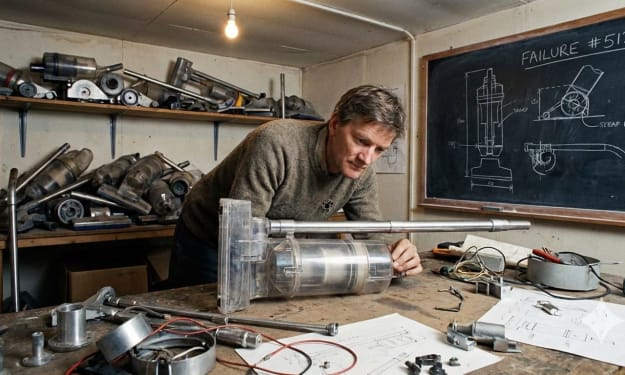
The Billionaire Who Failed 5,127 Times: The Radical Persistence of James Dyson
Look around your home, and there is a high probability you will spot a piece of technology that looks like it belongs on a spaceship. It might be a blade-less fan, a supersonic hair dryer, or a sleek, cordless vacuum cleaner humming with a futuristic whine.
By Frank Massey about 23 hours ago in Motivation
Practical Strategies for Self-Improvement & Productivity
In today's fast-paced world, the quest for self-improvement and enhanced productivity has become more critical than ever. We all aspire to be better, do more, and achieve our goals, yet the path can often seem daunting. This article delves into actionable strategies that not only promise to boost your efficiency but also foster a deeper sense of fulfillment and confidence. By understanding the 'why' behind these techniques, you can integrate them seamlessly into your daily life and unlock your true potential.
By Being Inquisitivea day ago in Motivation