
Tom Hardy — From Troubled Youth to Relentless Performer: A Motivational Biography
Legend

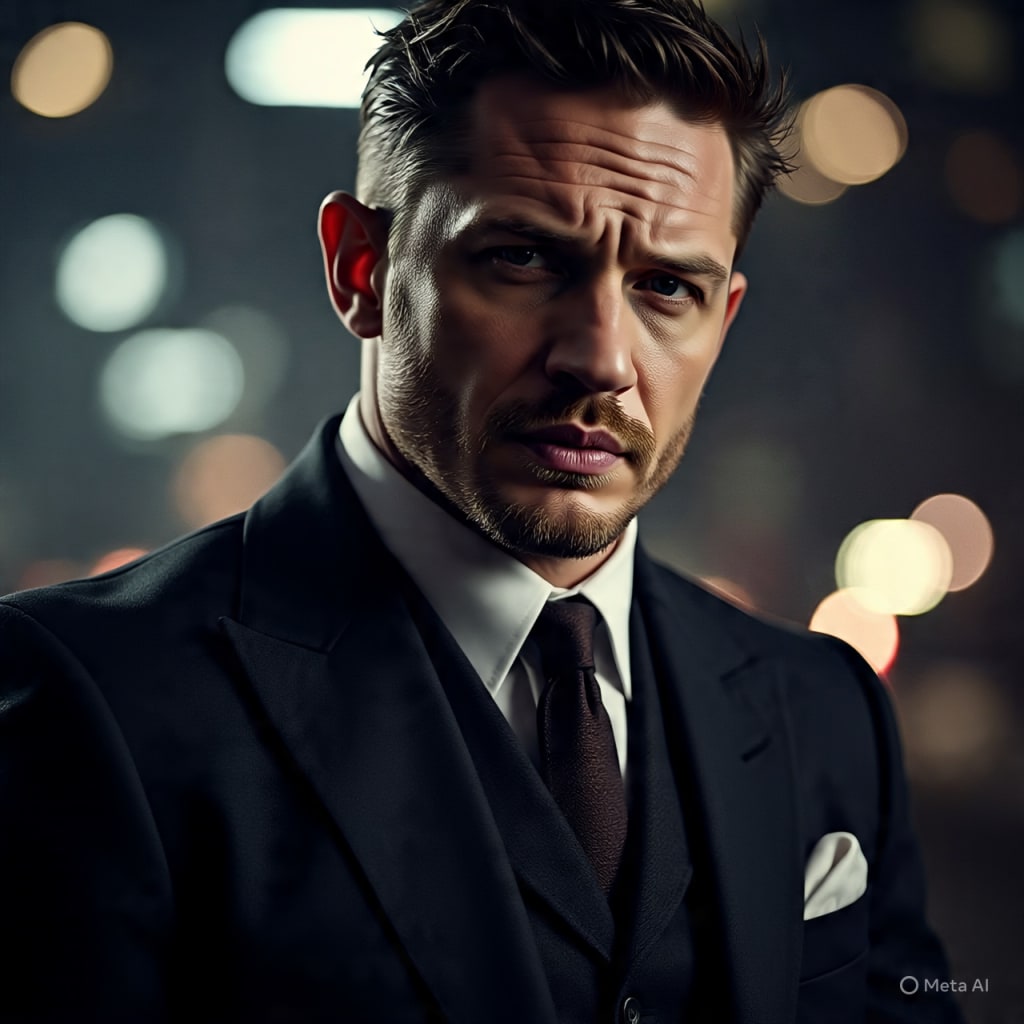
Introduction
There’s a particular kind of grit in Tom Hardy — a combination of physical intensity, private vulnerability, and the brutal honesty of someone who’s been to the edge and come back. Today he’s one of the most respected actors of his generation: a chameleon who disappears into roles, a family man who fiercely protects his privacy, and a performer who turned near-self-destruction into disciplined craft. But his rise wasn’t inevitable. This is the full story of Edward Thomas “Tom” Hardy — where he came from, how he almost lost himself to addiction, the creative choices that changed everything, and the lessons his life offers anyone trying to rebuild and become excellent on purpose.
1. Roots: a creative home and a restless boy
Edward Thomas Hardy was born September 15, 1977, in Hammersmith, London. He’s the only child of an artist mother and a novelist/comedy-writer father, a household where imagination came before instruction and stories were treated like tools. Hardy grew up across different parts of London; early schools included Tower House and Reed’s, and later he trained at Richmond Drama School and the Drama Centre London — institutions that would sharpen a latent intensity into a deliberate craft. From the start, he was not destined for a quiet life. He had energy, curiosity, and a restlessness that would both serve and threaten him.
Those formative years gave him a paradoxical advantage. On the one hand, he was surrounded by creative conversation and theatrical models: his father Edward “Chips” Hardy was already working in stories and scripts. On the other, the structure of formal training — the discipline of drama school — provided the tools for channeling a dangerous natural ferocity into technique. That mix of raw fuel and technical control would later define his work.
2. The backstory nobody wanted to read: rebellion, excess, and near collapse
Hardy’s twenties were chaotic. He has been candid about periods of heavy drinking and drug use in his youth — behaviour that escalated into a destructive cycle and nearly derailed him before he’d properly begun. Interviews and profiles across reputable outlets record the same uneasy truth: he “went off the rails,” pushed away steady relationships, and flirted with self-annihilation. In 2003 he confronted the reality of that path and entered rehabilitation; the decision to get help was the first adult step in a life that had been leaning toward ruin.
That chapter is not a tidy cautionary tale. Hardy himself has described it as shameful and dangerous — a time when he admits he would have made terrible choices for drugs. The rawness of that confession matters because it undercuts the myth that great careers are always smooth; his career has a before and after, and the line between them was recovery. The lesson is blunt: talent won’t protect you from self-destruction, but choosing help can flip a life.
3. Trade school for temperament: learning the actor’s craft
After rehabilitation, Hardy returned to the work that had always called him. Drama Centre London — known for its rigorous method training and intense physical approach — became his laboratory. The school stresses emotional truth and physical commitment; for Hardy, whose instincts were already theatrical, the Centre gave vocabulary and discipline. Early credits followed: TV work, small film parts, and an accumulation of experience that slowly changed industry gossip into professional respect.
People who watched Hardy in those days saw a person practising extremes: experimenting with voice, body, and presence until each element became an instrument. That experimental, even obsessive, approach prepared him for roles that demand the kind of transformation other actors approach more cautiously.
4. First major turns: a slow burn to recognition
Hardy’s early screen work was eclectic — supporting parts that showcased range rather than star power. He appeared in ensemble and supporting films, learning to make small moments feel large. The role that first turned heads outside the U.K. was his searing turn as the prison icon Charles Bronson in Bronson (2008): a violent, unpredictable performance that revealed a performer willing to court ugliness in the service of truth. Critics took notice; casting directors started writing his name on heavier lists.
Around the same time he landed roles in big pictures like Christopher Nolan’s Inception and later took on physically challenging projects such as Warrior and Tinker Tailor Soldier Spy, each job expanding how directors and audiences understood his range. He was no longer just the wild young actor — he could be quiet, measured, monstrous, charismatic, and heartbreakingly human.
5. The actor as instrument: risk-taking and transformation
What separates good actors from great ones is willingness to risk. Hardy took that ethos to extremes. In Bronson he reinvented himself physically and psychologically; in Warrior he learned the chest-breaking bodily reality of fighters; in Locke (2013) he carried an entire feature alone, conversing with characters over a steering wheel while the camera turned — an audacious, minimalist test of craft that few actors of his generation would attempt. Those projects signaled something important: Hardy didn’t want the safety of repeats. He wanted to be tested.
The consistent theme is total commitment. If a director asked for a guttural accent, Hardy would disappear into dialect and jaw. If a film demanded physical danger, he trained until the danger was believable. That discipline — the fusion of obsession and humility — creates performances that feel earned, not marketed.
6. The breakthrough & the industry’s new favorite chameleon
Mass recognition broadened with parts that put him in blockbuster orbit while keeping his credibility. His Bane — the masked, muscular villain in The Dark Knight Rises (2012) — was a calculated risk: a comic-book villain recrafted through menace, intellect, and a memorable voice. Then Mad Max: Fury Road (2015) showed his capacity for visceral, cinematic physicality in a film that became immediately iconic. In the same awards season, his supporting role in The Revenant (2015) opposite Leonardo DiCaprio earned him his first Academy Award nomination for Best Supporting Actor — a mark that confirmed both popular and critical acknowledgement. These films consolidated a rare position: Hardy was both a commercial draw and a director’s actor.
Those years taught him how to balance prestige and scale. He could anchor an A-list action concept and then step into an intimate drama the next year. Versatility became his brand — and he used that brand to pick projects that stretched him rather than comforted him.
7. Creating opportunity: producing, writing, and Taboo
Hardy didn’t wait for roles to come. He expanded his creative control into producing and even co-creation. Working with his father and collaborators, he helped shape projects that fit his artistic curiosity. The BBC series Taboo — which Hardy co-created and produced — is an example of taking narrative control, blending family collaboration with a desire to create a singular leading vehicle tailored to him. That move from actor to content creator mirrors a larger industry shift: performers who own storytelling have leverage and longevity.
Owning projects also gave Hardy room to explore darker, morally complicated characters without corporate filters. It was autonomy in practice: if he wanted to play an obsessive anti-hero, he could help build the world around that character.
8. The personal turn: family, privacy, and fatherhood
Away from cameras Hardy is fiercely private. He values family and has repeatedly said that parenthood and personal responsibilities helped anchor him when the 20s’ chaos threatened to re-emerge. He has three children — a son from a previous relationship (Louis) and two children with his wife Charlotte Riley (they married in 2014) — and credits fatherhood with forcing him into routines and responsibilities that recovery alone could not teach. The domestic life he keeps out of the tabloids is central to his identity; he has described his children as a shattering joy and a daily lesson in humility.
This private grounding is notable because it demonstrates a practical side of recovery: creating a life that makes relapse less attractive. For Hardy, purpose shifted from self-destructive impulses toward providing stability and example.
9. Public honesty about addiction and mental health
Hardy has spoken publicly about his addiction and the near-miss of a life cut short. He’s described it as a suburban shame, admitting that he once prioritized substance use over everything else. The difference between confession and strategy is key: he doesn’t use dark pasts for cheap drama; he frames them as instruction — warnings to himself and others. He’s said he is “lucky to be alive” and uses that gratitude to fuel discipline. Those admissions turned his narrative from a secret to a tool for empathy and influence.
The cultural value of such candor is twofold: it destigmatizes addiction for audiences who may admire him, and it models long-term, practical recovery for peers. Hardy’s story is not a single event; it’s a sustained commitment to living differently.
10. The work ethic behind the myth: rehearsal, physical training, and detail
Behind each intense performance is a grind most fans never see: dialect coaching, physical conditioning, script analysis, and an unblinking willingness to try choices that might fail. For Bronson he studied the man obsessively; for Warrior he trained as a fighter; for The Revenant he endured brutal shooting conditions. Hardy’s process treats the body like a musical instrument and the imagination like a laboratory — both need daily work. Professional willingness to endure discomfort creates the signature moments that critics point to as “transformation.”
That ethic produces more than an image of toughness. It creates reliability: directors know they can ask Hardy for a difficult choice because he’ll show up prepared and take responsibility for the result.
11. Awards, honors, and the unusual career arc
Hardy’s trophy shelf is meaningful but not the center of his story. He received the BAFTA Rising Star Award early in his ascent — a consumer-voted signal that the public and industry were aligning — and later earned an Academy Award nomination for The Revenant, among many other nominations and wins. Those honors underscore the industry’s recognition that his work is both compelling and durable. But Hardy treats awards as incidental to the work: a marker, not a master.
That humility is instructive. For people building careers, awards validate progress but do not replace the daily practice of craft.
12. Reinvention: comic book anti-heroes to tortured twins
If there’s a theme in Hardy’s filmography it’s reinvention. He played Bane (a masked, conspiratorial villain), then delivered dual roles as gangster twins in Legend, moved into comic-book anti-hero territory with Venom, and returned to intimate dramas like Locke. He’s an actor who resists typecasting by design. Part of that strategy is risk tolerance: choose wildly different projects and do the homework to make them credible. The payoff is range — the industry can see him in many lights, and that flexibility creates longevity.
The practical corollary is simple: diversify your work while specializing in technique. Hardy specialized in transformation; that specialization allowed him to diversify his choices.
13. The quiet power of choosing well: producing, business, and legacy moves
Hardy’s later career shows a deliberate pivot to projects that also build legacy. Producing Taboo, participating in auteur cinema, and choosing characters that remain culturally sticky are all moves toward a long-term footprint. He’s learned to take creative risks that also make business sense: select projects with voice, scale them when needed, and avoid becoming a commodity actor. The modern creative life requires this hybrid of art and commerce — Hardy learned it the hard way and now uses it to make better choices.
For anyone building a life’s work, this is the crucial step: ownership of narrative and product is the bridge between flare and durability.
14. Lessons from Hardy’s path — recovery, craft, and stubbornness
Tom Hardy’s life offers concrete lessons you can use:
Get help early. Addiction is an escalation; intervention saves futures.
Train like a technician. Natural talent needs method; the Drama Centre gave Hardy tools.
Choose hard roles. Stretching creates muscle. Don’t pick comfort.
Protect what matters. Family and privacy provide rhythms that guard recovery.
Make your own work. Create projects you’d want to star in or produce; ownership protects agency.
These are practical takeaways from a life that could have ended in anonymous ruin. Instead, Hardy built a discipline that turned suffering into craftsmanship.
15. The man today: humility, ferocity, and an unfinished story
Tom Hardy’s public persona still carries contradictions: an actor who thrives on intensity and a private man who protects his children and routines; a past that could have destroyed him and a present that channels his edge into art. He remains candid when asked about addiction and recovery, but otherwise he prefers the work to speak. In recent years he’s continued to pick surprising roles, collaborate with directors who test him, and quietly invest in projects that matter to him. The arc from a chaotic young man to a disciplined artist is not romanticized in Hardy’s telling; it’s practical, incremental, and often ugly. That authenticity is the center of his appeal.
He is, in the end, a working actor who built a life — small rebellions converted into consistent practice, personal crisis transmuted into daily ritual.
Conclusion — Why Tom Hardy’s story is a map for anyone rebuilding
Tom Hardy’s life is not a Hollywood fairy-tale. It’s a blueprint for salvaging talent through discipline and choice. He nearly lost his life to addiction, but he chose recovery; he might have stayed a supporting actor, but he pursued transformation; he could have become a tabloid fixation, but he carved a private life and a public craft. His story matters because it is messy and practical. It offers a template for anyone who needs more than inspiration — it offers steps: get help, train hard, choose bravely, and protect what grounds you.
If you take one idea from Tom Hardy’s journey, let it be this: bravery is not only the willingness to risk in public; it’s the courage to do the lonely, disciplined work every day that makes risky things possible
About the Creator
Frank Massey
Tech, AI, and social media writer with a passion for storytelling. I turn complex trends into engaging, relatable content. Exploring the future, one story at a time
Keep reading
More stories from Frank Massey and writers in Motivation and other communities.
Billie Eilish: The Untold Journey of a Modern Icon
Billie Eilish Pirate Baird O’Connell is not just a name—it is a phenomenon that has shaped a generation. Known for her haunting vocals, genre-defying music, and bold individuality, Billie’s story is far more than awards, fame, and global stardom. It is a story of resilience, vulnerability, creativity, and staying true to herself in an industry that often demands conformity.
By Frank Massey 5 months ago in Motivation
Triumph Over Adversity
The Oprah Winfrey is not only a biography of a billionaire media mogul, but a text on the power of resilience to overcome seemingly insurmountable odds.2+1 her story is a lesson to any person who may be going through seemingly impossible times.
By Edward Smithabout 19 hours ago in Motivation




Comments
There are no comments for this story
Be the first to respond and start the conversation.