
The Psychology of Persuasion
Lessons from an Advertising Maverick Rory Sutherland

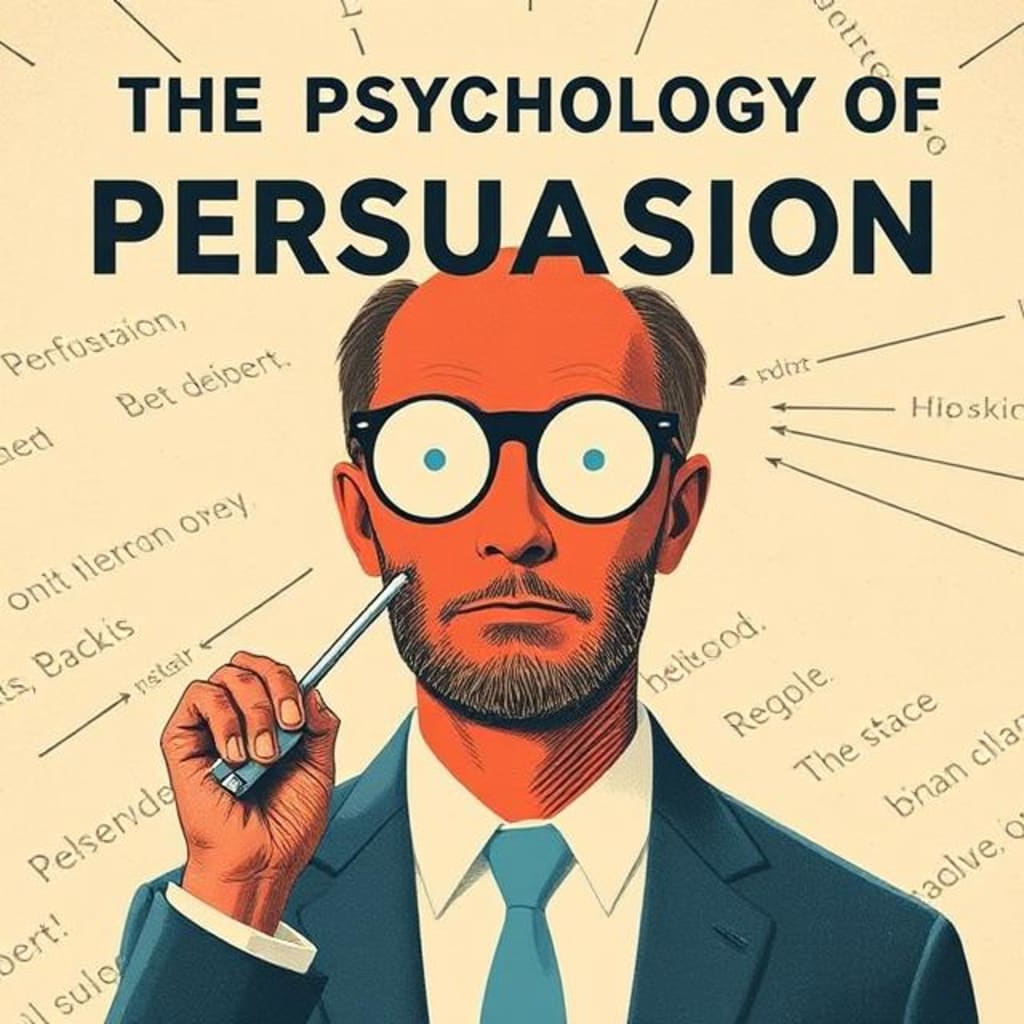
Rory Sutherland, Vice Chairman of Ogilvy UK and one of the most influential figures in modern advertising, is not your typical marketer. With a background in classics rather than business or psychology, Sutherland brings a distinctively humanistic and lateral approach to understanding value, behavior, and persuasion. His central thesis is simple yet revolutionary: people do not make decisions rationally—they make them psychologically. From this insight flows a torrent of practical wisdom for anyone involved in business, innovation, or communication. Here are some of the most compelling lessons from Rory Sutherland’s work.
1. Perception is Reality
One of Sutherland’s most famous arguments is that “a change in perspective is worth 80 IQ points.” What he means is that value doesn’t exist solely in the physical characteristics of a product or service—it often lies in how people perceive it. For example, in his book Alchemy, he recounts how improving the customer experience of waiting for the London Underground wasn’t solved by speeding up the trains (a costly engineering problem), but by installing dot matrix displays showing when the next train would arrive. It turned a stressful, uncertain wait into a predictable one—without changing the actual wait time.
The business lesson is powerful: small psychological changes can deliver enormous perceived value, often more affordably and effectively than engineering or logistical solutions.
2. Don’t Over-Rely on Logic
Sutherland is deeply skeptical of excessive rationality in business thinking. He argues that obsession with measurable efficiency often blinds companies to the more irrational, emotional factors that truly drive consumer behavior. “The problem with logic is that it kills off magic,” he says. In other words, if you limit yourself to what is rationally justifiable, you will miss what is psychologically compelling.
This mindset encourages embracing "psycho-logical" solutions—ideas that may seem illogical but work because they resonate emotionally or symbolically. Take Red Bull, for example: a drink that tastes worse and costs more than most competitors, yet sells more—largely because its price and brand message signal energy and exclusivity.
3. Test Counterintuitive Ideas
Sutherland’s approach often mirrors that of a behavioral economist crossed with a stand-up philosopher. He argues that marketing should experiment more freely—testing ideas that make intuitive sense not to rational economists but to actual humans. “If you never test anything crazy, you’ll only ever get conventional answers,” he advises.
For innovators, this means being willing to challenge assumptions and try the unreasonable—especially when the cost of experimentation is low. Instead of over-optimizing what already works, look for what surprises people, what delights them, or what breaks the expected pattern.
4. Signaling Matters More Than You Think
Another of Sutherland’s favorite themes is signaling—the idea that much of human behavior is less about function and more about communicating status, taste, or intent. A luxury handbag, for instance, isn’t bought for utility; it’s a social signal. A business class seat may not be ten times more comfortable than economy, but it signals importance, success, or self-respect.
By understanding signaling, brands can position themselves more effectively. Sutherland suggests businesses ask not just “What is the product for?” but “What does owning this product say about the person who owns it?”
5. Embrace Subjectivity
Sutherland’s worldview is refreshingly non-dogmatic. He believes that value is subjective, and therefore businesses should pay as much attention to psychology as they do to technology or finance. In a world obsessed with metrics and data, he advocates for more empathy, intuition, and creativity in decision-making.
He often reminds us that "there is no such thing as a 'real' value—only perceived value." Whether you're pricing a product, designing an experience, or crafting a message, your success depends not on objective superiority but on how you make people feel.
Final Thought
Rory Sutherland doesn’t offer formulas—he offers frameworks. His lessons are not about hacking consumer behavior but about understanding it more deeply. By focusing on perception, psychology, and the quirks of human decision-making, he invites us to reimagine how we define value and create meaning.
In a world where logic dominates boardrooms and spreadsheets rule strategy, Sutherland’s playful, psychological lens is not just refreshing—it’s necessary. As he might say: if you're not occasionally doing something that doesn’t make sense, you’re probably missing out on what really works.
About the Creator
Fred Bradford
Philosophy, for me, is not just an intellectual pursuit but a way to continuously grow, question, and connect with others on a deeper level. By reflecting on ideas we challenge how we see the world and our place in it.
Keep reading
More stories from Fred Bradford and writers in Motivation and other communities.
Want to Know What They’re Thinking? Start Here
Reading people is not a mystical talent, it is a skill rooted in psychology, observation, and empathy. For beginners, it can seem overwhelming to interpret body language, facial expressions, tone, and subtext. But with some structured attention and practice, anyone can learn to better understand others. Whether you're navigating social situations, managing a team, or simply looking to connect more deeply, learning to read people can give you a significant edge in communication and decision-making.
By Fred Bradford8 months ago in Motivation
Silver Screen Magic with Mae West
American actress and singer Mae West became a popular film actress during the Great Depression. She started entertaining in vaudeville, then performed on Broadway, and finally went to Hollywood. She signed up with Paramount Pictures and made her debut in the 1932 film “Night After Night.” She also starred in musicals, comedies, and crime dramas. The American Film Institute named her one of the best classic Hollywood actresses.
By Rasma Raisters3 days ago in Geeks



Comments
There are no comments for this story
Be the first to respond and start the conversation.