
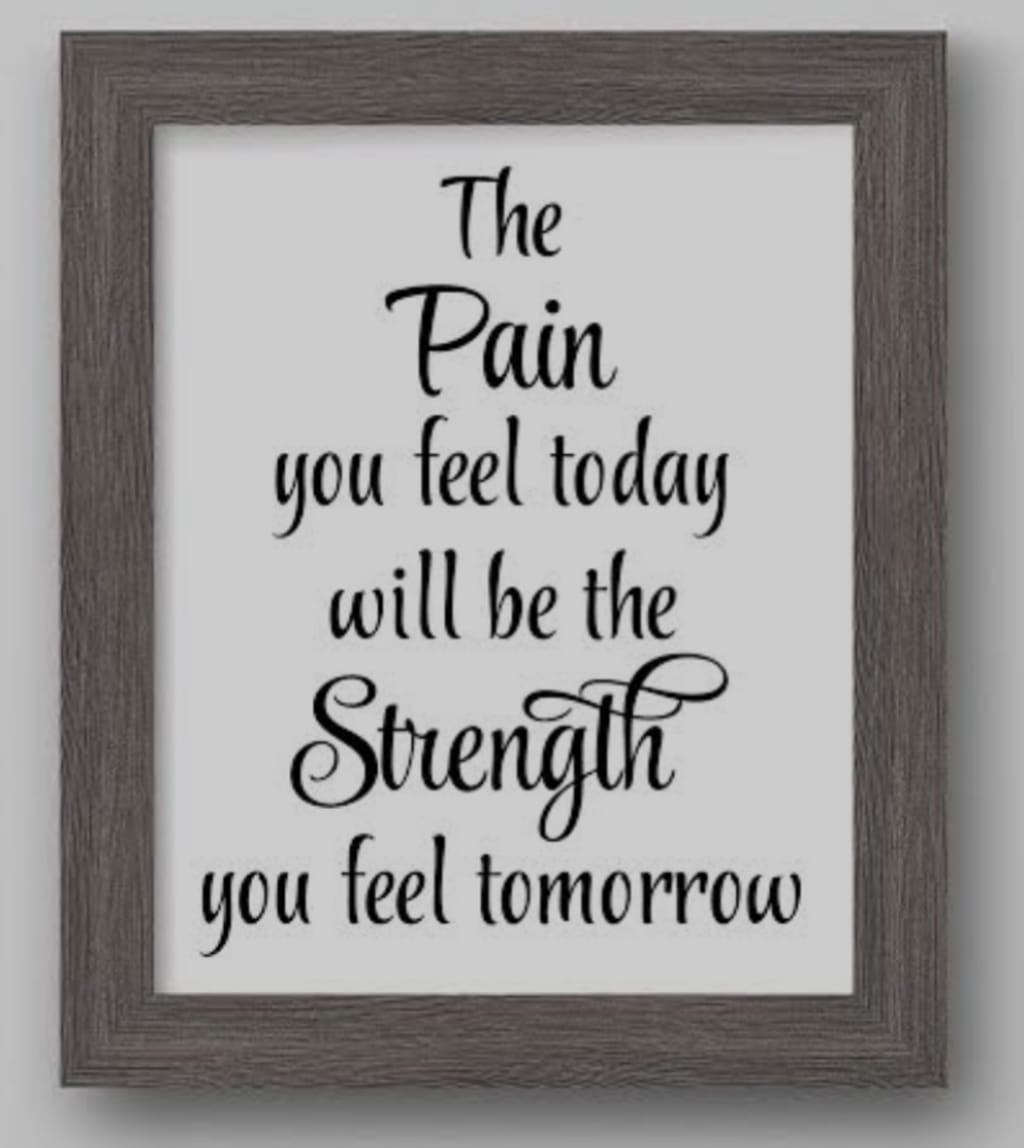
THE PAIN YOU FEEL TODAY IS THE STRENGTH YOU FEEL TONORROW
“Today’s struggle shapes tomorrow’s resilience.”

The Mountain and the Marathon
There was a small town nestled in the valley of two great mountains, where life moved slowly, and dreams were often left for stories told by elders beside the fire. In that town lived a boy named Arjun. He was quiet, lanky, and not particularly strong or fast, but he had a heart that burned with an untold desire — the kind of desire only understood by those who dream of more.
From the time he was a child, Arjun was fascinated by the town’s annual marathon — a grueling 30-kilometer race that climbed one side of the mountain and descended down the other. Only a few completed it. Even fewer finished it strong. To Arjun, those runners were gods — not because they were the fastest, but because they endured.
At the age of sixteen, Arjun decided he would run the marathon.
He remembered the laughter when he told his classmates. “You? You can’t even run to school without getting winded!” they teased. Even his father, a blacksmith hardened by years of labor, chuckled and said, “It’s good to dream, son, but don’t chase the wind.”
But Arjun wasn’t deterred. He woke up every morning before the sun, tied his worn-out sneakers, and began to run. The first few days were miserable. His legs ached. His lungs screamed. Sometimes he would collapse by the road, clutching his sides, wondering if maybe everyone was right.
One cold morning, as snow still dusted the ground, he pushed himself to climb the steepest path on the edge of the mountain. His legs felt like lead, and every step was a negotiation between will and surrender. When he finally reached the top, he collapsed, tears mixing with sweat. The pain was unbearable. He lay there, unable to move, whispering, “Why am I doing this?”
Just then, an old man came jogging up the path behind him — lean, wiry, his breath steady. He looked down at Arjun and smiled kindly.
“First time climbing this path?” the old man asked.
Arjun nodded, still panting.
“I remember the first time I did it,” the man said. “I thought I would die. But you know what? The pain you feel today is the strength you feel tomorrow.”
Arjun looked up at him, confused.
The man crouched beside him. “Strength doesn’t come from what you can do. It comes from overcoming the things you once thought you couldn’t.”
Those words stuck with Arjun like a flame buried in his chest. The next morning, despite the blisters on his feet and the soreness in his body, he ran again. And again the next day. Days turned into weeks. Weeks into months. The pain never fully left, but something else came alongside it — endurance.
There were mornings when he wanted to stay in bed, and days when his legs begged him to stop. But he remembered the old man’s words and kept going.
Finally, the day of the marathon arrived.
The entire town had gathered. Arjun stood at the starting line, his heart pounding not just from nerves but from everything it took to get there. He saw his classmates watching curiously. His father stood at the back, arms crossed, a slight frown on his face.
The whistle blew.
Arjun ran, slow and steady. People sprinted ahead of him, but he didn’t chase them. He had learned that races weren’t won in the first five kilometers, but in the last five. He climbed the mountain, step by step, his breaths rhythmic, his body aching — but this time, he welcomed the pain. It was no longer the enemy. It was proof of his growth.
Halfway through the race, many runners began to drop out, some due to cramps, others from exhaustion. But Arjun pressed on. As he reached the peak, he passed several runners who sat on the side, defeated. He gave them a nod — not out of pride, but out of understanding. He had been there once.
The descent was just as brutal. His knees throbbed. Every step jarred his bones. But he could see the valley now, the town growing closer. People lined the streets, cheering, and among them he saw his father — no longer frowning, but staring, his eyes wide with awe.
When Arjun crossed the finish line, he didn’t finish first, or even in the top ten. But he finished strong. And more importantly, he finished changed.
The old man from the mountain approached him, clapped a hand on his shoulder, and said with a smile, “Told you.”
That night, the town buzzed with celebration, not for the winners, but for the boy who had proven something greater than victory: resilience.
Years later, Arjun would become a coach, mentoring young dreamers who were laughed at, doubted, or dismissed. And every time one of them collapsed in the middle of training, ready to give up, he would sit beside them and say, “The pain you feel today is the strength you feel tomorrow.”
Because he knew firsthand — pain was not a wall, but a bridge. And those willing to cross it would find not just strength, but transformation.
About the Creator
Keep reading
More stories from Muhammad Tanveer and writers in Motivation and other communities.
365 DAYS 365 WAYS
The first time Aaron felt like giving up was on a cold January morning. He sat in his small apartment, staring at the blank wall in front of him. The calendar had just flipped to a new year—January 1st. While most people celebrated with fireworks and resolutions, Aaron felt an overwhelming sense of failure.
By Muhammad Tanveer8 months ago in Motivation



Comments
There are no comments for this story
Be the first to respond and start the conversation.