
THE MAN WHO STARTED AT 65: The Untold Real Story of Colonel Sanders
Inspirational story

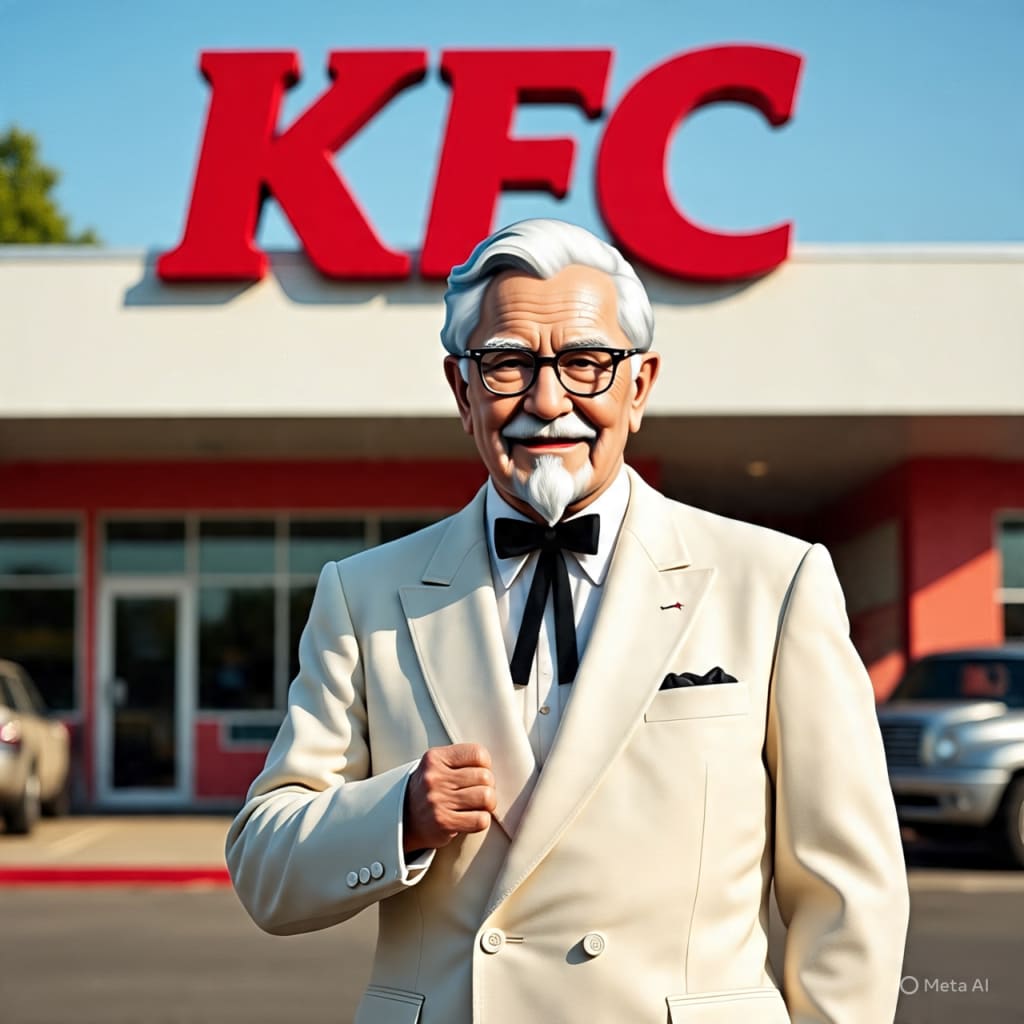
Colonel Harland David Sanders was not born a legend. He was born poor, on September 9, 1890, in Henryville, Indiana—long before his white suit and pointy goatee became one of the world’s most recognizable business symbols. His life story is often shortened into a motivational quote, but the real version is much deeper, heavier, and more brutally human than any cliché about “never giving up.”
This is the story of a man who failed more times than he succeeded, worked more jobs than most people can imagine, and only found global success after the age of sixty-five—an age when most people are slowing down. Sanders was still speeding up.
1. The Hardest Beginning
When Sanders was just six years old, his father died suddenly. With no choice left, his mother worked long shifts at a tomato-canning factory, leaving Harland to take care of his younger siblings. That meant learning how to cook meals before most kids even learned how to write.
He wasn’t the top student. He didn’t pretend to be. School didn’t fit him, and by the time he was 12 years old, he dropped out entirely. Poverty does not leave room for dream-chasing; it demands survival.
From that moment, Sanders entered the real world—hard, fast, and unprepared.
2. A Life of Jobs, Failures, and Restarts
Before he ever sold a single piece of fried chicken, Harland Sanders worked more jobs than a modern résumé could handle:
Farmhand
Streetcar conductor
Railroad fireman
Insurance salesman
Lawyer (briefly, after self-studying the law)
Ferry boat owner
Tire salesman
Gas station operator
Some he lost, some he quit, and some simply fell apart. Sanders wasn’t a bad worker; he was a man unlucky enough to live in an era filled with economic crashes, business collapses, and zero safety nets.
One of his early failures came when he practiced law. After a disagreement in court turned into a physical altercation, he was dismissed from practicing. Another business—his ferry boat company—was profitable, but he sold it too early and came out with almost nothing. He tried selling tires, but the Great Depression crushed everything around him.
His 30s and 40s were not golden years. They were a storm he had to survive.
3. The Gas Station That Changed Everything
In the 1930s, Sanders began running a Shell oil station in Corbin, Kentucky. It wasn’t glamorous, but it was steady. Soon, travelers passing along Kentucky Route 25 started to discover something surprising: the gas station owner cooked. And not ordinary cooking—good cooking.
He served meals in the back room: steak, country ham, biscuits, and fried chicken. He didn’t have a restaurant yet; he barely had a dining area. But word spread fast.
People didn’t say, “Let’s stop for gas.”
They said, “Let’s stop for Sanders’ cooking.”
This small shift changed his life forever.
4. The Birth of His Famous Fried Chicken
By 1936, Sanders’ cooking reputation grew so large that Kentucky’s governor gave him an honorary title: Kentucky Colonel. He wasn’t a military officer; the title was a symbol of his contribution to the state’s cuisine.
But the real breakthrough came when he began experimenting with a pressure cooker—an idea almost no one connected to fried chicken at the time. Traditional fried chicken took too long to cook for a restaurant crowd. Sanders wanted something different: fast, crispy, flavorful.
After hundreds of attempts, he perfected what became the iconic mix known as the “11 Herbs and Spices.”
To this day, the exact recipe is still locked in a vault. Sanders never wrote a detailed description publicly. He believed in protecting the craft.
By the early 1940s, he finally opened a proper restaurant and motel called Sanders’ Court & Café. For the first time in his life, he felt stable. Successful. Safe.
But life wasn’t done testing him.
5. Everything Falls Apart — Again
In the 1950s, the U.S. government decided to build a new interstate highway system. One new highway—Interstate 75—rerouted traffic away from Sanders’ restaurant. The steady stream of customers dried up in days.
His business, built over decades of sweat, slowly collapsed.
Sanders was 65 years old, nearly broke, and forced to auction off his property just to pay off debts. He was left with only one lifeline: his recipe.
Most people retire at sixty-five. Sanders decided to start again.
6. The Road, The Rejections, and the Impossible Comeback
With only his car, pressure cooker, flour, and spice mix, Colonel Sanders traveled from restaurant to restaurant across the U.S., offering a proposal:
“I’ll cook my chicken in your kitchen. If your customers love it, you give me five cents for every piece you sell.”
It wasn’t glamorous. He slept in his car many nights. Some owners refused to even let him demonstrate. Some tossed him out. According to later accounts, he was rejected more than 1,000 times.
That’s not a motivational quote. That was his real life.
But slowly, restaurants signed on—one here, two there. And the more people tasted the chicken, the faster word spread.
By 1963, he had more than 600 franchise locations.
7. The Birth of Kentucky Fried Chicken (KFC)
In 1964, investors approached Sanders with an offer:
sell the company but remain the face of the brand.
He agreed, selling KFC for $2 million (a large sum then, though tiny compared to what it became). Sanders stayed on as the public ambassador, wearing his white suit, traveling worldwide, greeting customers, and representing the brand he built from nothing.
He continued working for decades, becoming a global icon. Even in his 80s, he maintained a tight schedule, visiting restaurants and inspecting food quality.
At 90 years old, he passed away in 1980, leaving behind a legacy bigger than he ever imagined.
8. What His Story Really Teaches
The world remembers Colonel Sanders as the “chicken guy,” but the essence of his story is far deeper:
He failed more than he succeeded.
He started over more times than most people would dare.
He built an empire at an age when society thought he should step aside.
He turned rejection into momentum.
He became a global figure without ever pretending to be perfect.
His life proves a simple truth:
You are never too old, too late, or too defeated to start again.
Final Message
Colonel Harland Sanders is not just the founder of a fast-food empire. He is the embodiment of resilience—someone who lost businesses, careers, money, and time, yet found success because he refused to surrender. His story is real, verifiable, and deeply human.
He didn’t create KFC because he was fearless.
He created it because he kept going despite fear.
And that is why his legacy still inspires millions today.
About the Creator
Frank Massey
Tech, AI, and social media writer with a passion for storytelling. I turn complex trends into engaging, relatable content. Exploring the future, one story at a time
Keep reading
More stories from Frank Massey and writers in Motivation and other communities.
“The Man Who Refused to Break: The Unbelievable Journey of Chris Gardner
INTRODUCTION Some people are born with privilege, some with opportunity, and some with support systems that guide them at every turn. And then there are people like Chris Gardner—born into chaos, poverty, and violence—who somehow fight their way through unimaginable darkness to build a life that inspires millions.
By Frank Massey 2 months ago in Motivation



Comments
There are no comments for this story
Be the first to respond and start the conversation.