
The Loneliness of Being the Strong One All the Time
When everyone leans on you, who do you lean on?

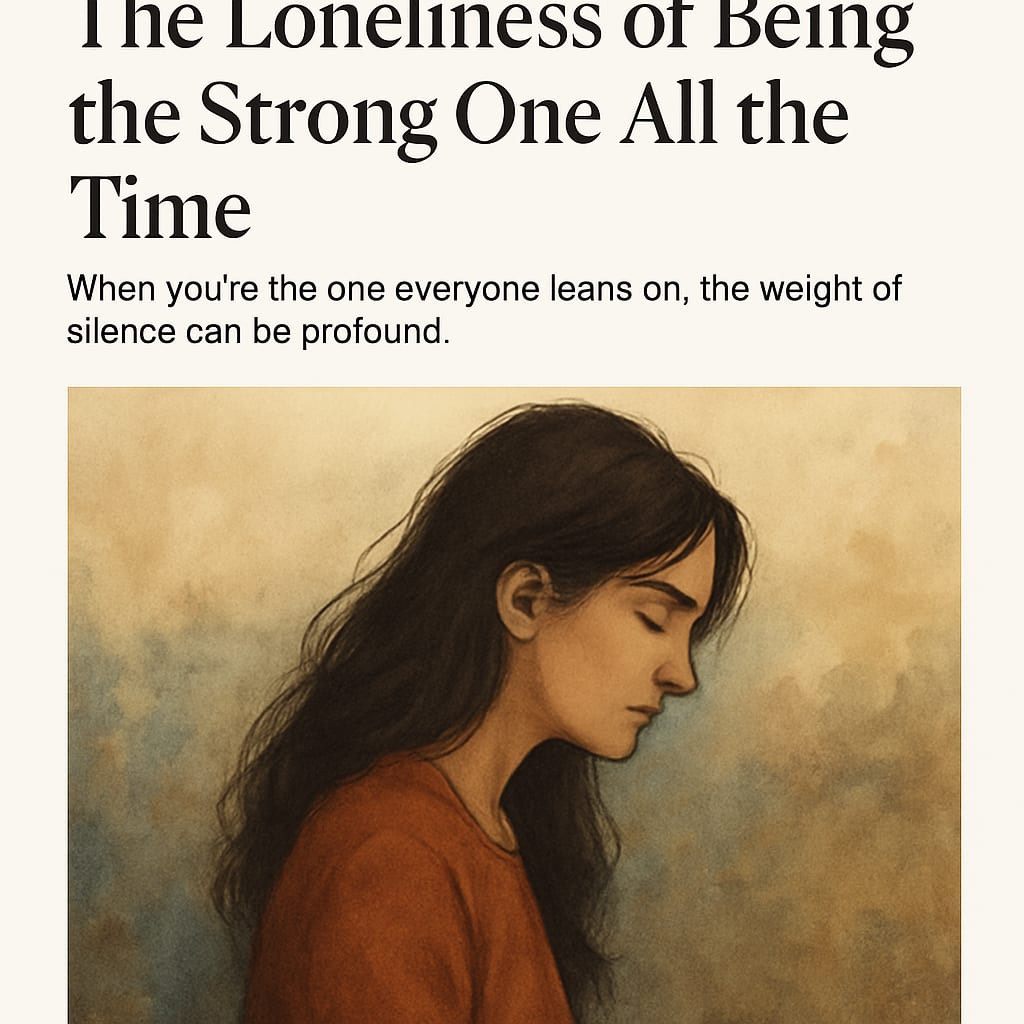
They call you dependable.
They say you’re resilient, brave, composed.
They admire how you “always keep it together.”
But what they don’t see is the weight beneath that strength — the ache of always being the one who never falls apart.
Being the strong one is lonely.
It means people rarely ask how you’re doing.
It means your pain is often invisible.
It means your breakdowns happen in silence, behind closed doors, when no one is watching.
And while strength is often praised, the loneliness it brings is rarely acknowledged.
The Unspoken Burden of Strength
When you’re the strong one, you become everyone’s go-to.
You hold space.
You offer advice.
You calm storms, fix chaos, and carry others through their darkest nights.
But what happens when your sky darkens?
Who checks on you?
The world assumes that because you’re strong, you’re fine.
But strength is not immunity. It’s endurance. It’s survival. And it comes at a cost.
Sometimes, it costs your own softness.
Why We Stay “Strong”
Many of us became strong not by choice, but by necessity.
We were the oldest sibling, the caretaker.
We grew up in unstable homes and learned early how to self-regulate.
We were praised for being “mature for our age.”
We found safety in control, in keeping emotions tucked away.
Over time, strength became our identity. Vulnerability felt like a threat. So we smiled when we were crumbling. We helped others while silently drowning.
We forgot that we deserved softness too.
The Loneliness You Don’t Talk About
There’s a unique kind of loneliness that comes with being the pillar in everyone’s life. It sounds like:
“I didn’t want to bother you — you already have so much going on.”
“You’re so strong, I knew you’d figure it out.”
“You're always fine. You're the rock.”
So you become emotionally self-sufficient.
You stop expecting support.
You learn to grieve alone, cry quietly, and show up smiling — even when your soul is tired.
And eventually, you begin to wonder: Will anyone ever be strong for me?
Strength Doesn’t Mean Always Holding It Together
We need to redefine what it means to be strong.
Strength is not:
Never crying
Always saying yes
Holding everyone’s pain while neglecting your own
Pretending to be okay when you’re not
True strength is:
Saying no when you’re at capacity
Asking for help without guilt
Letting others in, even when it feels risky
Being honest about your limits and your needs
Being strong should not mean being alone.
How to Let Yourself Be Supported
If you’ve been the strong one your whole life, receiving support might feel unnatural — even uncomfortable.
But here’s how we start:
Speak your truth out loud.
Tell someone you trust, “I’m not okay right now.”
Stop over-functioning.
Let people show up for you — even if they don’t do it your way.
Join spaces where you don’t have to be the fixer.
Whether that’s a support group, therapy, or a circle of friends who hold space for you.
Be soft with yourself.
Rest. Cry. Detach. Refill. You don’t have to earn your worth through labor or emotional labor.
A New Kind of Strength
There is power in softness.
There is strength in surrender.
There is courage in saying, I need help.
You are not less brave because you’re tired.
You are not less valuable because you broke down.
You are not failing because you can’t do it all today.
You are human.
And you’re allowed to lay your armor down.
Let others hold you — the way you’ve held them. Let yourself be seen — not just as strong, but as whole, layered, complex.
You are not alone.
And you don’t have to carry it all anymore.
About the Creator
Irfan Ali
Dreamer, learner, and believer in growth. Sharing real stories, struggles, and inspirations to spark hope and strength. Let’s grow stronger, one word at a time.
Every story matters. Every voice matters.
Keep reading
More stories from Irfan Ali and writers in Motivation and other communities.
Choosing Yourself Isn’t Selfish — It’s Survival
There comes a point in life where you stop asking for permission to exist fully. A moment when people-pleasing becomes exhausting, self-abandonment becomes unbearable, and you realize that staying quiet just to be liked is slowly breaking you.
By Irfan Ali8 months ago in Motivation
Lauren Sanchez Bezos celebrates Jeff Bezos with a heartfelt Instagram birthday post
The vibe of the tribute felt less like a celebrity flex and more like a quiet love letter Lauren Sanchez Bezos is in full celebration mode, and this time the spotlight is on her husband, Jeff Bezos. The media personality and entrepreneur marked Bezos’ birthday with a tender Instagram Story that blended romance, nostalgia, and a quietly powerful image that spoke volumes.
By Dena Falken Esq6 days ago in Motivation


Comments
There are no comments for this story
Be the first to respond and start the conversation.