
The Doctor Who Prescribed Life: Samuel Reed and the Underground Rebellion of the Night Shift
In 2011, a rural West Virginia town was drowning in a sea of opioids. The hospital administration worried about liability. The law worried about enabling addicts. One doctor decided to worry about breathing

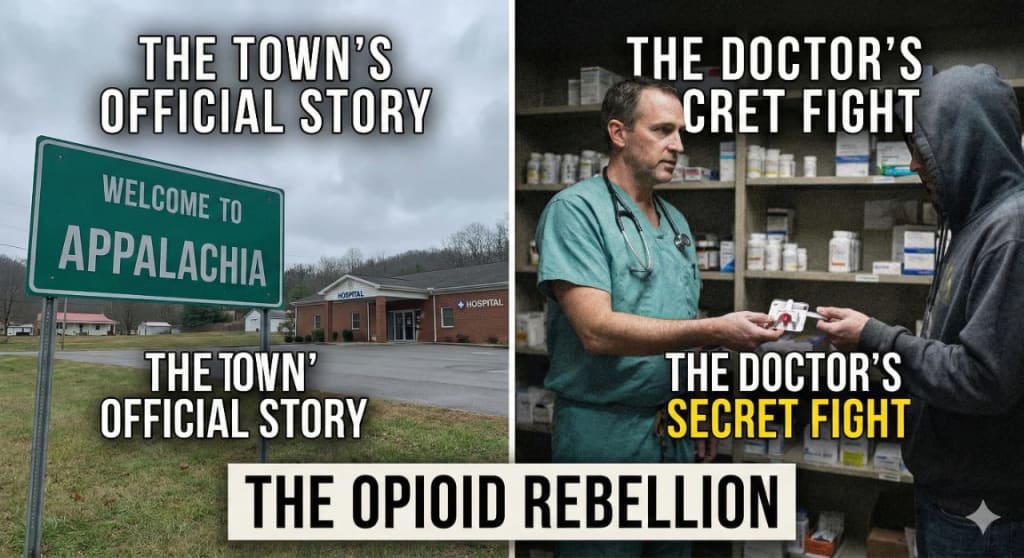
The true story of Dr. Samuel Reed, the Appalachian ER doctor who risked his medical license to distribute naloxone off the books, saving a town from the opioid crisis before the laws caught up.
Introduction: The Silence of the Holler
In the coal country of West Virginia, night falls differently. It is absolute. The mountains rise up on all sides, blocking the moon, turning the valleys—the "hollers"—into pockets of deep, impenetrable shadow.
In 2011, inside one of these shadows, sat a small community hospital. It was a brick building that had seen better days, much like the town surrounding it. The coal jobs had evaporated years ago, leaving behind a vacuum that had been filled by disability checks, despair, and eventually, the pill mills.
The Emergency Room was the only light that stayed on all night.
Staffing the ER on the graveyard shift was Dr. Samuel Reed. He was a local man, soft-spoken, with the weary eyes of someone who had seen the town’s decline written on the bodies of his patients.
In a city hospital, the ER is a place of chaotic noise—gunshots, sirens, shouting.
But in rural Appalachia in 2011, the ER was terrifyingly quiet.
The patients weren't coming in screaming. They were coming in blue. They were coming in silent. They were being dropped off at the sliding doors by terrified friends who sped away before the security guard could come out.
Dr. Reed was witnessing the first crest of the tidal wave. Oxycodone was giving way to heroin, and heroin was beginning to be cut with fentanyl.
And Dr. Reed was the only thing standing between his town and a generation of funerals.
Part I: The New Pathology
Dr. Reed had been trained to fix broken things. Miners with crushed legs. Farmers with hands caught in balers. Heart attacks. Strokes.
But by 2011, the pathology of his shift had changed.
He began to notice the pattern. It was the same demographic: 18 to 35. The children of the miners. The former high school quarterbacks. The cheerleaders.
They arrived in respiratory arrest.
Opioids kill by sedating the brain stem. They tell the body to forget to breathe. The patient slowly suffocates while unconscious. It is a peaceful-looking death, but it is a death nonetheless.
The hospital protocol was standard: Intubate. Ventilate. Administer Naloxone (Narcan) intravenously if you suspect an overdose. Wait for them to wake up. Discharge them with a pamphlet on rehab.
Reed did this dance every night. But he noticed something else.
He noticed that by the time the ambulance got to the hollers—up the winding, unpaved roads where the GPS didn't work—it was often too late.
The "Golden Window" for reversing an overdose is minutes. The ambulance drive time was often thirty minutes.
He was pronouncing young people dead on arrival. Kids he had given sports physicals to ten years earlier were now lying on his slab, cold.
And he knew there was a miracle drug sitting in the pharmacy cabinet, locked away, that could have saved them.
Part II: The Forbidden Cure
Naloxone is a boring drug. It has no street value. You can't get high on it. It does exactly one thing: it knocks opioids off the brain’s receptors and wakes the patient up instantly.
In 2011, you could only get it in a hospital or an ambulance. It was a prescription drug. You couldn't buy it at CVS. You couldn't give it to a layman.
This created a fatal paradox. The people who needed Naloxone—the mothers, the friends, the roommates of the addicts—were not allowed to have it. The people who had it—the doctors—were miles away.
Dr. Reed looked at the supply in the hospital pharmacy. Vials of liquid life.
He looked at the grieving mothers in his waiting room.
He approached the hospital administration. He suggested a program: Let’s give a kit to the families of high-risk patients. Just in case.
The response was a wall of ice.
"Absolutely not," the administrators said.
"It’s a liability risk."
"It’s against state dispensing laws."
"If you give them the antidote, they’ll just use more drugs because they think they have a safety net."
This was the prevailing logic of the time: Saving their lives is enabling their addiction.
Dr. Reed listened to the policy. Then he looked at the chart of a 19-year-old girl who had died in a church parking lot because no one knew what to do.
He decided that the policy was an accomplice to murder.
Part III: The Lost Inventory
Dr. Reed began a quiet rebellion.
He didn't make a speech. He didn't file a lawsuit. He simply started "losing" inventory.
When a shipment of Naloxone arrived, a few boxes would fail to make it to the official count.
Dr. Reed began to carry a bag.
He identified the nodes of the community—the people who saw everything.
The clerk at the 24-hour gas station on the edge of town.
The janitor at the high school.
The elderly woman who ran the trailer park office.
The pastor of the small Baptist church.
He would visit them after his shift. He would pull out a syringe and a vial (this was before the easy-to-use nasal sprays became common).
"Listen to me," he would say. "I'm going to show you how to use this. If you see someone in a car, or a bathroom, and they look like they're sleeping but their lips are blue... you stick this in their thigh or their arm. You push the plunger. You don't wait."
The people were terrified. "Am I allowed to do this?"
"No," Reed would say. "But if you don't, they will die. Do you want to explain to the police why you had a needle, or do you want to explain to their mother why you did nothing?"
He turned the town’s bystanders into a secret militia of paramedics.
Part IV: The Sermon of the Syringe
One of the most profound interactions occurred with a local pastor.
The pastor was of the "fire and brimstone" variety. He had preached sermons about the sin of addiction. He believed that the overdose was the wages of sin.
Reed sat in the pastor's office.
"Reverend," Reed said. "I know you think this is a moral failing. Maybe it is. But you can't save a soul if the body is dead. You can't preach to a corpse."
He slid the kit across the desk.
"This gives them a second chance. Isn't that what you preach? Redemption?"
The pastor looked at the kit. He thought about the funerals he had presided over in the last year. Closed caskets for 20-year-olds.
He took the kit.
Reed wasn't just distributing medicine; he was distributing a shift in philosophy. He was teaching the town that an addict was not a criminal to be discarded, but a patient to be revived.
Part V: The Night of the Bad Batch
The test of Reed’s underground network came on a Tuesday night in February. It was freezing cold. Snow was dusting the roads.
A new supply of heroin hit the town. It was laced with a potent analogue of fentanyl.
At 11:00 PM, the calls started.
The dispatch radio in the ER crackled. "Overdose on Route 9."
Two minutes later: "Overdose at the Gas-N-Go."
Five minutes later: "Unresponsive male, Creekside Trailer Park."
The town had one ambulance on duty. It sped to the first call on Route 9.
That left the rest of the town defenseless.
Dr. Reed stood in the ER bay, waiting. He knew the math. The ambulance would take 45 minutes to transport the first patient, drop them off, and get back out.
The other victims had maybe 10 minutes.
He paced the floor. He prepared the intubation trays, expecting a mass casualty event. He expected bodies.
At 11:30 PM, a pickup truck roared into the ambulance bay.
The driver was the clerk from the Gas-N-Go.
In the passenger seat was a young man, groggy, vomiting, but breathing.
"I hit him with the stuff, Doc!" the clerk shouted, his hands shaking. "He turned blue, I hit him, and he woke up screaming."
Ten minutes later, a station wagon arrived. It was the pastor. In the back seat was a young woman found in the church restroom. She was crying, disoriented.
"She's alive," the pastor said, looking at Reed with wide eyes. "She came back."
Throughout the night, they trickled in. Five overdoses in forty minutes.
The ambulance only brought in one.
The other four were brought in by civilians—civilians armed with the "lost inventory" of Dr. Reed.
By 3:00 AM, the crisis had passed. Five young people were sitting in hospital beds, miserable, in withdrawal, but alive.
If Reed had followed the rules, four of them would be in the morgue.
Part VI: The Reckoning
You cannot hide five miracles in a small town.
Rumors started to swirl. The hospital administration looked at the inventory logs. They looked at the charts. They realized that civilians were administering prescription-grade antidotes.
Dr. Reed was summoned to the boardroom.
It was a classic confrontation. The Suits vs. The Coat.
"You are exposing this hospital to massive liability," the CEO told him. "You are practicing pharmacy without a license. You are distributing controlled substances to laypeople. Do you have any idea what happens if someone has an adverse reaction?"
Reed looked at them. He was tired. He had just finished another night shift.
"There is no adverse reaction to Naloxone in a healthy person," Reed said. "It’s water. But the adverse reaction to doing nothing is death. 100% of the time."
"You are violating policy," they said.
"I am encouraging breathing," Reed replied. "That is the baseline requirement for all other hospital policies. If they don't breathe, you can't bill them."
He put his badge on the table.
"You can fire me," he said. "But you'll have to explain to this town why the only doctor who stays awake at night is being let go for saving their children."
It was a bluff, but it was a strong one. The hospital couldn't afford to lose their only night-shift physician. Who else would come to a dying coal town for that salary?
They reprimanded him. They put a note in his file. They told him to stop.
He put his badge back in his pocket.
And that night, he put three more kits in his bag.
Part VII: The Tide Turns
Dr. Reed didn't stop the opioid crisis. The wave continued to crash for years.
But something changed in that town.
The stigma cracked. Because the gas station clerk had saved a life, he no longer saw the addict as a "junkie." He saw him as a human being he had rescued. Because the pastor had used the needle, he stopped preaching about sin and started preaching about recovery.
Reed’s actions forced the community to become participants in the solution rather than spectators to the tragedy.
Two years later, the laws began to catch up. West Virginia, and then the federal government, passed "Good Samaritan" laws. They passed laws allowing pharmacists to dispense Naloxone without a prescription. They started equipping police officers with it.
What Reed had done in the shadows became the standard of care.
Part VIII: The Invisible Legacy
Dr. Reed eventually retired. He still lives in the mountains.
He walks through the grocery store. He sees a man working in the produce section—a man who is now 30, maybe has a kid of his own.
Reed knows that man. He knows that on a Tuesday in 2011, that man was blue on the floor of a trailer. He knows that the only reason that man is stacking apples today is because Reed gave a kit to the trailer park manager.
The man doesn't know. He just nods at the doctor. "Morning, Doc."
"Morning," Reed says.
There is no statue of Samuel Reed in the town square. There is no plaque in the hospital lobby.
But there are family dinners that are happening tonight that shouldn't be happening. There are fathers playing catch with their sons. There are women graduating from community college.
They are the "Reed Survivors," even if they don't know his name.
Conclusion: The Ethics of Physics
Dr. Reed’s story challenges the comfortable narratives we tell ourselves about healthcare and law.
We like to think that rules protect us. But in an emergency, rules are often just friction.
Addiction is a complex socio-economic and psychological issue. It requires therapy, jobs, hope, and community.
But before any of that can happen, there is a brutal physics equation: Oxygen must reach the brain.
Dr. Reed understood that you cannot rehabilitate a ghost.
He stripped the crisis down to its most essential moral component. He decided that the law of the land was secondary to the law of the lungs.
In a country that loves to debate the "morality" of addiction, Dr. Reed reminds us of the only morality that counts in the Emergency Room:
Life is always better than death.
Breathing is always better than suffocating.
And sometimes, to keep the oath you swore to your patients, you have to break the oath you swore to your boss.
The heroes of the opioid crisis weren't the politicians signing bills in 2016. They were the doctors, nurses, and neighbors in 2011 who realized that no one was coming to save them, so they had to save each other.
About the Creator
Frank Massey
Tech, AI, and social media writer with a passion for storytelling. I turn complex trends into engaging, relatable content. Exploring the future, one story at a time
Keep reading
More stories from Frank Massey and writers in Motivation and other communities.
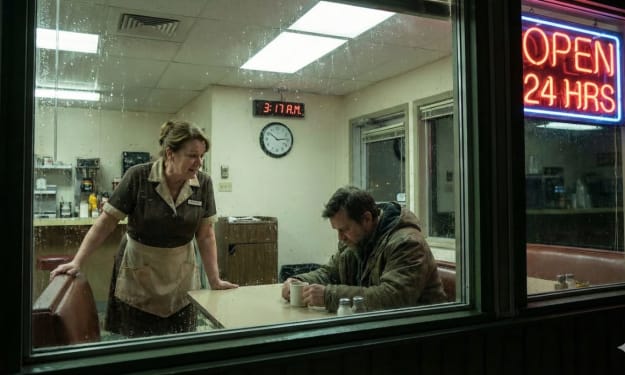
The Truck Stop Waitress Who Talked a Man Out of Suicide at 3:17 A.M.
The Interstate is a singular, rhythmic entity. Especially Interstate 40, the great concrete artery that slices through the belly of America, running from the chaotic ports of North Carolina to the dusted plains of California. By day, it is a blur of commerce and vacationers. But by night, the road changes. It becomes a kingdom of shadows, red taillights, and solitary souls.
By Frank Massey 4 days ago in Motivation
The Message That Arrived Too Late
At 11:58 p.m., the city outside Sameer’s apartment was already celebrating. Fireworks cracked the sky open, laughter echoed from balconies, and car horns competed like impatient children. Inside, the room was silent except for the steady ticking of a clock hanging slightly crooked on the wall.
By shakir hamid2 days ago in Motivation



Comments
There are no comments for this story
Be the first to respond and start the conversation.