
The Art of Setting Boundaries
Boundaries let you know when to say, 'Yes' and when to say, 'No' to avoid being manipulated by others.

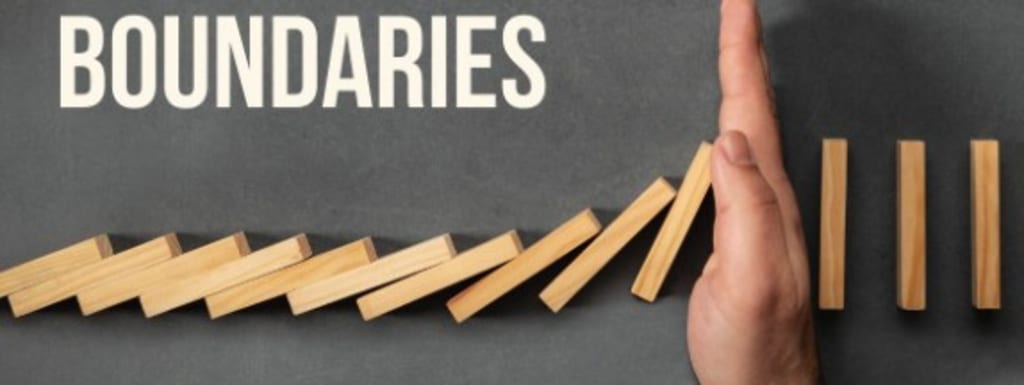
Boundaries are sacred lines drawn not to shut others out—but to honor your own space where your spirit, energy, and purpose reside. Personal boundaries, or the act of setting boundaries, is a life skill.
What Are Boundaries?
Boundaries are lines drawn to indicate a limit or extent to what people will accept or allow into their lives. There are several types of boundaries, and the number depends on who you ask or read about.
- Mental boundaries protect your thoughts and opinions.
- Emotional boundaries protect your feelings and inner peace.
- Physical boundaries include your personal space.
- Spiritual boundaries guard your beliefs, values, and sacred time.
- Time boundaries preserve your energy and schedule.
- Digital boundaries shape how and when you engage online.
"Boundaries are not walls—they’re gates with locks you control."
Why Boundaries Matter
- Boundaries prevent burnout and resentment.
- They clarify relationships, making expectations mutual.
- They honor our lifestyles, keeping distractions at bay.
- They model self-respect, teaching others how to treat you.
- Boundaries ensure that helping others doesn’t become a form of self-demotion.
- Boundaries are not barriers. They are bridges for growth.
- Boundaries allow you to serve from your overflow, not from your lack.
How to Set Boundaries Without Burning Bridges

Setting boundaries puts limits on our time, energy, and emotional availability. It is a skill many of us struggle to master. With a little introspection, guidance, and support, we can all master the art of setting boundaries.
- Know your limits: Reflect on what drains you vs. what nourishes you.
- Be clear about what you can and cannot do: State your intentions and commitment.
- Name your needs: Use clear, kind language, such as “I’m not available for calls after 8 p.m.”
- Hold the line: Reaffirm boundaries. Keep them gently but firmly.
- Stop saying "yes" to everything: Stop going along to get along.
- Let go of guilt: Saying “no” is not unkind. It's sacred stewardship.
- Boundaries don’t require drama: They require dignity.
- Setting boundaries helps you work and serve within your limits, not by what has been imposed upon you by someone else.
- Anticipate pushbacks: Not everyone will embrace your boundaries immediately. Some might test or challenge them, especially if they’ve benefited from your lack of limits in the past.
- Be a good example: Others will learn from your clarity and peace when you live by boundaries.

Think of your life as a garden surrounded by a fence. You are a steward over what you have planted. Therefore, you need a fence to keep out trampling feet, pesticides, and predators. The garden thrives when it’s tended with love and protected. We don't have scarecrows in our garden. Therefore, the next best thing is to have clear-cut boundaries.
Where there is a fence, there is usually a gate to be used for people to enter and exit. It should be that way with boundaries. Some boundaries will come and go as we grow. However, there should be room for improvement. Therefore, boundaries should not be sealed in cement or locked inside a vault.
Two-Way Street
Boundary-setting is ideal for both parties. No person should set all the rules and expect the other person to go along with them. Boundaries get better results when there is a two-way street instead of one person saying, "It's my way or the highway."
The main boundaries should be established directly or indirectly at the beginning of a serious relationship, so there will be no surprises or disappointments later. However, both parties should agree that there is room for improvement as they both grow in the relationship.
The Bottom Line
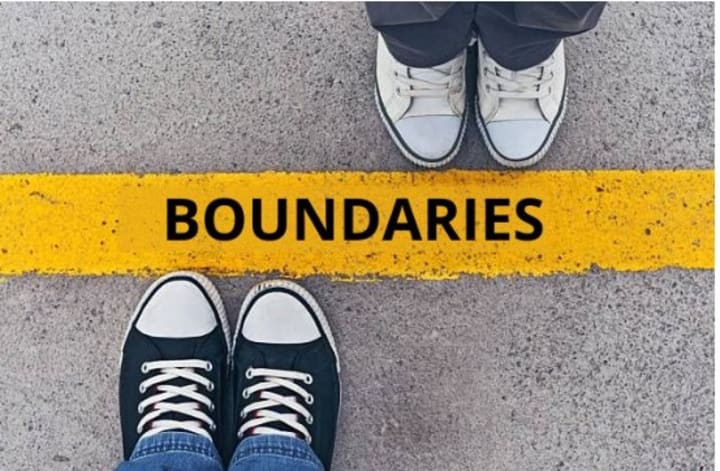
To live peacefully, everybody should have boundaries, either directly expressed or implied.
Nina W. Brown, Ed.D., LPC, is a professor and eminent scholar in the Educational Leadership and Counseling Department at Old Dominion University in Norfolk, Virginia. She identified four types of boundaries.
- Soft boundaries: When a person doesn't have any boundaries at all, he merges with other people's boundaries, and easily becomes a victim of psychological manipulation.
- Spongy boundaries: A person with spongy boundaries is unsure of what to let in and what to keep out.
- Rigid boundaries: A person with rigid boundaries is closed or walled off, so nobody can get close to him, either physically or emotionally. Rigid boundaries are characteristic of people who have had bad experiences in the past.
- Flexible boundaries: These are similar to spongy and rigid boundaries, but the person exercises more control over what he allows.
Feel free to comment if you have opinions about boundaries.
About the Creator
Margaret Minnicks
Margaret Minnicks has a bachelor's degree in English. She is an ordained minister with two master's degrees in theology and Christian education. She has been an online writer for over 15 years. Thanks for reading and sending TIPS her way.
Keep reading
More stories from Margaret Minnicks and writers in Motivation and other communities.
How To Get Out Of A Rut
Being in a rut simply means you are in a routine that is unpleasant, boring, and energy-sapping. Being in a rut is being stuck in a pattern of doing the same things day in and day out, usually without any enjoyment. You surely will become bored with what you are doing, and you might even become bored with yourself. It seems as if no matter which way you turn, you are stuck in the rut. In fact, you might feel like the harder you try to get out, you fall deeper into a black hole that holds you captive.
By Margaret Minnicks5 years ago in Motivation


Comments
There are no comments for this story
Be the first to respond and start the conversation.