
The Art of Breaking Rules: Why Conformity is the Death of Creativity
If you’re playing by the rules, you’ve already lost

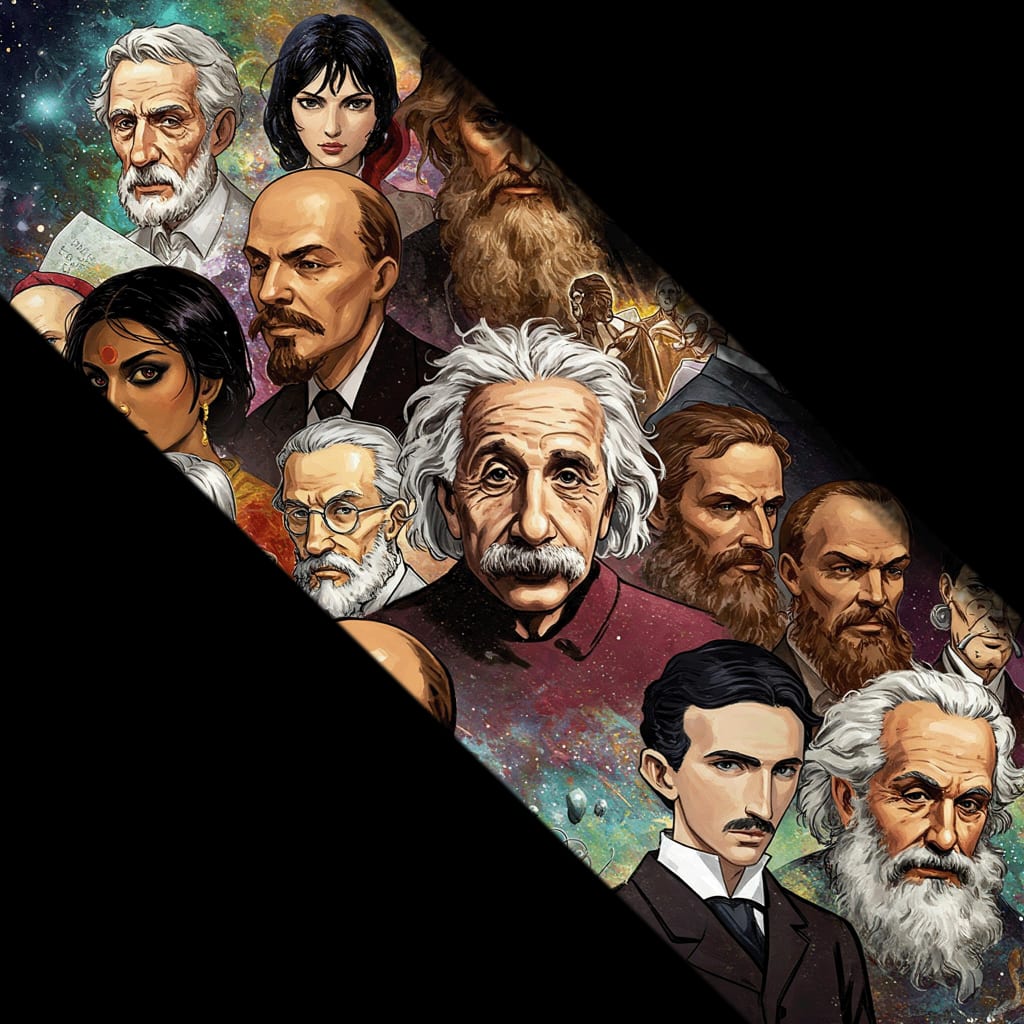
There’s a quiet kind of suffocation happening all around us, and most people don’t even notice it. It’s the slow, creeping death of originality—the way rules, traditions, and expectations wrap around the mind like ivy, draining the life from anything that dares to grow outside the lines.
We’re told to follow the blueprint. Go to school, get the job, work the hours, buy the things. Create within the framework that already exists. Don’t shake the system—adapt to it. But here’s the truth: every system, every framework, every so-called “rule” was made up by someone no smarter than you or me. And if history has proven anything, it’s that the people who truly change the world are the ones who refuse to play by someone else’s script.
Think about it. Every great artist, entrepreneur, revolutionary—hell, even the scientists who completely rewrote our understanding of reality—started by rejecting what they were told was possible. Einstein wasn’t following Newton’s rules when he reshaped physics. Steve Jobs wasn’t playing by corporate norms when he built Apple. And you? You’re not going to create anything worthwhile if you spend your life waiting for permission.
The Illusion of Authority
Most people never question why things are the way they are. We grow up surrounded by invisible boundaries—social norms, industry standards, “best practices.” But who decides what’s best? Who determines the limits of what can be done?
The moment you stop assuming the world is set in stone is the moment you start to see how much of it is up for grabs. The most powerful thing you can do is realize that authority is often just an illusion—a costume people wear to make their opinions seem like law.
Challenge it. Tear it apart. Question everything that has been established and help new ideas and different ideas flourish. If you do not help others realize their genius, no one will help you realize yours.
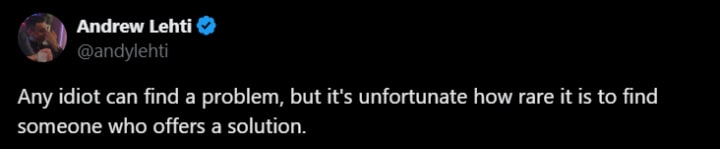
Creativity Thrives in Rebellion
If you want to build something truly original—whether it’s art, a business, a philosophy—you have to be willing to break the mold. The best ideas feel dangerous at first. They make people uncomfortable. They don’t fit neatly into existing categories. That’s the whole point.
The problem? Most people are terrified of being the outlier. We crave validation. We want to be accepted. But conformity is the enemy of genius. If your ideas don’t scare you a little, they probably aren’t big enough.
How to Unlearn the Rules
Breaking free isn’t just about rejecting everything outright—it’s about strategically choosing which rules matter and which ones need to be destroyed. Here’s where to start:
- Ask “why” relentlessly – If a rule exists, there’s a reason for it. But is it a good reason? Is it still relevant? If the answer is no, throw it out.
- Make discomfort your default state – If you always feel safe, you’re not growing. Seek out challenges that force you to think differently.
- Surround yourself with rebels – Creativity is contagious, but so is mediocrity. Find people who push boundaries, not just follow them.
- Stop waiting for permission – No one is coming to tell you it’s okay to start. Do it anyway.
The truth is: most people will never break free. They’ll stay in their lanes, follow the rules, and wonder why life feels dull and uninspired. But you? You have a choice. You can step outside the lines. You can disrupt, destroy, and create something entirely new.
Is "ordinary" enough? It has its place, yes, but to truly thrive, we must embrace active diverse thinking from many perspectives, even if we adapt a passive mindset. The future belongs to those who break the mold.
Step outside the lines.
Because genius isn’t some mystical gift—it’s simply the absence of cognitive bias. The world is full of invisible chains, mental shortcuts, and flawed assumptions that keep people trapped in false realities. True genius isn’t about being born different; it’s about seeing what others have missed, questioning what they’ve accepted, and refusing to let inherited blind spots define your limits.
True genius isn’t about being born different; it’s about seeing what millions have overlooked, recognizing the illusions they’ve accepted as truth, and daring to break the pattern.
But seeing the truth isn’t enough. You have to go further—you have to find a way to shatter the cognitive biases that keep others locked in place. It’s not just about your own clarity; it’s about breaking through their resistance, dismantling the false realities they cling to, and forcing a shift in perspective.
And before you can do that, you must first learn how to break the Cognitive Impasse. Because the biggest obstacle isn’t the world—it’s the limits of the mind itself, and the limit we restrict ourselves to.
I leave you with my extensive research. If you trust my expertise already, or enough to fancy a read, I've condensed the core information of 75 pages into just a few hundred words to get you started: Have you ever wondered why we sometimes laugh when someone we care about dies?
Healing the Pain of Cognitive Impasse: Additional Resources for Bias Reduction
Lehti, Andrew (2024). Cognitive Psychology and the Education System. figshare. Collection. 10.6084/m9.figshare.c.7532079
Entertainment is by far the most alleviating way to distill cognitive biases, but even these have issues. Below is a concept for an interactive game to teach the basics of hundreds of biases.
This visual shows a small part of my hobby research, which goes beyond cognitive biases. My process involves deep dives before I can distill the information into teachable insights.
Description
Displayed words: 141,145
Portion of Raw Data: roughly seven percent.
This hasn't just been a work in progress for several years, but rather my entire life, it just so-happens that the last few have been very pertinent to this research refinement. This is just the very small bits of data that I have uploaded online. I have a sickening number of syntheses and analyses and obervation-ses. (intentional misspelling)
I was trying to visualize the amount of data I have analyzed, specifically how personality dynamics work. I have a great deal of information about every type of person I've ever come across, though none of this data is tied to anyone specifically. It helps to reverse engineer.
Get a type from someone, use what I know about them, build the spectrums between each, and their dynamics with other types. For whatever reason, I have been interviewing people my entire life. This is just a small part of the data I have, which clearly pertains only to a category and not to any specific individual.
I have abandoned most of my research in favor of a new model, because it requires extreme refinement. I guess abandon is the wrong term; but rather reallocate and refine.
There are about eight seconds of AI analysis included here that shouldn't be. I must admit, though, that while AI didn't generate the data, it has tremendously helped me refine, format, sort, and organize the data into my desired formats to help with visualization, and analysis.
The formatting alone is the most intense timewaster, which AI has tremendously helped with. However, it does tend to make changes on its own, so review was still required. This is what you need to be using AI for. It is a research assistant to those that do not have the luxury of paying a yearly salary for one.
X: andylehti
Papers from my research which I consider important to understand humanity:
Lehti, Andrew (2024). Selective-Mindedness: An Introduction and the Illusion of Open-Mindedness. figshare. Journal contribution. https://doi.org/10.6084/m9.figshare.27642519
Lehti, Andrew (2024). Cognitive Impasse and the Puppet Master of Society: A Framework of Mental Rigidity. figshare. Journal contribution. https://doi.org/10.6084/m9.figshare.28014626
Lehti, Andrew (2024). Standardized Obedience: The Suppression of Critical Thinking, Innovation, and Creativity in Worldwide Conformity-Driven Education Systems.. figshare. Journal contribution. https://doi.org/10.6084/m9.figshare.28015913
Lehti, Andrew (2024). The Cycle of Inferiority and Superiority: From Imposition to Projection and Self-Perpetuation. figshare. Journal contribution. https://doi.org/10.6084/m9.figshare.28013819
Lehti, Andrew (2024). Extrapolative Trial by Error. figshare. Journal contribution. https://doi.org/10.6084/m9.figshare.27643080
Lehti, Andrew (2024). Volume Six: Cognitive Defensiveness: Infamicate. figshare. Journal contribution. https://doi.org/10.6084/m9.figshare.27098722
About the Creator
Andrew Lehti
Andrew Lehti, a researcher, delves into human cognition through cognitive psychology, science (maths,) and linguistics, interwoven with their histories and philosophies—his 30,000+ hours of dedicated study stand in place of entertainment.
Keep reading
More stories from Andrew Lehti and writers in Motivation and other communities.
My Inspiration for Life
When I set out to understand human cognition and why humans were the way they were, I first applied this understanding to a very small slice shaped by my own biased perception. Over more than a decade of investigation, introspection, meta-cognition, and behavioral analyses, I found myself not on the opposite aisle, but on an empty overpass overlooking two massive chasms mislabeled as such. Between these two aisles, an infinitely smaller fenced-in area which bore the sign that read “Individuality.”
By Andrew Lehtiabout a year ago in Motivation
DO YOU THINK LIFE HAS A PURPOSE OR WE CREATE OUR OWN?
There’s a question that trails us through life, shifting shape as we grow: Does life have a purpose, or do we create our own? It’s not a loud question. It doesn’t demand attention. It waits. It lingers in the background of our routines, resurfacing when we’re finally still enough to hear it.
By Pore Camara7 days ago in Motivation


Comments
There are no comments for this story
Be the first to respond and start the conversation.