
Four Noble Truths of Buddhism | Find The Origin | Samudya (समुदय) | Psychosomatic Pain
See things as they are. Nothing more nothing less.
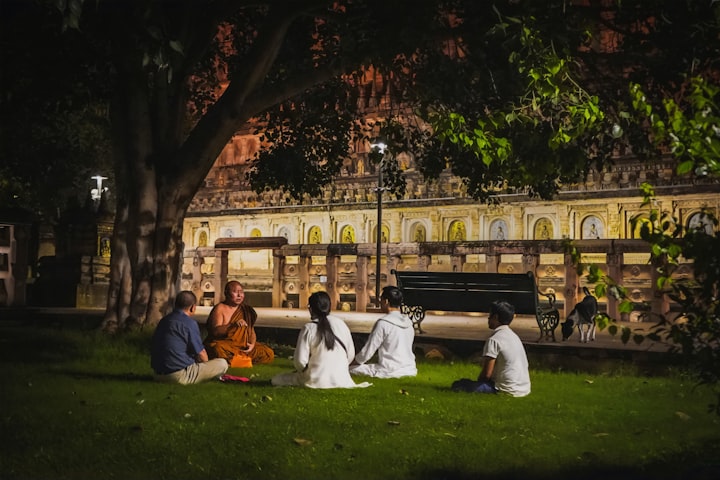
The four noble truths of Buddhism have been on my radar for some time. I heard about it during my Vipassana course in 2020. A speech from a fellow Toastmaster reignited my interest in writing about it.
This initiative aims to find tools within Buddhism to manage anxiety. Vipassana, a Buddhist form of meditation, was the tool of my choice.
The first article was on the first noble truth. We learned that suffering is inevitable. By writing about it, I wanted to bring people out of denial with anxiety. The second article in this series was on the second noble truth. The second noble truth is to identify the source of anxiety.
Through these two noble truths, we learned the concepts of Dukha(दुःख - Suffering), Samudya(समुदय - Origin of Suffering), and Tanha (तृष्णा - cravings).
The ideology behind the second noble truth is profound. Hence, I wanted to break the second noble truth further in two articles. These two articles are two of my experiences from practicing Vipassana since 2020. Illuminated-Curated published the introductory piece on the second truth in early December 2023.
It took me a long time to write this article. The reason is that I became fixated on achieving an ideal meditation session. I forgot that the desire for a perfect meditation session is an example of craving (Tanha).
To follow through this article, I would request the readers read through my introduction to Vipassana. Below is the link:
Why Am I Writing?
In this article, I will start by explaining the concept of psychosomatic pain. I will then extend the introduction with an effective strategy to manage psychosomatic pain. To demonstrate, an example from my meditation practice sounds realistic. You might ask - Why am I talking about psychosomatic pain when the inspiration behind this series is managing anxiety?
Scientific research has documented enough evidence to co-relate anxiety with psychosomatic pain. I will provide some references on the correlation later. First, let's have a quick introduction to psychosomatic pain.
What is psychosomatic pain?
The term "psychosomatic" combines "psyche," meaning mind, and "soma," meaning body. It highlights the integral role of psychological factors in the experience of pain. Common examples of psychosomatic pain include headaches, back pain, and gastrointestinal symptoms. Emotional and psychological states contribute to the severity and persistence of physical discomfort.
In short, psychosomatic pain is physical pain caused by stress or emotional distress.
Some references to establish the correlation between anxiety and physical pain:
- Gatchel, R. J., & Turk, D. C. (1999). Psychosocial factors in pain: Critical perspectives.
- Asmundson, G. J., & Katz, J. (2009). Understanding the co-occurrence of anxiety disorders and chronic pain: State-of-the-art
- Edwards, R. R., Cahalan, C., & Mensing, G. (2011). Pain, catastrophizing, and depression in the rheumatic diseases.
- McLean, S. A., Clauw, D. J., Abelson, J. L., & Liberzon, I. (2005). The development of persistent pain and psychological morbidity after motor vehicle collision: Integrating the potential role of stress response systems into a biopsychosocial model
- Goesling, J., Clauw, D. J., & Hassett, A. L. (2013). Pain and depression: An integrative review of neurobiological and psychological factors
Pain in the tailbone
During a Vipassana session, we cannot change our pose. An intense Vipassana session lasts an hour.
In a usual Vipassana session, a sensation flares up in my tailbone after around 30 minutes. After 40 mins, the sensation converts into pain. With every passing minute, the intensity increases. The pain becomes unbearable by the end of the 50th minute.
The pain creates an illusion of an external force pulling my hips apart. If I don't stop, it feels that this force will rip my hips off.
Every minute feels like a millennium. The pain clouds my mental sanity. It forms an illusion that the session will never end. I wait desperately for the timer to go off and come out of the pose. The more frustrated I get, the intensity of the pain increases. The situation is like a real-life scenario when anxiety engulfs us. This comparison is one of the reasons meditation has been in the limelight as a one-stop shop for combating stress.
Vipassana is all about scanning the body for sensations. Irrespective of the intensity of the sensation, we should not spend more than 2-3 minutes on them. I can manage all other sensations, but the pain in the tailbone is the toughest. Patience, self-love, and discipline are the only lifelines.
The only way out is to learn to manage the pain (suffering). There is no way to end the pain. If you try to stop the pain, it will increase its intensity.
Not everyone experiences the sensation in the tailbone. For you, it could be something different, but our response to the pain remains the same.
Pain Management
What's the way out? The pain causes suffering. According to the first noble truth, suffering is inevitable. The first step to managing the pain is to accept it. If the pain in my tailbone disappears, another sensation (suffering - Dukha) will replace it.
The second truth of Buddhism talks about identifying the source behind the suffering. In this particular case, the source behind the suffering is resistance. Resistance to allow the pain to express itself. This resistance or desperation for pain relief is a craving (Tanha).
To summarize, pain is omnipresent, and the cause of suffering is resistance. If we can't end the pain, we should try to stop the resistance. Hence, I allow the pain to exist. How many times have we heard people say? "Let it Go."
"Let it GO" - is one of the most misunderstood and underrated phrases today. It does not mean ignorance. Instead, it indicates unconditional acceptance.
Relief
The next step will be to increase my focus's intensity around the painful area. My breathing might become intense. During some sessions, I can precisely narrow down the pain area. I could narrow it down to as close as a needlepoint. At this point, self-love and compassion allow me to be equanimous. Be in perfect harmony with any sensations, whether pain or pleasure. Watch the pain with faith that I can manage the suffering within the framework of my body. Observe it with diligence and discipline.
Once I have spent 3-4 minutes in the area, I try to move forward towards scanning my legs. It's challenging to take the focus away from pain. We can map this experience to a real-life situation. Our obsession with anxious situations does not let us see anything else. The whirlwind of negative emotions creates a never-ending cycle, leading to Rumination.
During a Vipassana session, we scan our bodies many times. Hence, my attention will pass through the tailbone at various times. We can relate this to a real-life situation as well. Scars of the past come and haunt us with anxious memories. PTSD (Post Traumatic Stress Disorder) is a notable psychological disorder covering this aspect.
When my focus passes through the painful area around my tailbone, I follow the same process. Watch the sensation with complete focus and self-love. Allow the pain to happen. Random thoughts will distract the focus. Don't resist those thoughts, but focus on returning the attention to the sensation.
After some time, you will observe the intensity of the pain going down. There will be a phase when there will be no sensation. There will be relief, and you will experience spiritual peace. Please be careful at this stage, though. We cannot attach expectations (craving – Tanha) to this pain-free phase. Such cravings will happen, so this stage is a common pitfall in Vipassana practice. The relief turns into pride, which brings attachment (Tanha). Attachment brings the pain back to twice its initial intensity.
Vipassana advocates a state of equanimity in pain and pleasure. Don't resist the pain, and don't attach yourself to the pleasure.
Our behavior toward psychosomatic pain & anxiety should be similar. It's nothing but a sensation. Watch the sensations with faith that they will come and go. We need to handle each situation with the same level of equanimity.
Conclusion
During December 2023, I was experiencing excellent sessions lasting 1:30 to 2 hours. I started visualizing many such successful sessions. The visualization attached my ego (Tanha - Craving) to the duration of the session. Even after practicing Vipassana for 4 years, I fall into the pitfall. Offlate, my sessions have not lasted more than 30 minutes.
This realization is a great learning curve. Many such learning curves allow us to peel layers of our personalities. For example, this incident taught me to get rid of my ego. Each sensation teaches us a lot about our personality. In the future, I will detail more of these experiences.
I covered two sensations to throw light on the second noble truth. In days to come, I will dedicate articles on Buddhism's third and final noble truth.
Our usual day is full of positive and negative experiences. All experiences are like sensations. Both positive and negative experiences have cravings attached. There are no guarantees on how long a positive or negative experience lasts. Still, detachment makes it easier to manage them.
About the Creator
Keep reading
More stories from tarun bhatt and writers in Motivation and other communities.
Toastmasters Table Topics #12 | You are at the airport for your end-of-year vacation. You are traveling internationally, and upon reaching the airport, you realize you have forgotten your passport. What will you do?
I have written about the significance of public speaking in the past. I started this writing series on table topics some months back. Before diving into today's topic, here is a quick introduction to Table Topics.
By tarun bhatt2 years ago in Motivation
Influential Women Magazine: Where Power, Purpose, and Legacy Align
In a world where visibility is often mistaken for influence, Influential Women Magazine stands apart. It is more than a publication - it is a purpose-driven platform that celebrates women whose leadership is rooted in substance, values, and long-term impact. Rather than focusing on fleeting trends or surface-level recognition, the magazine amplifies stories that matter stories of women shaping industries, communities, and future generations through intentional leadership.
By influentialwomenmagazine3 days ago in Motivation
So You Decided To Become a Nurse Practitioner:
So you decided to become an "Advanced Practice" nurse. Congratulations!... is what I would say if this was a good idea. Grad school? In this economy? What were you thinking? Likely it was something along the lines of either 1) “I've seen these other chucklefucks do it— Why can't I?” or even 2) “I've got a nice career, I should shake it up. I miss feeling like I have no clue what I'm doing.”
By Sandor Szabo2 days ago in Fiction


Comments (2)
great work
Tarun, this article is fascinating! I was quite interested in Buddhism when I was young and fell into the pitfalls of western culture, but you have inspired me to read more. Thanks for such a thought-provoking piece!