
Embrace the Transformation
Re-thinking priorities, seeking justice, and practicing radical self-love in 2021.


It isn't any wonder why many people today choose to avoid declaring a drastic change for the sake of a holiday. New Year's resolutions are steeped in expectations based on Western societal norms. They are also assumed absolutes, for the definition of resolve is to find an answer, to solve, to determine.
But what happens when the search for resolution continues? What if you take a little bit longer to figure things out? What if you don't have the ability, drive, or resources to accomplish certain goals? What if this past year just left you saying "enough for now"?
New Year's resolutions have become trademarked as a tabula rasa - new year, clean slate! But breaking habits and ways of life in order to start anew is wrapped up in layers of nuance. We would all like the freedom to reinvent, but the reality is that most people do not have the privilege to do so. They are beholden to obligations, unable safely or financially to make the changes that they need to thrive. Many folks must overcome consistent obstacles, and plan out years in advance in order to create effective change. Some people have mental or physical health issues that refrain them from making adjustments to their lifestyle.
All of those circumstances are a part of the human condition, and I for one believe that we must give ourselves and others more grace and support in our processes. The advertisement of a yearly resolution sets an overburdened society up to fail.
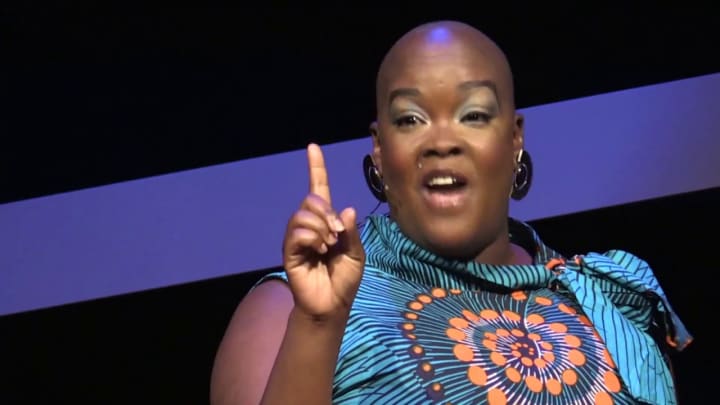
Author and activist Sonya Renee Taylor addressed how our white supremacist and fat phobic society shapes the notion of resolutions, and how we must mutiny against capitalist messages that tell us to change ourself. We have been taught not to honor the body that has carried us through life, but to strive for physical "improvement" based on the Western standard of beauty. This conundrum spreads throughout all parts of our lives. Despite all we hear about being gentle with one's self, if someone is unable to conform to a subconscious or societal ideal, shame rears its ugly head.
Shame is the emotion I've often felt keeps me from taking holistic care of my mind and body. My current opponent in the balancing act of my mental health, shame comes at me with the fear of negative perception. All of the pessimistic or negative sentiments I've received over the years come boiling to the surface when my anxiety triggers shame. Ultimately though, shame is a monster I do not wish to feed. So in these moments, I talk to my best friend. I also try to remember Taylor's words, that I am only one person who's resilient body has survived this world, and affirm myself that I am worthy of taking up space. My body is a site of resistance.
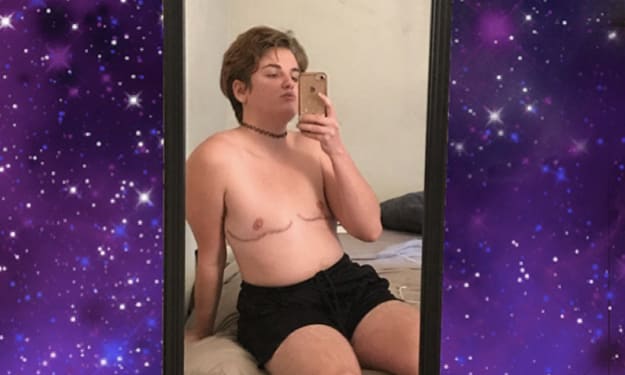
"That's all awesome," you may think "but there are still really big moves I want to make this year. There is so much work to be done!" Yes, this is true, and I often corralled by the urgent need for inner work, and direct action myself. Being white and transgender, I see conflicting messages from social media telling me to both rest and reflect, and to do more for social justice movements all the time. I have learned that both are true and the two can, and must, coexist.
Coming out of the year 2020 has humbled many of us to see that the work we do on ourselves and for others will be continuous. This notion can cause relief, fear, or exhaustion depending on who you are and what your life looks like. Regardless of how you feel (maybe a combination of emotions!) there has come a collective need to start working towards a sustainable future.
For some wisdom on how one might do that, I look to adrienne maree brown. A contemporary of Taylor, brown brightens up the dark caverns of untapped thought by weaving together the politic of pleasure and purposeful action. She believes deeply in love, sex, justice, critique, empathy, joy, and healing - Pleasure Activism! The insight she shares on these subjects calls on individuals and communities to centralize pleasure in ourselves and within collective endurance. We are meant to feel good and make others feel good. There is incredible evidence that American culture does not focus on physical, spiritual, or emotional wellness of people, but what they can do to mask "imperfections".
In Emergent Strategies, brown asserts that what we will accomplish has to do with where we place our intention and ambition. We answer the call that will drive us forward. This may look different to everyone with any given circumstances, but in order to achieve and transform, we must be specific in what we are looking to move and change. For many, these lessons are a means of survival, for others it can revolutionize their treatment towards themselves and others. I think finding the key to our own self-innovation is a call we should answer.
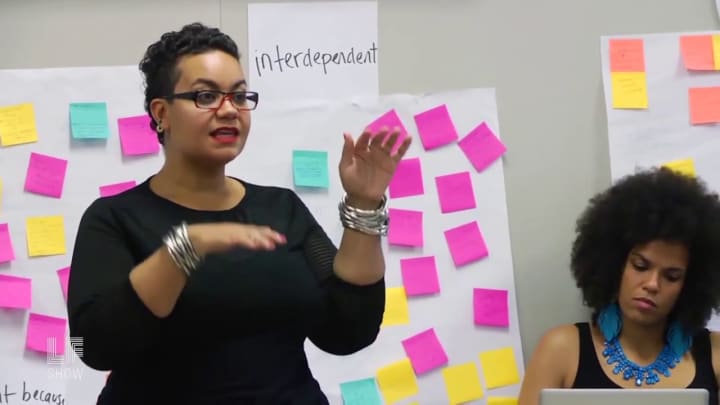
These ideas are all apart of transformative justice (TJ), a movement for which brown is a vocal advocate. TJ's framework is built upon de-escalation tactics and harm reduction models. It allows for people and communities to take on the root cause of harm in order to seek justice by transforming a situation without police intervention. This model of thinking is helpful within social justice movements or any means of conflict resolution.
Something I love about this framework, other than centering community intervention and collective healing, is that transformative justice encourages people to strive for progress not perfection. As someone who thinks deeply about the human condition, and can also falter under perfectionism, I wonder how the expectations we have grown up with enable us to treat ourselves and others. We are trying to learn, in a pandemic no less, how to better reach each other and reduce harm while simultaneously grappling with the gravity of our own conditioning.
TJ creates space for a key word: resolution. This idea of resolution is far from those you proclaim when the ball drops in New York City. It's much different than the one that tells you to get a six-pack in four weeks or you're unworthy of happiness. These resolutions come from conversations and actions that build connection in communities, that break generational trauma, that actually begin to heal. They allow us to rethink our priorities.
I believe in using transformative justice as a lens to navigate our own self-worth. Are we treating ourselves the way we would treat our most treasured loved ones? Are we at the point where we are gentle and joyous with the unique body that gives us so much? Can we act as our own compass for bliss?

It's because of my own life experiences that I think we're in a state of constant evolution rather than definitive resolutions. The world is ever-shifting and it's utterly unpredictable. It's important to be mindful of yourself in response to all of the energy you take in from the world. Your environment and precious energy inform your growth and happiness.
At the end of last year was fortunate enough to take a six week online workshop on Trans Joy. It was a group comprised of myself, our instructor shawndeez jadalizadeh (UCLA lecturer and Ph.D candidate), and five other transgender and non-binary people. In this intimate setting, we processed our experiences as trans people and how we could create a deeper more meaningful relationship to joy. This course taught me so much about centering my own well-being and honoring my transness in a world where my body is not the so-called ideal. This way, I will be able to be more effective achieving the goals I have by centering joy as I reach for them.
That's all to say, I have learned through my community, my friends, my teachers, and the work of folks oriented towards justice to take care of myself a little better everyday in a different way. This year, I will:
- Honor myself and my body for what we have lived through.
- Honor others exactly how they are.
- Recognize shame when it happens and affirm myself that I am only human, flawed and adaptable.
- Center joy.
- Be more vulnerable and believing in the power of my own voice.
This may be my shortlist of "resolutions" for the next year, though they are not finished. The unsurprising thing is that these objectives have been riding alongside me for years. While we work towards creating a more just society, we must be prioritizing our own wellness always, to do so is not a shameful act. Putting on our own proverbial oxygen mask in order to breathe will help us assist others in the long run. It is okay to acknowledge our limits, and it is essential to invest in our own healing.
"I define vulnerability as emotional risk, exposure, uncertainty... I've come to believe... that vulnerability is our most accurate measurement of courage." - Brené Brown
About the Creator
Dayn Kerns
An artistic type from Southern California.
(they/he)
Life is full of typos.
"Your life's work begins when your great joy meets the world's great hunger." - Kate Bornstein
Keep reading
More stories from Dayn Kerns and writers in Motivation and other communities.



Comments
There are no comments for this story
Be the first to respond and start the conversation.