
Echoes of My Childhood: The Tale of a Talking Doll
How a Childhood Companion Shaped My Understanding of Connection and Loss

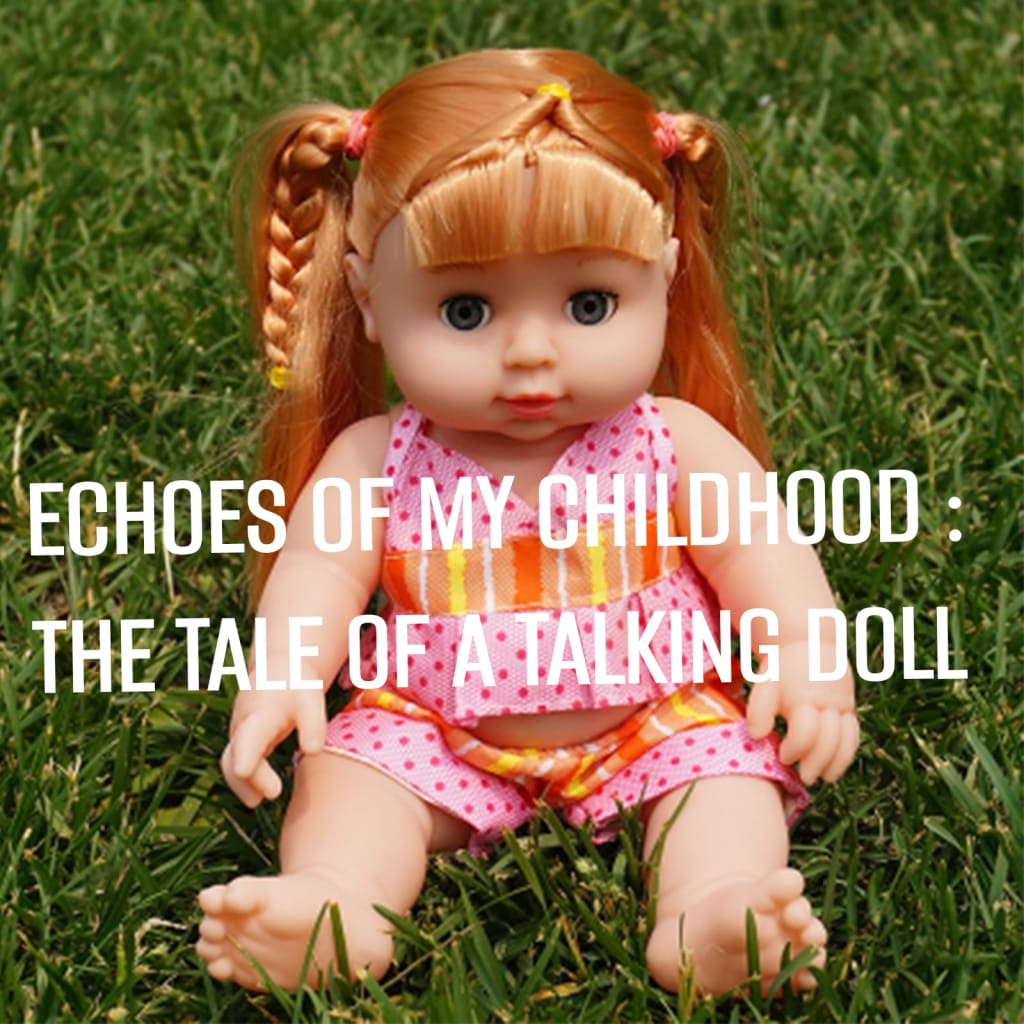
There’s a special kind of magic in the toys we treasure as children. They’re not just objects; they’re confidants, adventurers, and, sometimes, our first introduction to the idea of companionship. For me, that magical item was a talking doll named Emily. Her presence shaped not only my childhood but also left an indelible mark on my understanding of connection and loss.
Emily wasn’t particularly fancy by today’s standards. She had a soft cloth body, plastic limbs, and curly blonde hair that often tangled into a frizzy mess. But what set her apart was her ability to "talk" when you pulled a string at her back. “Let’s play!” she would chirp, her voice mechanical yet comforting. “You’re my best friend,” she’d say, and for a lonely six-year-old like me, those words carried more weight than any parent or teacher could imagine.
I was an only child, and Emily quickly became my partner in all things imaginative. We’d host tea parties in the garden, where the stuffed animals served as our esteemed guests. On rainy days, we’d build forts from blankets, huddling inside as though protecting ourselves from a storm raging beyond our imaginary castle walls. Emily’s predictable phrases somehow never grew tiresome. Instead, they became a grounding force in my otherwise ever-changing world.
Her voice was a comfort during the times when I felt misunderstood. When my parents were too busy or preoccupied, Emily was there to assure me that I wasn’t alone. Her simple, repetitive sentences became a form of affirmation that I desperately needed. “You’re my best friend,” she’d say, and I’d reply, “You’re mine too.” It was a dialogue of sorts, one that taught me the power of spoken words—even if only one side of the conversation was truly alive.
Over the years, Emily began to show her age. Her hair grew patchy, her dress frayed, and her voice box became temperamental. Sometimes, her phrases would cut off mid-sentence, and other times, her once-cheerful tone sounded warped and eerie. Yet, I refused to part with her. To me, she wasn’t just a doll; she was a repository of memories, a tangible piece of my younger self.
The pivotal moment came when I was about 12. My family was moving to a new city, and my parents encouraged me to declutter. “You’re getting older,” they reasoned. “You don’t play with her anymore.” It was true—Emily had spent the past few years sitting on a shelf, her once-bright blue eyes now clouded with dust. But the thought of leaving her behind felt like abandoning a part of myself.
In the end, I reluctantly agreed to pack her away. As I placed her in a box, I felt a pang of guilt and sadness, as though I were betraying an old friend. Moving day came and went, and Emily’s box ended up in the attic of our new home, where it stayed for years, untouched and forgotten.
It wasn’t until my late twenties, while cleaning out the attic in preparation for my parents’ downsizing, that I rediscovered her. The moment I saw her, a flood of memories came rushing back. Her once-bright dress was now dull, and her voice box no longer worked. But as I held her in my hands, I realized that her value wasn’t in her functionality or appearance. Emily represented a chapter of my life—a time when imagination was my greatest asset, and a simple toy could be my closest companion.
I decided to keep her, not as a toy but as a keepsake. She now sits on a shelf in my home office, a quiet reminder of the girl I once was and the lessons she learned. Emily taught me the importance of connection, even in its simplest forms. She showed me that companionship doesn’t always need to be complex or reciprocal; sometimes, it’s enough to simply be there for someone.
Looking back, I’m grateful for the role Emily played in my life. She was more than a doll; she was a bridge between childhood and adulthood, teaching me how to navigate emotions, cherish memories, and cope with loss. While she no longer speaks, her impact echoes in my heart, a testament to the enduring power of childhood magic.
So, to anyone reading this who might still have their own “Emily” tucked away in a box or displayed on a shelf, I encourage you to take a moment to reflect on what that object represents. These relics of our past are more than just things; they’re storytellers, keepers of memories, and silent witnesses to the people we’ve become.
About the Creator
Keep reading
More stories from INFO INSIDER and writers in Motivation and other communities.
What's your mission?
In life, each of us carries a unique purpose—a mission that drives our actions, shapes our choices, and defines our legacy. For me, my mission is more than a personal endeavor; it’s a calling to create positive change, inspire growth, and contribute meaningfully to the world around me. This mission is a guiding light, illuminating my path and grounding my decisions in values that resonate deeply with who I am.
By INFO INSIDER about a year ago in Motivation
The Message That Arrived Too Late
At 11:58 p.m., the city outside Sameer’s apartment was already celebrating. Fireworks cracked the sky open, laughter echoed from balconies, and car horns competed like impatient children. Inside, the room was silent except for the steady ticking of a clock hanging slightly crooked on the wall.
By shakir hamid2 days ago in Motivation




Comments
There are no comments for this story
Be the first to respond and start the conversation.