
Digital Self-Discipline: How to Resist the Scroll
Reclaim your attention in an age of endless distractions.

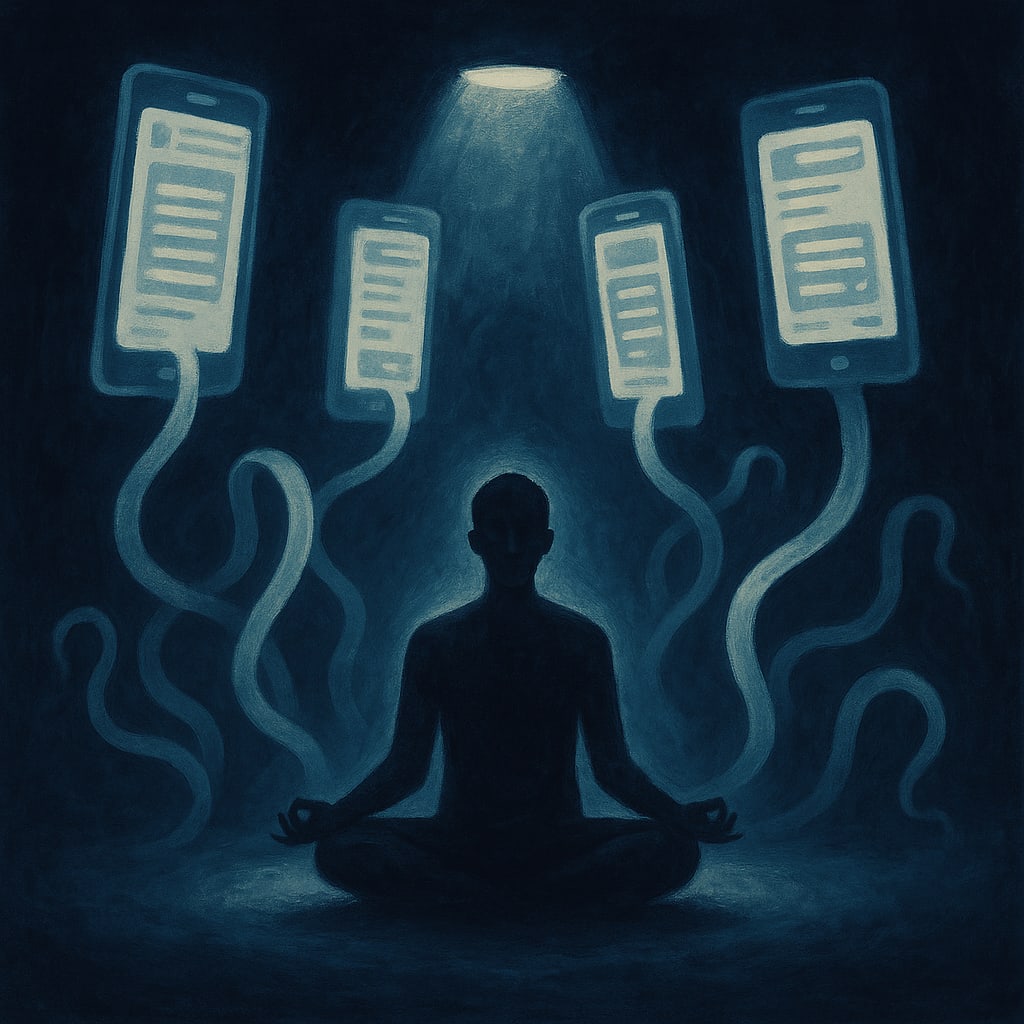
In the age of smartphones, social media, and infinite feeds, we are all one thumb-flick away from losing an hour of our lives. What used to be moments of quiet—waiting for the bus, eating lunch, lying in bed—are now filled with scrolling. Endlessly. Mindlessly.
But here's the problem: discipline, that old-fashioned virtue we once associated with waking up early and going to the gym, now has a digital dimension. If you can’t control your screen, can you truly control your life?
Welcome to the era of digital self-discipline.
The Hijacking of Your Attention
Let’s start with a harsh truth: you are not in full control of your attention.
Your favorite apps—Instagram, TikTok, Twitter, YouTube—are not neutral tools. They are meticulously designed, algorithmically optimized attention traps. The endless scroll, the notification badges, the autoplay features—they’re all psychological hooks meant to keep you engaged, not to improve your life.
And it works. According to a study by RescueTime, the average person spends 3 hours and 15 minutes per day on their phone, with the top 20% spending more than 4.5 hours daily.
That’s nearly 50 days per year.
You could write a book. Learn a language. Start a business. But instead, your thumb scrolls. Your brain drifts. Your goals wait.
Why Is It So Hard to Stop?
Because it’s not a willpower problem. It’s a design problem.
Social media platforms exploit the dopamine system in your brain. Every like, every swipe, every red icon gives you a tiny hit of pleasure. The more intermittent the reward, the more addictive the behavior—a psychological principle known as “variable reward.”
It’s the same mechanism that keeps gamblers glued to slot machines.
So when you find yourself checking your phone for no reason, even while knowing it’s a waste of time, it’s not that you're weak. It’s that the system is stronger than you—unless you train for it.
Digital Self-Discipline Isn’t Just Abstinence
Let’s be clear: digital self-discipline doesn’t mean deleting all your apps and moving to a cabin in the woods.
It means using technology intentionally.
The real discipline is in the small, daily choices:
Do you check your phone first thing in the morning?
Do you scroll while eating?
Do you sleep with your phone beside your bed?
Do you open Instagram without even realizing it?
These habits feel harmless. But collectively, they erode your attention span, fragment your focus, and weaken your mental clarity.
Reclaiming Control: Tactics That Actually Work
So how do you take back control? Not with vague advice like “use your phone less,” but with clear, actionable systems:
1. Digital Gatekeeping
Make it harder to access your most distracting apps.
Remove them from your home screen.
Log out after each session.
Turn off all notifications.
Use tools like Screen Time, Digital Wellbeing, or Forest.
Friction is your friend. The more steps it takes to open the app, the less likely you’ll impulsively do it.
2. Set a ‘No Scroll’ Schedule
Designate screen-free zones in your day:
First hour after waking up
During meals
One hour before bed
This isn’t about going cold turkey—it’s about protecting your most valuable mental windows.
3. Replace, Don’t Just Remove
Don’t just remove scrolling. Replace it with something fulfilling.
Read a physical book.
Journal.
Meditate.
Take a walk.
Your brain needs stimulation. Starving it won’t work. Feeding it consciously will.
4. Use the Phone, Don’t Let It Use You
Before unlocking your screen, ask: What am I here to do?
Set a purpose every time you pick up your device. If you can’t name one, put it down.
The Bigger Picture: Your Life Is What You Pay Attention To
We often think our time is the most valuable resource. It’s not. Your attention is.
Time passes whether you use it well or not. But attention shapes your inner world—your thoughts, feelings, desires, ambitions. If you spend your mental energy on things you didn’t choose, you’re living someone else’s algorithm.
The average person now switches tasks every 47 seconds. This digital scatterbrain state makes it harder to read deeply, think critically, or simply be present. That means the price of constant scrolling isn’t just lost time—it’s a fragmented self.
The Discipline of Digital Awareness
Digital self-discipline is a practice. You won’t master it in a day. You’ll relapse. You’ll scroll unconsciously sometimes. That’s okay.
But over time, as you reclaim your attention, something profound happens:
You start to think more clearly.
You feel more in control.
You rediscover boredom—and with it, creativity.
You re-enter the world with eyes open, not glued to glass.
In a world engineered for distraction, choosing to focus is a radical act.
Discipline isn't just saying no. It’s knowing what you’re saying yes to.
So the next time you reach for your phone to “just check something,” pause.
Take a breath.
And remember: your attention is your life. Use it wisely.
About the Creator
Ahmet Kıvanç Demirkıran
As a technology and innovation enthusiast, I aim to bring fresh perspectives to my readers, drawing from my experience.
Keep reading
More stories from Ahmet Kıvanç Demirkıran and writers in Motivation and other communities.
The Exhaustion Gap: Why Rest Feels Illegal in a Burnout Society
It’s 7:15 a.m. The train rattles forward as exhausted faces stare blankly at their phones, coffee cups, or the blur outside the window. One passenger leans her head on the glass, not asleep, but not fully awake either — suspended in that gray zone between trying and giving up. She isn’t lazy. She’s just tired — deeply tired. Not the kind of tired sleep can fix, but the kind that comes from carrying the silent weight of having to prove her worth every waking moment.
By Ahmet Kıvanç Demirkıran7 months ago in Motivation
The 5 Essential Traits of Effective Leaders Who Succeed in Every Industry
Effective leaders shape teams, guide decisions, and build trust across every field. Whether someone works in business, healthcare, education, technology, or nonprofit work, leadership skills matter. While tools and systems change by industry, the core traits of effective leaders stay the same. These traits help people lead with clarity, confidence, and purpose.
By Jaime Irickabout 22 hours ago in Motivation


Comments (2)
good bro
Excellent piece♦️♦️♦️