
The Exhaustion Gap: Why Rest Feels Illegal in a Burnout Society
We live in a world that celebrates the hustle but punishes recovery. Why has taking a break become a rebellious act?

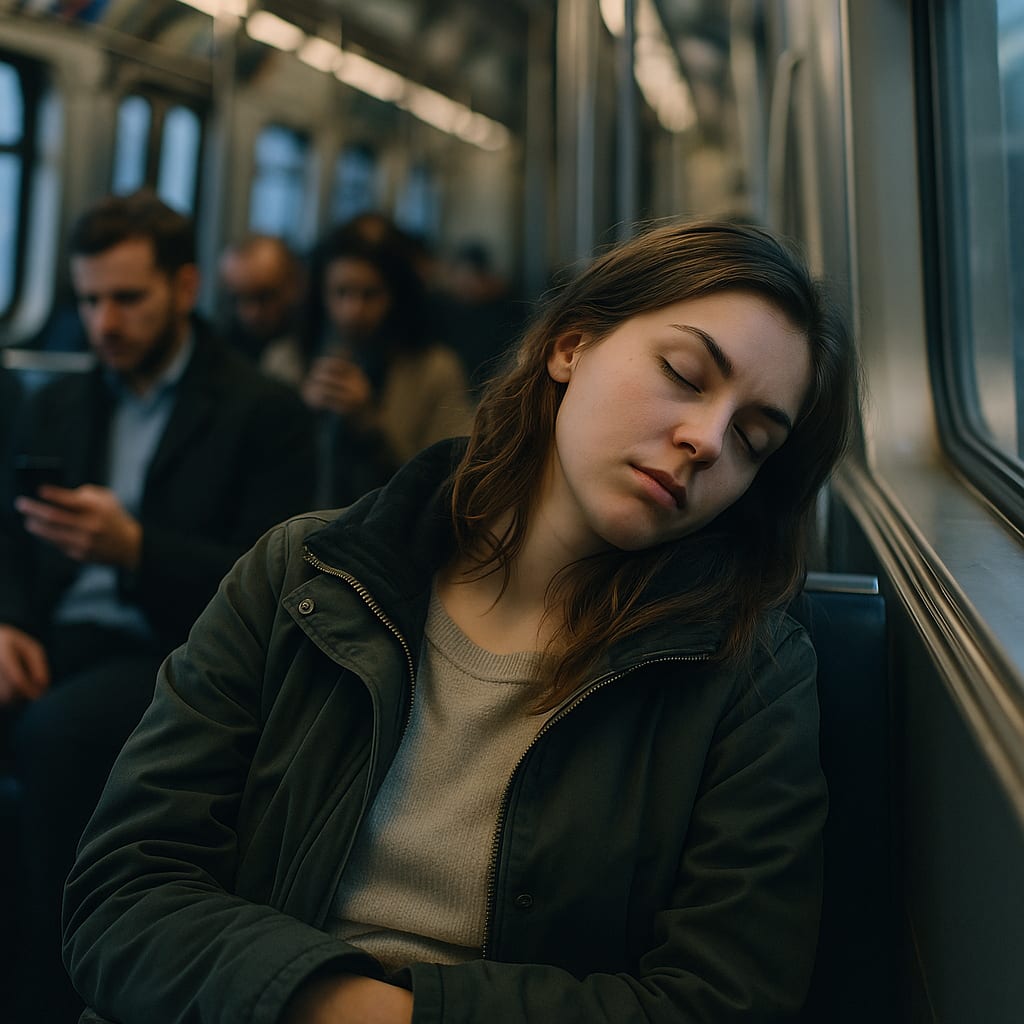
It’s 7:15 a.m. The train rattles forward as exhausted faces stare blankly at their phones, coffee cups, or the blur outside the window. One passenger leans her head on the glass, not asleep, but not fully awake either — suspended in that gray zone between trying and giving up. She isn’t lazy. She’s just tired — deeply tired. Not the kind of tired sleep can fix, but the kind that comes from carrying the silent weight of having to prove her worth every waking moment.
This is the scene of modern life: a society allergic to rest.
We live in a culture that romanticizes burnout, glorifies overwork, and dismisses rest as a sign of weakness. We throw around phrases like “rise and grind,” “hustle harder,” and “sleep is for the weak” with a kind of moral fervor. Somewhere along the way, productivity became synonymous with virtue, and exhaustion turned into a badge of honor.
But what if the real rebellion today is not working harder — but resting?
🧠 The Burnout Trap
Burnout used to be something that happened to overworked surgeons or Wall Street analysts. Now, it's everyone's baseline. From students to freelancers, from gig workers to corporate climbers, burnout is no longer the exception — it's the expectation.
According to the World Health Organization, burnout is now officially recognized as a “syndrome” resulting from “chronic workplace stress that has not been successfully managed.” But it’s more than just a workplace problem — it’s a cultural one.
We are embedded in a system that treats human beings like machines. Our value is calculated in outputs, our identities reduced to job titles, and our worth measured in KPIs, engagement metrics, or hours clocked.
This mechanized mindset turns rest into a liability. If you're not constantly producing, you're falling behind. And if you're falling behind, you're failing.
☕ Rest Guilt: The New Pandemic
Even when we do rest, we rarely let ourselves enjoy it. We scroll on our phones, feel bad about “wasting time,” and mentally prepare for the work that awaits. It's not truly rest — it's delayed labor.
This guilt isn't irrational. It’s internalized from years of conditioning. From the student who feels bad for not studying on the weekend, to the parent who feels selfish for taking a break, to the freelancer who thinks a vacation will destroy their momentum — the guilt of resting is widespread and insidious.
And when we do take breaks, they’re often commodified. Spa days, wellness retreats, and productivity-optimized meditation apps offer a temporary balm — but often perpetuate the same idea: rest must serve work. We rest to be more efficient. We take breaks to “recharge” for our jobs. Even sleep is marketed as a tool for better hustle.
What if rest didn’t have to justify itself?
📱 Social Media: Hustle’s Loudest Cheerleader
Open Instagram and you’ll find a flood of “motivation” posts:
“If you’re not working on your dream, someone else is.”
“You have the same 24 hours as Beyoncé.”
“Grind in silence. Let success make the noise.”
We applaud people who wake up at 4 a.m. to work out, learn two languages before breakfast, run a side business, and still manage a social life. We don’t ask why they’re doing it all — we just assume this must be success.
Social media is saturated with curated productivity. Even our leisure is aestheticized. Reading books, journaling, and going for walks are no longer personal moments of reflection — they're content opportunities. You’re not just relaxing; you're building a brand.
In this economy of visibility, being tired is invisible — unless it’s aesthetically pleasing.
🚫 Rest is Resistance
What if choosing not to overwork was radical?
What if saying, “I’m done for today,” was an act of defiance?
What if taking a nap was a protest?
In a society that thrives on your fatigue, reclaiming rest is revolutionary. It pushes back against the system that wants your constant output. It says, “I am not a machine.” It draws a boundary that capitalism does not want you to have.
Resting isn’t laziness. It’s survival. It’s healing. It’s essential.
Activist and author Tricia Hersey, founder of The Nap Ministry, has been vocal about the political dimensions of rest. Her movement reframes napping not just as self-care, but as a form of resistance against the exploitative demands of productivity culture — especially for marginalized communities who have historically been denied rest.
Rest is not something you earn. It’s something you deserve.
🧩 The Rest-Productivity Paradox
Ironically, the very thing we avoid — rest — is what allows us to do meaningful work.
Numerous studies show that chronic exhaustion diminishes creativity, decision-making, empathy, and memory. It makes us less human.
You’re not better when you push through fatigue. You’re just quieter about how much you’re suffering.
Our brains need unstructured time. Our souls need boredom. Our hearts need stillness. But in a world addicted to doing, stillness feels like a threat.
✨ How to Reclaim Rest (Without Guilt)
Resting in a burnout society isn’t easy — but it’s necessary. Here’s how to start:
Name the Lie: Recognize the internal voice that says, “You haven’t done enough.” That voice isn’t you. It’s the culture speaking through you.
Schedule Nothing: Literally put “nothing” in your calendar. Protect that time as fiercely as a meeting.
Unplug the Guilt Machine: You are not lazy for needing a break. You are human.
Redefine Productivity: You are allowed to be productive at being alive — breathing, resting, healing, connecting.
Rest Out Loud: Talk about your rest. Normalize it. Say, “I took a nap,” or “I read for fun,” and don’t apologize for it.
Embrace Boredom: Put the phone down. Stare at the ceiling. Walk without a podcast. Let your mind wander.
Don’t Earn Your Break: You don’t need to finish your to-do list to rest. Rest isn’t a reward — it’s a right.
🌍 A Culture Shift Begins With You
We can’t dismantle hustle culture overnight. But we can start with ourselves.
Refuse to glorify busyness. Refuse to admire burnout. Refuse to treat exhaustion as a badge.
Instead, admire those who have boundaries. Admire the person who knows when to stop. Admire rest.
Because the more we normalize rest, the more we chip away at the system that profits from our fatigue. And the more we rest, the more we remember: We were never meant to live this tired.
About the Creator
Ahmet Kıvanç Demirkıran
As a technology and innovation enthusiast, I aim to bring fresh perspectives to my readers, drawing from my experience.
Keep reading
More stories from Ahmet Kıvanç Demirkıran and writers in Motivation and other communities.
Reinventing Life After Exhaustion
Marcus had reached what others called "the successful middle": a respectable corporate job, a decent apartment in a bustling city, and enough income to indulge in occasional luxuries. But behind the comfortable facade, Marcus felt an unsettling emptiness. Life had become routine, predictable, exhausting.
By Ahmet Kıvanç Demirkıran8 months ago in Motivation
I Never Gave Up Honesty, Success Came to Me
There was a time when honesty felt like a burden I carried alone. While others seemed to climb faster by exaggerating their skills, hiding their mistakes, or bending the truth, I stayed behind—quiet, overlooked, and often doubting myself. I didn’t lack ambition or effort. What I lacked, I thought, was the ability to play the game the way everyone else did.
By Fazal Hadi2 days ago in Motivation



Comments
There are no comments for this story
Be the first to respond and start the conversation.