
Christian Bale: From Dark Knight to Hollywood’s Chameleon
Batman

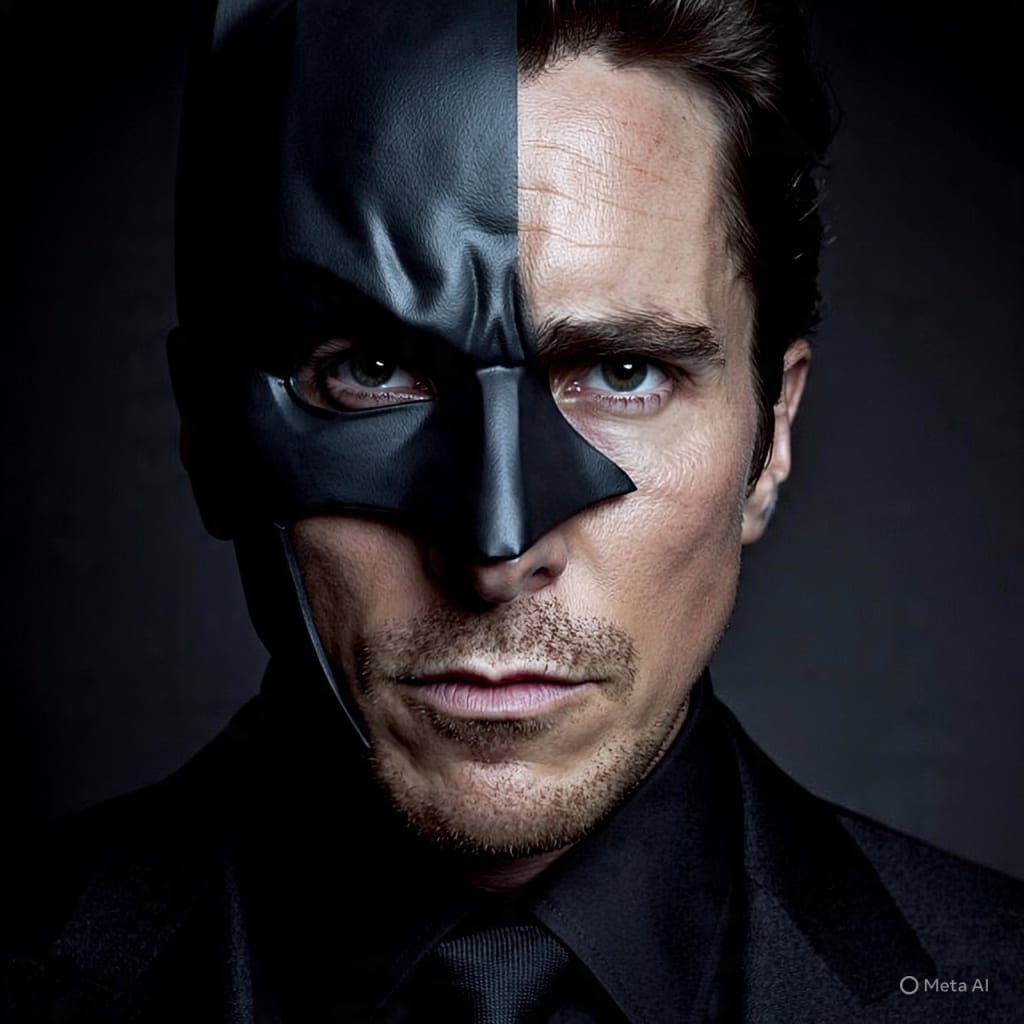
Christian Bale’s name today carries weight not just because of his movies, but because of his reputation as one of the most fearless, dedicated, and mysterious actors of his generation. Known for transforming his body, his voice, and even his soul for roles, Bale has become the definition of commitment. But behind the awards and iconic performances lies a story of resilience, sacrifice, and a relentless pursuit of perfection.
The Child Who Never Wanted to Be Ordinary
Christian Charles Philip Bale was born on January 30, 1974, in Haverfordwest, Wales. His family was far from ordinary. His father, David Bale, was a commercial pilot turned entrepreneur and environmentalist, while his mother Jenny was a circus performer. Growing up, Christian was surrounded by constant change — his family moved frequently, living in England, Portugal, and even the U.S. for a while.
Bale often says that this rootless childhood shaped him. It made him adaptable, able to slip into different environments and accents without fear. That adaptability would later become his greatest gift as an actor. But as a boy, it also meant he struggled to find stability.
At just 8 years old, Bale was already drawn into the world of performing. He acted in commercials — one for fabric softener became surprisingly popular. But he wasn’t a child who dreamed of fame. In fact, Bale was shy, private, and overwhelmed by the idea of attention. What he loved was not being himself, but escaping into other identities.
The Spielberg Breakthrough
The turning point came when Christian was only 13 years old. Steven Spielberg was searching for a young actor to lead his new film, Empire of the Sun (1987). The movie told the story of a British boy surviving in a Japanese internment camp during World War II. Thousands of children auditioned. Bale, with his piercing eyes and ability to convey raw emotion, won the part.
The film was grueling. Bale carried the entire movie on his shoulders, delivering a performance so powerful that critics called it one of the greatest child performances ever captured on screen. Yet the success brought him mixed feelings. Suddenly, he was famous — but fame was something he feared, not embraced. Reporters chased him. Fans expected him to be outgoing. Bale only wanted to act, not to be a celebrity.
This inner conflict — the love of acting but dislike of stardom — would haunt him for decades.
The Lost Years
After Empire of the Sun, Bale struggled to navigate Hollywood. He appeared in movies like Henry V (1989) and Newsies (1992), but while he gained respect, he wasn’t yet the star people expected.
Newsies, a Disney musical where Bale sang and danced, flopped at the box office. Years later, Bale admitted he had no real desire to be in a musical but felt pressured into it. The failure of the film left him disillusioned. Many young stars in the 90s faded into obscurity after one hit role. Bale seemed destined for the same path.
But Christian had something rare: stubborn persistence. He refused to quit. He chose roles carefully, preferring projects that challenged him instead of mainstream opportunities that would have made him comfortable.
American Psycho – Becoming a Legend
By the late 90s, Bale was in his mid-20s, still searching for that role which would cement his name. It came in the form of a dark, disturbing character: Patrick Bateman in American Psycho (2000).
The movie was based on Bret Easton Ellis’s controversial novel about a wealthy Wall Street banker who hides the soul of a psychopath. The role was terrifying. Many actors turned it down. Leonardo DiCaprio was even offered the part but declined. The studio hesitated — could Christian Bale carry such a risky film?
Bale didn’t just say yes — he immersed himself. He studied the psychology of sociopaths, crafted the perfect mask of charm and menace, and physically transformed his body into a sculpted figure of vanity. The result was chilling. Audiences were horrified, fascinated, and unable to forget his performance.
American Psycho became a cult classic, and suddenly, Christian Bale wasn’t just an actor — he was an artist who wasn’t afraid to go where others wouldn’t.
The Extreme Transformations Begin
Bale had shown his dedication with American Psycho, but soon the world would see how far he was willing to go.
In 2004, he starred in The Machinist. For the role of Trevor Reznik, an insomniac haunted by guilt, Bale lost an astonishing 63 pounds. He reportedly survived on little more than black coffee, apples, and cans of tuna. His body wasted away — bones jutted out, his eyes sunk deep, and he looked almost skeletal.
Friends and colleagues feared for his health, but Bale was determined. He once said, “I find what I do to be incredibly liberating. I don’t want to play myself. I want to disappear.”
Disappear he did. The transformation was so shocking that pictures of his gaunt frame spread across the world. Bale had crossed into a new territory of method acting. He was no longer just performing — he was living inside his characters, regardless of the cost.
The Dark Knight Rises
Just one year after The Machinist, Bale swung to the complete opposite extreme. He gained back more than 100 pounds of muscle to play Bruce Wayne in Christopher Nolan’s Batman Begins (2005).
Producers initially worried he was too thin after The Machinist. But Bale trained relentlessly, bulking up through intense workouts and a strict diet. His transformation from skeletal to superhero stunned Hollywood.
When Batman Begins was released, Bale’s brooding, human portrayal of Bruce Wayne redefined the character. He was no longer the campy hero of earlier decades — Bale made Batman real, flawed, and deeply human.
The success of Batman Begins launched one of the most celebrated trilogies in cinema history. The Dark Knight (2008), featuring Heath Ledger’s unforgettable Joker, became a cultural phenomenon. Bale’s Batman was praised for his intensity, his inner conflict, and his sheer presence.
But Bale never let the role define him. Even at the peak of Batman’s global success, he continued to chase difficult, unusual projects.
The Actor Who Disappears
What made Christian Bale unique was not just his roles but his ability to disappear into them. Unlike many stars who carried the same persona from film to film, Bale transformed completely.
In Rescue Dawn (2006), he lost weight again to play a prisoner of war.
In The Fighter (2010), he played crack-addicted Dicky Eklund, a role that earned him an Academy Award for Best Supporting Actor.
In American Hustle (2013), he gained weight, wore a comb-over, and transformed into a conman with almost unrecognizable charm.
Every time, audiences saw not Christian Bale, but the character. That is his greatest power: invisibility.
Part 1 Closing
By the early 2010s, Christian Bale was already considered one of the greatest actors of his generation. From a child star in Empire of the Sun to a chameleon in The Machinist and a global icon as Batman, Bale had proven that he would give everything — body, mind, and soul — to the craft of acting.
But this was only half the story. His later career, personal struggles, and the quiet, mysterious life he leads outside Hollywood reveal even more about the man behind the mask.
Part 2: The Transformation Years – From Cult Roles to Batman’s Cape
Christian Bale’s career took a dramatic turn as the new millennium approached. While he had already built a reputation as a talented young actor, it was in the early 2000s that he truly cemented his place as one of the most daring performers of his generation.
American Psycho – A Defining Performance
In 2000, Bale starred in American Psycho, based on Bret Easton Ellis’s controversial novel. Taking on the role of Patrick Bateman—a wealthy New York investment banker with a chillingly violent double life—was a massive gamble. The film had already stirred outrage before its release, and many established actors had turned down the role.
But Bale embraced it. He approached Bateman not as a caricature of evil but as a deeply insecure, image-obsessed man who hid behind a mask of perfection. His meticulous preparation paid off. Critics were both horrified and mesmerized, and Bale’s performance became iconic. Though the film divided audiences, it quickly developed a cult following, and Bale emerged as an actor unafraid of risk.
He later admitted that people on set didn’t quite believe in him until they saw his chilling transformation on camera. “Nobody took me seriously,” Bale recalled, “but once I stepped into Bateman’s shoes, they couldn’t look away.” That role forever changed how Hollywood saw him.
The Physical Transformations Begin
If American Psycho proved Bale’s psychological commitment, his next roles showed his almost frightening physical dedication. In 2004, he accepted the role of Trevor Reznik in The Machinist. The character, a factory worker suffering from insomnia and paranoia, demanded a disturbing physical state.
Bale dropped over 60 pounds, surviving on little more than apples, coffee, and water. At just 121 pounds, his frail, skeletal figure shocked fans and the film industry alike. The transformation was extreme, even dangerous, but it demonstrated Bale’s unmatched willingness to sacrifice for authenticity. “It’s just what the role needed,” he explained simply, though doctors warned he was risking his health.
Critics praised his haunting performance, and audiences realized Bale wasn’t just another Hollywood star—he was an artist who lived and breathed his characters.
The Batman Gamble
Ironically, after shrinking his body to the brink of collapse, Bale’s next major challenge was the opposite: bulking up to become one of cinema’s most iconic heroes.
In 2005, director Christopher Nolan cast Bale as Bruce Wayne in Batman Begins. It was a bold decision. Warner Bros. had struggled to revive the Batman franchise after years of missteps, and many doubted the choice of Bale, who was known for darker, indie roles.
But Bale threw himself into the part. Within months, he rebuilt his body, gaining over 100 pounds of muscle through intense training. The transformation stunned fans—and silenced doubters. His Batman was unlike any before: brooding, complex, and deeply human.
The film was a massive success, breathing new life into the superhero genre. Bale’s Bruce Wayne wasn’t just a billionaire in a cape—he was a man torn by trauma, fear, and duty. Audiences connected with the realism Nolan and Bale brought to Gotham City, and suddenly, Christian Bale was no longer just a respected actor. He was a global star.
Balancing Blockbusters and Grit
Unlike many actors who become trapped in superhero roles, Bale refused to let Batman define him completely. Between Batman Begins (2005) and its sequels, he chose projects that showcased his versatility.
In The Prestige (2006), he played a rival magician opposite Hugh Jackman, delivering a performance filled with mystery and obsession. In Rescue Dawn (2006), he endured another grueling transformation to play a POW in Vietnam.
But it was The Dark Knight (2008) that pushed Bale into the stratosphere. The film was a cultural phenomenon, with Heath Ledger’s unforgettable Joker stealing headlines. Yet Bale’s grounded, tortured Bruce Wayne provided the perfect counterbalance. The film grossed over $1 billion and solidified Nolan’s trilogy as the greatest superhero saga ever made.
During this period, Bale became known not only for his talent but also for his intensity on set. He demanded authenticity and sometimes clashed with crews, but his results were undeniable. To him, acting wasn’t about comfort—it was about truth.
The Oscar Glory – The Fighter
In 2010, Bale stepped away from capes and gadgets to play a raw, heartbreaking role in The Fighter. Portraying Dicky Eklund, a former boxer turned drug addict, Bale lost weight again and immersed himself in the chaotic world of addiction.
His performance was transformative—painfully real, unflinchingly honest, and deeply moving. Critics hailed it as one of his finest works, and for the first time, the Academy could not ignore him. In 2011, Christian Bale won the Oscar for Best Supporting Actor.
As he stood on stage, emotional and humbled, he thanked his family and the real Dicky Eklund. It was a moment that validated decades of struggle, sacrifice, and relentless dedication.
About the Creator
Frank Massey
Tech, AI, and social media writer with a passion for storytelling. I turn complex trends into engaging, relatable content. Exploring the future, one story at a time
Keep reading
More stories from Frank Massey and writers in Motivation and other communities.
Tom Hardy — From Troubled Youth to Relentless Performer: A Motivational Biography
Introduction There’s a particular kind of grit in Tom Hardy — a combination of physical intensity, private vulnerability, and the brutal honesty of someone who’s been to the edge and come back. Today he’s one of the most respected actors of his generation: a chameleon who disappears into roles, a family man who fiercely protects his privacy, and a performer who turned near-self-destruction into disciplined craft. But his rise wasn’t inevitable. This is the full story of Edward Thomas “Tom” Hardy — where he came from, how he almost lost himself to addiction, the creative choices that changed everything, and the lessons his life offers anyone trying to rebuild and become excellent on purpose.
By Frank Massey 5 months ago in Motivation
Silver Screen Magic with Mae West
American actress and singer Mae West became a popular film actress during the Great Depression. She started entertaining in vaudeville, then performed on Broadway, and finally went to Hollywood. She signed up with Paramount Pictures and made her debut in the 1932 film “Night After Night.” She also starred in musicals, comedies, and crime dramas. The American Film Institute named her one of the best classic Hollywood actresses.
By Rasma Raisters4 days ago in Geeks


Comments (1)
Hi, I read your story and I really liked it. It seems like you are a professional writer because you give each scene its own unique value, which very few people manage to do. I really liked your work it was very, very good. Actually, I’m just a casual reader, and I really enjoy reading stories. and I liked it a lot, too. Also, how long have you been doing this work?