
ALL ABOUT DRUM
Drumming has been shown to have a number of benefits for both physical and mental health

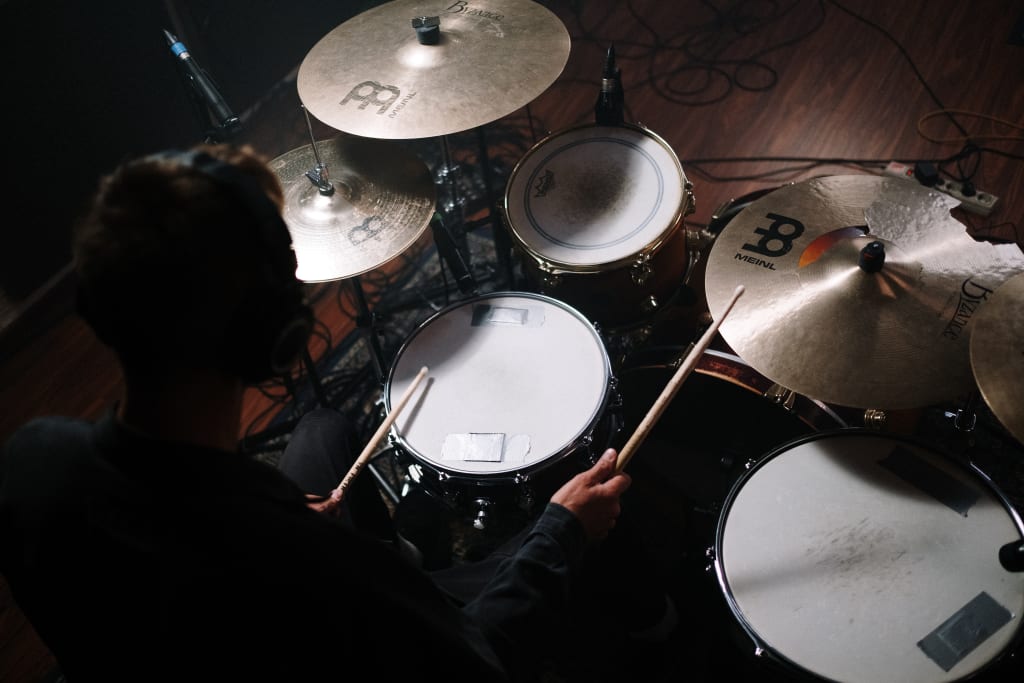
Some of the advantages of playing the drums are:
- Stress reduction: Drumming can help to reduce stress and tension by releasing endorphins, the body's natural "feel-good" chemicals.
- Improved mood: Drumming has been found to improve mood and reduce symptoms of depression and anxiety.
- Increased focus and concentration: Drumming can improve attention and focus, making it useful for people with attention deficit disorder (ADD) and attention deficit hyperactivity disorder (ADHD).
- Improved coordination and motor skills: Drumming requires coordination between the hands and feet, which can improve motor skills and dexterity.
- Increased self-esteem and confidence: Drumming can boost self-esteem and confidence, especially when performed in a group setting.
- Improved immune system function: Drumming has been found to increase the activity of natural killer cells, which play a role in the body's immune response.
- Increased social interaction and connection: Drumming in a group setting can foster a sense of community and social interaction.
What should we pay attention to to play the drums?
- There are several important things to pay attention to when playing the drums:
- Posture and ergonomics: It's important to sit in a comfortable and stable position, with good posture and relaxed shoulders. Your drum kit should be set up in a way that allows you to reach all the drums and cymbals without straining.
- Correct stick grip and control: The drumstick grip is one of the most important factors that determine your touch and tone while playing the drums. Also, there is not just one gripping technique. Of course, it may vary according to the types of music and the style played. The drumstick grip is one of the most important techniques at the beginning of drum training.
- Hand and foot technique: It's important to use proper technique when playing the drums, with consistent and controlled strokes. This will help you to play with speed and accuracy while avoiding injury.
- Timing and rhythm: One of the most important aspects of drumming is playing in time with the music. It's important to develop a strong sense of rhythm and timing, and to practice playing with a metronome to improve your timing.
- Dynamics and expression: Drumming is not just about playing loud and fast - it's important to develop a sense of dynamics and expression, and to vary the volume and intensity of your playing to match the music.
- Listening and communication: Drumming is often a collaborative effort, and it's important to listen to the other musicians in the band and communicate effectively through your playing.
What does the correct way of holding the drumstick give us while playing the drums?
- Holding the drumstick properly is very important when playing the drums, as it can affect your playing technique, sound, and overall performance. Here are some of the reasons why:
- Technique: Proper stick grip can help you to play more accurately and with better control. Holding the stick too tightly or loosely can result in inconsistent strokes or missed hits.
- Sound: The way you hold the stick can also affect the sound you produce. A loose grip can produce a softer, less defined sound, while a tight grip can produce a harsh, overly loud sound. A proper grip can help you to achieve a balanced, consistent sound.
- Comfort and endurance: Holding the stick properly can help to reduce fatigue and prevent injury. A tight grip can cause tension in the hands and arms, leading to fatigue or even injury. A loose grip can cause the stick to slip or bounce, also leading to fatigue or difficulty in controlling the sticks.
- Flexibility: Proper stick grip can help you to play more flexibly and with greater range. With a proper grip, you can produce a variety of different strokes and tones, and switch between playing soft and loud with ease.
Overall, holding the drumstick properly is crucial for developing good technique, achieving a balanced and consistent sound, and avoiding injury or fatigue. It's important to take the time to learn and practice proper stick grip, as it can greatly enhance your playing experience and overall performance.
Are there different drumstick grip styles?
Yes, there are several different drumstick grip styles that drummers use. The two most common types of grip are the matched grip and the traditional grip.
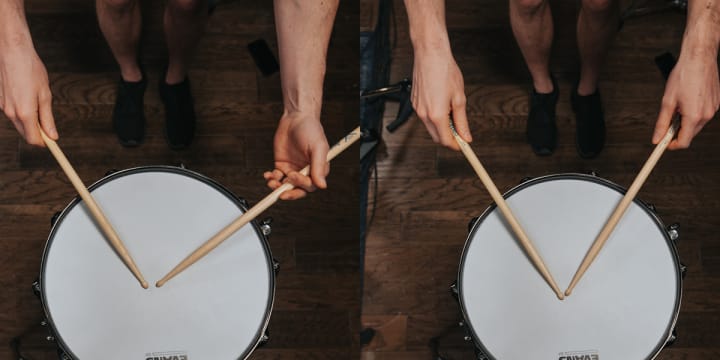
- Matched grip: In the matched grip, both hands hold the drumstick in the same way, with the palms facing down and the thumbs resting on top of the stick. This grip is commonly used in rock, pop, and other modern styles of music.
- Traditional grip: In the traditional grip, the left hand holds the stick differently from the right hand, with the palm facing up and the thumb resting on the side of the stick. This grip is commonly used in jazz, marching band, and other traditional styles of music.
There are also other less common grip styles, such as the French grip, where the thumb is positioned under the stick, and the German grip, where the wrist is rotated so that the palm faces down.
The choice of grip style depends on your playing style, the type of music you play, and personal preference. Each grip style has its own advantages and disadvantages, and may require different techniques and adjustments to achieve the desired sound and feel. It's important to experiment with different grip styles and find the one that works best for you.
How should we choose the drumstick we use and is the quality of the drumstick important?
When choosing drumsticks, there are several factors to consider:
- Size and weight: Drumsticks come in different sizes and weights, and the choice depends on your playing style and preferences. Generally, heavier sticks are better for playing loud and hard-hitting music, while lighter sticks are better for playing softer or more delicate music.
- Material: Drumsticks can be made from different materials, including wood, nylon, and carbon fiber. Wooden sticks are the most common, and come in various types of wood such as hickory, maple, and oak. The choice of material depends on your playing style and budget.
- Tip shape: The tip of the drumstick can be shaped in different ways, such as round, oval, or teardrop. The choice of tip shape depends on the sound you want to achieve, and whether you prefer a brighter or darker tone.
- Brand and quality: The quality of the drumstick is important, as low-quality sticks can break easily or produce inconsistent sound. It's generally recommended to choose sticks from reputable brands that are known for their quality and durability.
In addition to these factors, it's important to choose drumsticks that feel comfortable in your hands and suit your playing style. It's also a good idea to try out different types of drumsticks before making a purchase, to see which ones work best for you.
Overall, the quality of the drumstick is important, as it can affect the sound and feel of your playing. Choosing high-quality sticks from a reputable brand can help you to achieve a better sound and improve your overall playing experience.
About the Creator
Keep reading
More stories from writers in Motivation and other communities.
9 Habits I Noticed in Successful People
I used to believe success was loud. I thought it came with fancy cars, big announcements, and overnight miracles. But the truth hit me quietly—on an ordinary afternoon, sitting in a small café, watching people who were clearly winning at life without trying to prove anything.
By Fazal Hadi7 days ago in Motivation
The Path to Salvation
The late autumn evening air filled the monk's lungs, but it wasn't the season that chilled his bones. The heavy-handed presence of evil he had sensed upon entering the woods surrounding this mountain village had not bothered to conceal itself from him.
By Made in DNA2 days ago in Fiction


Comments
There are no comments for this story
Be the first to respond and start the conversation.