
Why Your Chocolate Habit Could Be Healthy—If You Choose Wisely
How choosing the right kind of chocolate can support your body and mind


Introduction: A Sweet Treat with a Powerful Secret
Chocolate. It's the language of love, the comfort of a rainy afternoon, and the reward at the end of a long week. But behind the silky bite and decadent aroma lies a truth most overlook: not all chocolate is created equal—and only naturally processed chocolate delivers the health benefits science raves about.
In this article, we’ll trace the path of chocolate from its humble beginnings as a tropical seed to the antioxidant-rich superfood it becomes when handled with care. We’ll dive into clinical research, explore health-boosting compounds, and uncover how to enjoy chocolate not just as a treat—but as a wellness ally.
Before we dive into the sweet benefits of naturally processed chocolate, I want to share a resource that complements this journey perfectly — Thriving Through Wellness: Your Path to a Balanced Life. If you’re passionate about holistic living, this guide is for you.
From Pod to Powder: What Is Naturally Processed Chocolate?
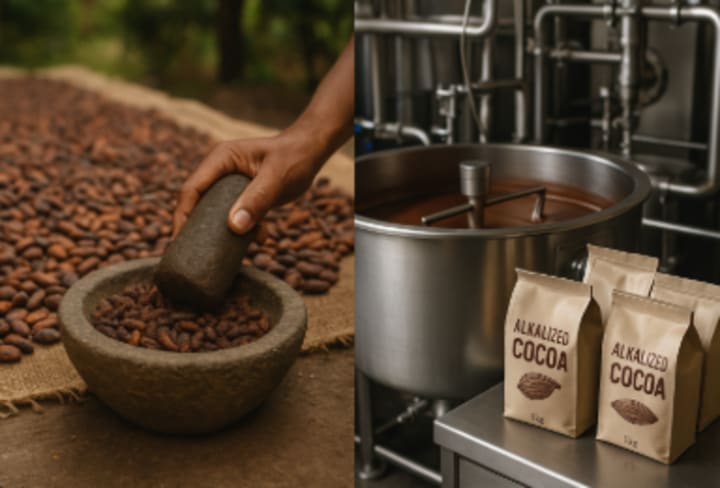
Cacao is raw, untreated chocolate obtained from the Theobroma cacao tree. Natural processing involves little heat, no alkalizing (“so-called ‘Dutch processing’”), and little to no additives. These methods preserve the flavanols, the strong antioxidants that are responsible for cacao’s health attributes.
In contrast, commercial chocolate is typically processed through the method of alkalization, which drastically reduces flavanol levels and takes away much of the potential benefits of chocolate.
The Heart of the Matter: Cardiovascular Benefits
One of the most researched areas of cacao’s influence is its influence on cardiovascular health. Flavanols present in naturally processed chocolate increase the production of nitric oxide (NO) that will dilate blood vessels, reduce blood pressure, and improve circulation overall.
Studies in the British Journal of Nutrition found that volunteers who consumed high-flavanol cocoa daily for 28 days had enhanced endothelial function and reduced blood pressure.

Brainpower in a Bar: Cognitive & Emotional Health
Natural chocolate is not just good for your heart — heart food, it’s brain food too.
Flavanols also elevate cerebral blood flow, improve working memory, and reduce the effect of mental fatigue. Cacao contains theobromine and phenylethylamine, too, which enhance mood and focus.
A study released in 2017 by Frontiers in Nutrition noted quantifiable cognitive improvement only two hours after dark chocolate consumption.

Blood Sugar Support & Insulin Sensitivity
Amazingly, dark, naturally produced chocolate, consumed in moderation, actually can help stabilize blood sugar. When researchers did a meta-analysis of over 192,000 individuals, those who regularly consumed dark chocolate were 21% less likely to develop Type 2 diabetes.
The key once more is the flavanols, which increase sensitivity to insulin and reduce inflammation, both of which are critical to metabolic health.
Just like mindful eating enhances the chocolate experience, creating intentional habits around your overall health can transform your life. That’s something I explore deeply in Thriving Through Wellness. It’s more than a book — it’s a wellness companion.
Skin, Eyes & Anti-Aging Properties
Cacao flavanols also protect your largest organ: skin. They enhance skin hydration and elasticity and protect against UV damage.
Even eyes are assisted out. A JAMA Ophthalmology study found that dark chocolate improved retinal vessel dilation within two hours of consuming it, possibly improving vision clarity.

What to Look For in Healthy Chocolate
To obtain all these rewards, look for chocolate that is:
- At least 70% cacao
- Stamped as non-alkalized or “natural cocoa.”
- Low in added sugars and fats
- Fair trade and ethically sourced, if possible
Avoid white chocolate and most milk chocolate, with little to no cacao solids and packed with sugar and dairy.

How Much Should You Eat?
As with all things good, the virtues of chocolate have a counterpoint. A small amount — a few times a week, some 1 ounce (28g) of dark chocolate — is adequate to be health-promoting without venturing into too much sugar or too much fat.
The Ritual of Chocolate: Eating with Intention
Chocolate is most enjoyed slowly, mindfully. Let it melt on the tongue. Serve it with berries or nuts. Use it to recognize a peaceful moment, not just a craving.
This makes chocolate not a fix, but a daily self-love ritual and brings your wellness journey a little bit brighter.

Research & References
- British Journal of Nutrition — Effects of cocoa flavanols on vascular function
- BMJ Meta-Analysis — Chocolate consumption and diabetes risk
- Frontiers in Nutrition — Dark chocolate and cognitive performance
- JAMA Ophthalmology — Dark chocolate and visual function
- EFSA (European Food Safety Authority) — Health claims on cocoa flavanols
Final Thoughts
From ancient Mayan ceremony to modern superfood, cacao never lost its sacred status. As naturally processed and eaten with intent, chocolate is so much more than an after-dinner treat — it is body medicine, mind clarity, and soul bliss.
Next time you unwrap a package of chocolate, choose the one that honors its roots — and savor each bite from bean to bliss.
If today’s read inspired you to take small but meaningful steps toward wellness, you’ll love Thriving Through Wellness: Your Path to a Balanced Life. It’s designed to help you build a lifestyle that supports both joy and balance — bean to bliss and beyond.
About the Creator
Velma Lovemore
I’m Velma Lovemore. I write about self-improvement, healthy living, and simple habits to help you live with more intention, balance, and ease.
Keep reading
More stories from Velma Lovemore and writers in Longevity and other communities.
Creating a Purposeful Life After 50
Aging is a natural part of life, and with each passing year, we gain wisdom, experience, and memories that shape who we are. While aging brings its own unique beauty, it also comes with physical, emotional, and lifestyle changes that require more attention and care. After the age of 50, it becomes even more crucial to adopt daily habits that support our overall health, happiness, and well-being. This phase of life is a powerful opportunity—a time to reflect, reset, and rebuild habits that enhance vitality rather than diminish it.
By Velma Lovemore10 months ago in Longevity
How Hegseth Came to See Moral Purpose in War as Weakness
An analytical exploration of the evolution of Pete Hegseth’s war ethos and the implications for U.S. policy Over the past decade, Pete Hegseth has undergone a dramatic transformation from conservative media personality to one of the most polarizing figures in American military policy. Today serving as the United States Secretary of Defense under President Donald Trump, Hegseth’s public pronouncements and strategic decisions suggest a worldview in which traditional moral frameworks surrounding war are increasingly dismissed as liabilities. What began as rhetorical emphasis on strength and combat readiness has evolved into a broader ideological stance that treats moral purpose in war—moral clarity, restraint, and adherence to legal norms—as signs of weakness rather than virtue. Hegseth’s rise to prominence began long before his appointment to the Pentagon. As a Fox News host and conservative commentator, he championed aggressive U.S. military action and frequently criticized what he saw as excessive political correctness. In his 2020 book American Crusade: Our Fight to Stay Free, he framed global conflicts in starkly moralistic terms, calling for a broad “crusade” against forces he characterized as hostile to Western civilization. This early rhetoric laid the groundwork for his later rejection of moral constraints on warfare, equating moral caution with lack of resolve. Once in office, Hegseth’s framing of war shifted further. In public briefings on the current U.S.-Iran conflict—dubbed Operation Epic Fury—he regularly emphasizes military dominance and operational success while refraining from articulating broader humanitarian or moral objectives. “We didn’t start this war but … we’re finishing it,” he told reporters, focusing on strategic outcomes like neutralizing Iran’s missiles and naval capability rather than advancing a clear moral purpose or vision for peace. Critics argue this shift reflects a deeper intellectual and ethical stance: that moral qualifiers in war make victory harder to achieve. Hegseth has disparaged established rules of engagement and what he calls “politically correct wars,” suggesting that adherence to international legal norms or concerns about civilian casualties constrains effective action. In comments widely circulated on social media, he reportedly scoffed at traditional rules designed to minimize harm, embracing instead a version of warfighting that prioritizes lethality over deliberation. In broader public discourse, commentators observe that Hegseth’s approach redefines moral purpose—not as a guiding principle that justifies violence only under strict conditions, but as a hindrance that dilutes the effectiveness of military force. This echoes a critical academic debate about the role of moral clarity in war: traditionally seen as essential to maintaining legitimacy and support, moral purpose now, in Hegseth’s framing, appears subordinate to the singular goal of “winning.” Analysts note that this perspective aligns with a broader trend in some conservative circles that equates restraint with weakness. Under this view, moral purpose—whether rooted in international law, humanitarian concern, or the protection of noncombatants—is often portrayed as undermining national strength and strategic advantage. Instead, proponents argue, moral restraint handicaps military operations by imposing constraints that adversaries do not accept or follow. Hegseth’s critics, however, warn that this logic risks eroding longstanding norms designed to limit suffering and uphold a rules‑based international order. The implications of this philosophical shift are substantial. On the battlefield, dismissing moral purpose can lead to decisions that escalate violence and damage alliances. Outside war zones, it raises questions about the U.S. commitment to global norms and its moral leadership. When moral restraint is reframed not as strategic prudence but as “weakness,” the boundaries that separate responsible military action from unchecked aggression become blurred. This evolution in Hegseth’s rhetoric and policy underscores a broader tension in American strategic culture: the balance between strength and ethics. While military potency is undeniably central to national security, history demonstrates that moral purpose in war—rules of engagement, protection of civilians, legal accountability—serves essential functions, both practical and normative. When war is waged without meaningful moral purpose, critics warn, it may achieve tactical objectives at the cost of long‑term strategic stability and international legitimacy. In redefining moral purpose as weakness, Hegseth embodies a school of thought that prizes power over principle. Whether this approach will prove effective—or whether it will deepen divisions and erode foundational norms of conduct in warfare—remains a pivotal question in U.S. defense policy.
By Fiaz Ahmed 41 minutes ago in Longevity




Comments
There are no comments for this story
Be the first to respond and start the conversation.