
The Science of First Impressions: Can You Really Judge a Book by Its Cover?
"How Your Brain Forms Snap Judgments in Seconds—And How to Make Them Work for You."


How Your Brain Forms Snap Judgments in Seconds—And How to Make Them Work for You
Whether we realize it or not, first impressions shape the way we see the world and how the world sees us. Within seconds of meeting someone, our brain makes snap judgments about their trustworthiness, competence, intelligence, and personality.
But how accurate are these instant evaluations? Can we really trust our first impressions? And more importantly, can we control how others perceive us?
This article explores the science behind first impressions, the psychological shortcuts our brain takes, and how you can use this knowledge to your advantage in personal and professional life.
1. The Neuroscience of First Impressions
Our brains are designed for speed over accuracy when it comes to processing new people and environments. Studies show that it takes just 0.1 seconds for the brain to form an initial impression of someone.
How First Impressions Are Formed:
Facial Features: Research suggests that people with symmetrical faces are often perceived as more attractive and trustworthy.
Body Language: Open, confident postures are associated with leadership and dominance, while closed-off body language can signal insecurity or defensiveness.
Tone of Voice: The way we speak, even more than what we say, influences how others perceive us.
Attire and Grooming: People often associate well-dressed individuals with success, organization, and confidence.
Why the Brain Relies on Snap Judgments:
Evolutionarily, quick assessments helped humans determine friend or foe in seconds.
Our brains use cognitive shortcuts (heuristics) to conserve energy and process vast amounts of social information efficiently.
The halo effect causes us to assume that one positive trait (like attractiveness) means a person has other positive qualities (like intelligence or kindness).
Action Step:
Pay attention to your body language, tone, and appearance in first encounters. They shape perceptions before you even speak.
2. The Accuracy—and Inaccuracy—of First Impressions
While first impressions are powerful, they are not always correct. Our snap judgments are influenced by biases, stereotypes, and personal experiences.
Common First Impression Biases:
The Halo Effect – If someone has one noticeable good trait, we assume they have others (e.g., assuming attractive people are also intelligent).
The Horn Effect – The opposite of the halo effect; one negative trait can overshadow everything else (e.g., an awkward handshake making someone seem incompetent).
Confirmation Bias – We tend to look for evidence that supports our initial impression and ignore evidence that contradicts it.
Cultural Bias – Different cultures have different interpretations of body language, dress, and communication styles, which can affect how first impressions are formed.
Action Step:
Before fully trusting a first impression, challenge yourself: Is my judgment based on real evidence, or am I falling into a bias?
3. The Power of Nonverbal Communication
Why Body Language Speaks Louder Than Words
55% of first impressions are based on body language.
38% comes from tone of voice.
Only 7% of first impressions are based on the actual words spoken.
How to Make a Positive First Impression with Body Language:
Eye Contact: Signals confidence and honesty.
Posture: Stand tall, shoulders back—confidence is contagious.
Handshake: A firm handshake creates a strong initial impression.
Smiling: A genuine smile makes you appear approachable and friendly.
Action Step:
Before meeting someone new, take a deep breath, stand up straight, and enter the interaction with purpose and positivity.
4. Can You Change a Bad First Impression?
First impressions stick because of something called the primacy effect, meaning we remember the first information we learn about someone more strongly than later details.
How to Fix a Bad First Impression:
Acknowledge It: If you sense you’ve made a poor impression, address it (e.g., "I think I may have come off the wrong way earlier; I’d love to start fresh").
Consistent Positive Behavior: Over time, repeated good interactions can override a bad first impression.
Use Humor and Authenticity: Being genuine and lighthearted can help shift perceptions quickly.
Action Step:
If you’ve made a bad first impression, focus on consistent, positive engagement to gradually reshape how you’re perceived.
5. How to Make First Impressions Work in Your Favor
Knowing how quickly people judge, you can strategically influence first impressions to enhance your personal and professional relationships.
Steps to Master First Impressions:
Dress the Part: Appearance matters—wear clothing that matches the situation.
Be Mindful of Your Energy: Enthusiasm and confidence are contagious; bring good energy into interactions.
Ask Thoughtful Questions: People remember how you made them feel—genuine curiosity builds connection.
Control Your Nerves: Confidence isn’t about being fearless; it’s about managing fear. Slow your breathing and take your time when speaking.
End Strong: People remember how you leave a conversation just as much as how you start it.
Action Step:
Before any important meeting, take two minutes to prepare your body language, mindset, and intention.
Final Thoughts: First Impressions Are Powerful, But Not Final
First impressions are powerful psychological mechanisms that shape relationships, careers, and opportunities. While they can be accurate, they are also subject to bias and error.
The good news? You can control the impression you make.
By understanding the science behind first impressions, improving your nonverbal communication, and managing biases, you can shape the way people perceive you—and open doors to opportunities you never imagined.
Because in the end, you can’t always judge a book by its cover—but most people do. So why not make your "cover" work for you?
About the Creator
Ahmet Kıvanç Demirkıran
As a technology and innovation enthusiast, I aim to bring fresh perspectives to my readers, drawing from my experience.
Keep reading
More stories from Ahmet Kıvanç Demirkıran and writers in Longevity and other communities.
The Power of Silence
Listen More, Speak Less, and Watch Your World Change In a world that values loud voices, bold opinions, and constant self-expression, silence is often misunderstood. It is seen as a sign of weakness, shyness, or disengagement. But what if silence was actually one of the most powerful tools you could master?
By Ahmet Kıvanç Demirkıran11 months ago in Longevity
Day 4 of Quitting
If this is how sobriety feels, maybe it’s better to go through life a little buzzed… this, along with other hits like, I want to kill myself, I wish I was dead, and I’m going to throw myself off a bridge have been the only thoughts on rotation these past few days. I promise myself that if, in a month, I still feel like this (‘this’ meaning despondent, full of rage, and simultaneously numb) I can go back to smoking. Until mid-February though? Nicotine is off the table.
By sleepy drafts12 days ago in Longevity
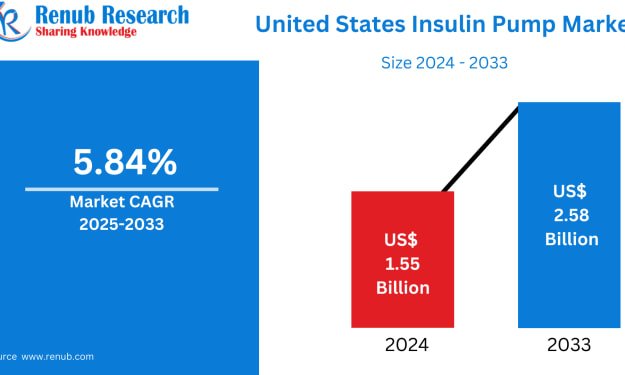
United States Insulin Pump Market Size and Forecast 2025–2033
Introduction Diabetes continues to be one of the most widespread chronic diseases in the United States, affecting millions of people across all age groups. With the growing emphasis on precision medicine, patient convenience, and digital healthcare integration, insulin delivery technologies are undergoing a major transformation. Among these innovations, insulin pumps have emerged as a cornerstone in modern diabetes management.
By jaiklin Fanandish3 days ago in Longevity



Comments (1)
First impressions can be right or wrong! Great work’! Well written!